
Close
Back


From now on you can download videos from our website
If you would also like to subscribe to the newsletter and receive our latest updates, click on the button below.
Enter the email address you registered with and we will send you a code to reset your password.
The password must be at least 12 characters long, no spaces, include upper/lowercase letters, numbers and symbols.
Click the button to return to the page you were on and log in with your new password.
08 November 2021
1 MIN READ
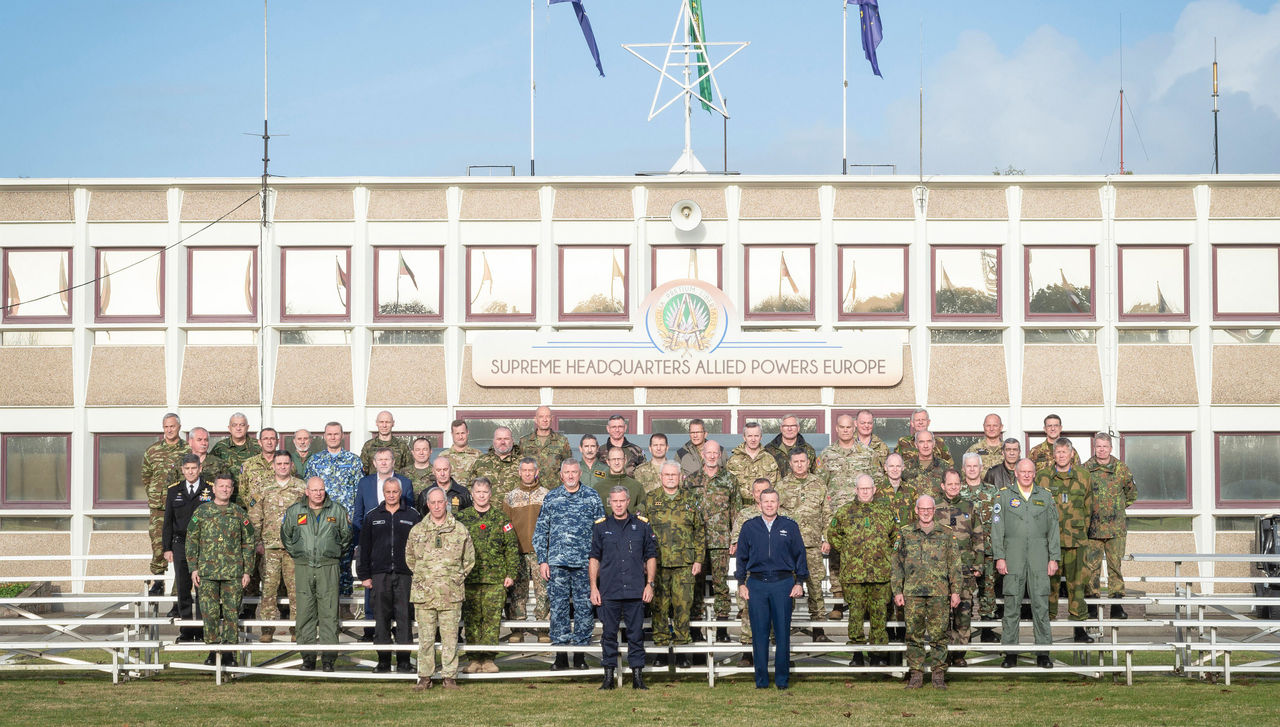
On the 8th November 2021, the NATO Military Committee headed down to the Supreme Allied Command Operations for a day of roundtable discussions on defence and deterrence.
After a short welcome by General Tod Wolters, the Supreme Allied Commander Europe (SACEUR), the NATO Military Representatives were ushered into their first session of the day dedicated to the Concept for the Deterrence and Defence of the Euro-Atlantic Area (DDA). Alongside NATO’s Warfighting Capstone Concept, the DDA is a pillar of the NATO 2030 initiative launched at the Brussels Summit last year. NATO and Nations have been working diligently to develop these unique concepts that not only set out NATO’s military priorities, its approach to current and future threats but will also provide a guide to commanders for future security requirements and resources.
"The DDA unites national, regional, and theatre-wide military efforts to a common purpose. It provides nations with a framework to align respective national military deterrence activities in peacetime and, if directed, defend in crisis and conflict... all nested underneath the NATO 2030 initiative,” General Wolters said.
Additionally, the Deputy Supreme Allied Commander Europe, General Sir Tim Radford discussed the New Force Model that SHAPE is developing with Nations. “Today NATO is facing complex challenges – assertive authoritarian regimes, terrorism, cyber and missile threats, climate change and disruptive technologies. In response, we are undertaking our biggest adaptation since the Cold War: investing in modern capabilities, adopting new command structures, and raising the readiness and peacetime vigilance activities of our forces,” General Radford said.
The last session of the day focused on the enablement SACEUR’s Area of Responsibility and improving NATO’s ability to support the deployment and sustainment of Allied forces into, across, and from the entire Alliance territory. This effort builds on improving lines of communications and re-supplying as well as allied military mobility. The Commanders of the Joint Support and Enabling Command, Lieutenant General Jürgen Knappe and the Joint Force Command Norfolk, Vice Admiral Daniel W. Dwyer were present to support the discussions. Both commands declared Full Operational Capability earlier this year and have been fully supporting the Alliance since.