
Close
Back


From now on you can download videos from our website
If you would also like to subscribe to the newsletter and receive our latest updates, click on the button below.
Enter the email address you registered with and we will send you a code to reset your password.
The password must be at least 12 characters long, no spaces, include upper/lowercase letters, numbers and symbols.
Click the button to return to the page you were on and log in with your new password.
21 June 2021
1 MIN READ
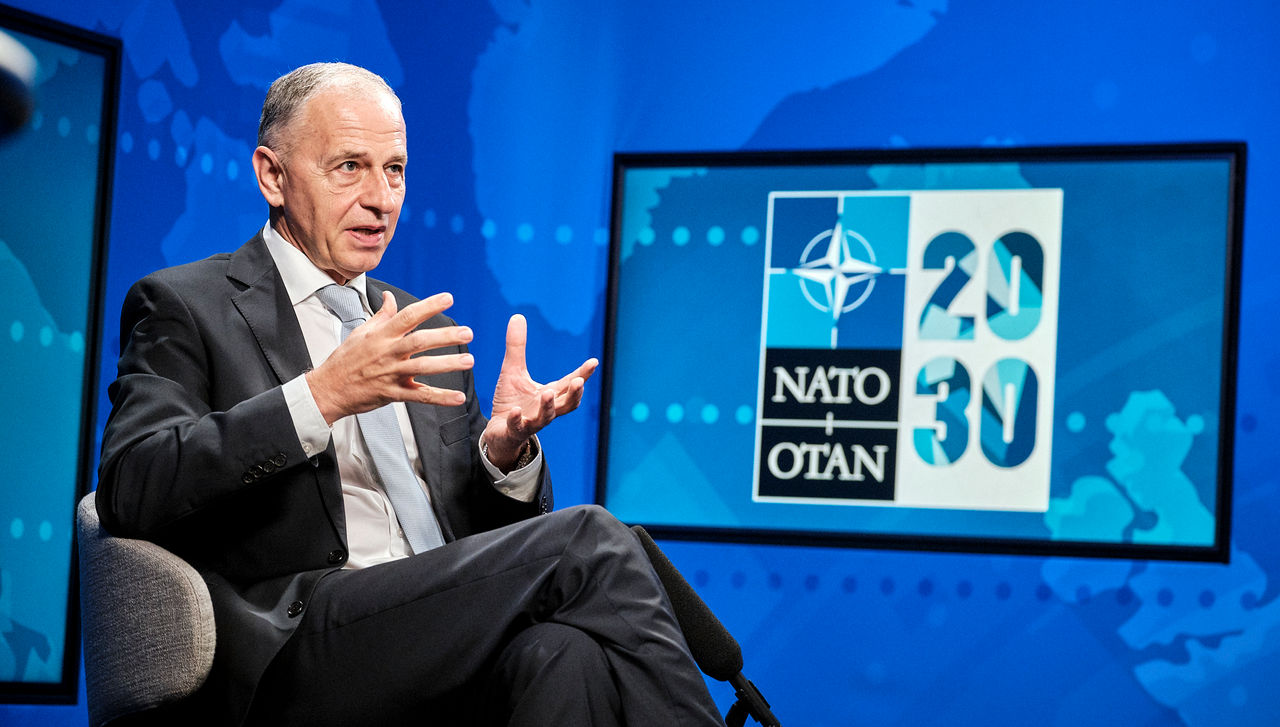
NATO Deputy Secretary General Mircea Geoană addressed the future of NATO in his remarks to the University of Chicago Booth School of Business on Monday (21 June 2021). “In these unpredictable and fast-changing times, we need bold thinking and an innovative mind-set,” he told the audience. Describing security threats as complex, including terrorism, cyber-attacks, disruptive technologies, and climate change, the Deputy Secretary General underscored the importance of unity, which Allies reaffirmed at the NATO Summit on 14 June.
Describing this as an important Summit, Mr. Geoană outlined the decisions Allies agreed on, tackling the security challenges of tomorrow by enhancing unity and cohesion, strengthening resilience to protect critical infrastructure and supply chains, and addressing the implications of climate change. Allies also agreed to strengthen innovation in order to maintain the Alliance’s technological edge, including by agreeing to launch a new Defence Innovation Accelerator, work cross-domain to promote transatlantic cooperation on new technologies, and establish a NATO Innovation Fund to invest in start-ups.
Noting the threat of authoritarian regimes, including China and Russia, the Deputy Secretary General underlined the need to protect our values of democracy, freedom, justice, rule of law, and human rights, which NATO has been upholding for over 70 years. To continue defending these values, NATO Allies also decided to deepen cooperation with existing partners and seek new ones with like-minded countries and organizations, he added.