
Close
Back


From now on you can download videos from our website
If you would also like to subscribe to the newsletter and receive our latest updates, click on the button below.
Enter the email address you registered with and we will send you a code to reset your password.
The password must be at least 12 characters long, no spaces, include upper/lowercase letters, numbers and symbols.
Click the button to return to the page you were on and log in with your new password.
01 June 2021
2 MIN READ
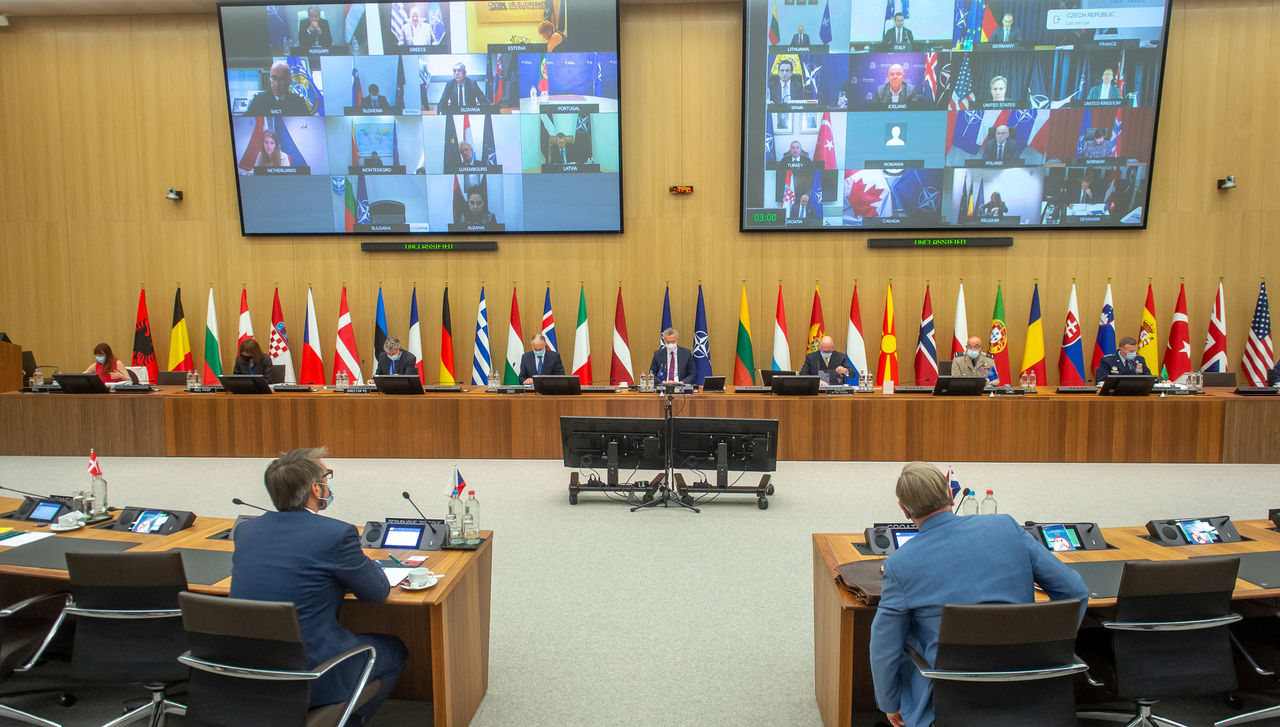
NATO Foreign Ministers met on Tuesday (1 June 2021) in order to prepare for the NATO Summit on 14 June. “Ministers addressed a range of issues including Afghanistan, Belarus, Russia and China; and overall, the need for NATO to adapt to a new era of growing global competition,” said Secretary General Jens Stoltenberg. “We are presented with a number of challenges to our security that we need to tackle together, because no country and no continent can deal with them alone. Against this background, Ministers addressed the NATO 2030 agenda on how to continue to adapt NATO for the future.”
Mr Stoltenberg outlined that the ministers’ discussions covered ways to strengthen NATO as the unique and indispensable forum for transatlantic security cooperation, and efforts to boost collective defence, reaffirm the 2014 defence investment pledge, and fully implement all decisions to strengthen NATO’s posture. Ministers also addressed the importance of resilience, and of taking a more integrated approach to protecting critical infrastructure.
“We also discussed concrete ways to sharpen our technological edge, and prevent technological gaps among Allies,” said the Secretary General. He added that Allies are "considering to establish a defence innovation accelerator – a new centre to foster greater cooperation among Allies on technology, underpinned with extra funding from nations that decide to participate."
NATO 2030 is also about enhancing the Alliance’s role in preserving the rules-based international order, which Mr Stoltenberg said “is challenged by authoritarian regimes, like Russia and China.” This includes strengthening existing partnerships and building new ones, including in the Asia-Pacific, Africa, and Latin America.
Ministers also discussed stepping up training and capacity building for partners, as well as work to address the security impact of climate change. “Finally, there is broad agreement for the need to start work on NATO’s next Strategic Concept, because our strategic environment has significantly changed since 2010,” said the Secretary General. He underlined that NATO’s adaptation will require Allies to continue investing in defence, and to “invest more together”, as a force multiplier and a “strong message of unity and resolve”.
Foreign Ministers also discussed the way forward for NATO’s engagement in Afghanistan, and developments in Belarus. “We have strongly condemned the serious violation of Belarus of the norms of international civil aviation, and the fundamental right of the freedom to the speech, and I welcome sanctions by NATO Allies, and the European Union,” Mr Stoltenberg said. “This shows the importance of like-minded countries standing together,” he added.