
Close
Back


From now on you can download videos from our website
If you would also like to subscribe to the newsletter and receive our latest updates, click on the button below.
Enter the email address you registered with and we will send you a code to reset your password.
The password must be at least 12 characters long, no spaces, include upper/lowercase letters, numbers and symbols.
Click the button to return to the page you were on and log in with your new password.
27 May 2021
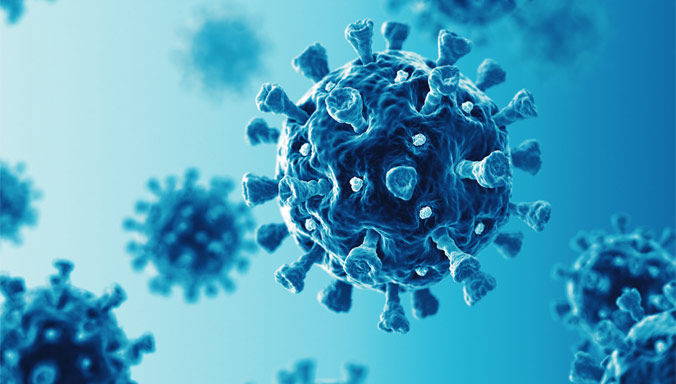
Today (27 May 2021) marks the launch of a joint project by two Italian and Austrian universities aimed at enhancing health and safety on the workplace, in response to new challenges posed by the COVID-19 global pandemic.
This multi-year initiative – supported by the NATO Science for Peace and Security (SPS) Programme – involves researchers from the Sapienza University of Rome (Italy) and Graz University of Technology (Austria). Their collaboration caters to the need to develop new detection tools in the context of the ongoing health emergency, but will also contribute to the identification of potential contamination from other toxic bio-agents. Specifically, this project will combine expertise in biophysics, materials science and spectroscopy to propose an innovative monitoring platform based on nanotechnology. The techniques employed by this project are expected to provide a cost-effective, selective and efficient solution to monitor the presence of the coronavirus and other pathogens.
During the launch of the project, H.E. Ambassador Elisabeth Kornfeind, Ambassador of Austria to NATO and to the Kingdom of Belgium, said: “The ongoing pandemic has clearly shown that we have to work and cooperate on resilience in a multitude of fields – this project clearly fits into this aim.” H.E. Ambassador Francesco Maria Talò, Permanent Representative of Italy to NATO, remarked: “The complexity of the challenges of the XXI century, such as those resulting from the coronavirus, demonstrates the importance of the link among science, security and safety.” “The Science for Peace and Security Programme represents a precious resource for the whole Alliance,” he added. “Since the start of the pandemic, the SPS Programme has been contributing to the Alliance’s initiatives to build resilience and promote recovery from COVID-19,” David van Weel, NATO’s Assistant Secretary General for Emerging Security Challenges pointed out.
SPS has been an integral component of NATO’s response to COVID-19, and has tapped into its broad network of scientists and research institutions in NATO and partner countries to foster collaborative solutions against the coronavirus. In doing this, it adapted ongoing activities and launched new initiatives to contribute to strengthening diagnosis capacity, enhancing crisis management, and facilitating coordination among first responders.