
Close
Back


From now on you can download videos from our website
If you would also like to subscribe to the newsletter and receive our latest updates, click on the button below.
Enter the email address you registered with and we will send you a code to reset your password.
The password must be at least 12 characters long, no spaces, include upper/lowercase letters, numbers and symbols.
Click the button to return to the page you were on and log in with your new password.
19 May 2021
1 MIN READ
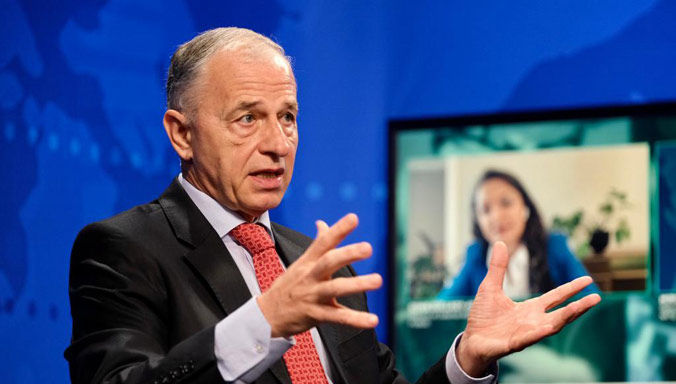
NATO Deputy Secretary General Mircea Geoană discussed NATO’s role in cyber defence, its approach to cyber security, and the Alliance’s responsibility in driving technological innovation in remarks to the ''Defence Disrupted'' conference on Wednesday (19 May 2021).
The Deputy Secretary General underlined the importance of greater collaboration among a wide range of actors, including start-ups and government, noting this is part of the NATO 2030 initiative. Mr Geoană stressed the crucial role of NATO as a forum between Allies to exchange best practice, not only to promote the responsible use of defence technologies but to also strengthen trust between Allies. The triple helix, consisting of government, industry and academia, plays an important role to adopt new technologies, and to avoid interoperability gaps, he added.
As part of NATO 2030, the Alliance needs to adapt and prepare for unpredictable threats, including in cyber space, and focus more on resilience and innovation, the Deputy Secretary General explained. New technologies, including sensor systems, will be key in training military to adapt to new warfare grounds such as urban environments, he said. While highlighting it is important to strengthen defence against cyber-attacks, he added it is also important to boost resilience among societies. Looking ahead the Deputy Secretary General stressed the importance for the Alliance to maintain its technological edge and underlined the importance of transnational cooperation.