
Close
Back


From now on you can download videos from our website
If you would also like to subscribe to the newsletter and receive our latest updates, click on the button below.
Enter the email address you registered with and we will send you a code to reset your password.
The password must be at least 12 characters long, no spaces, include upper/lowercase letters, numbers and symbols.
Click the button to return to the page you were on and log in with your new password.
06 May 2021
1 MIN READ
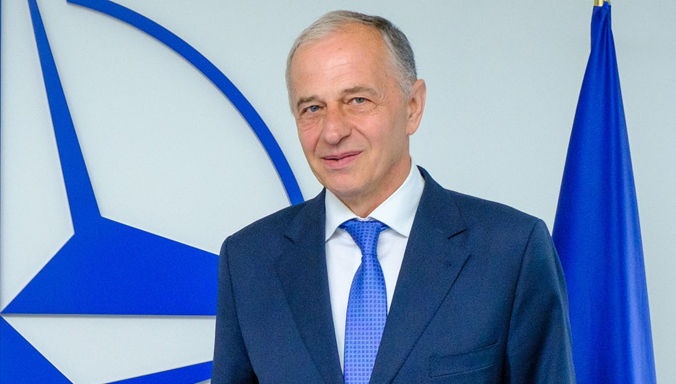
NATO Deputy Secretary General Mircea Geoană, speaking at the Military Mobility Symposium co-organized by the European Defence Agency and the Portuguese Presidency of the Council of the European Union on Thursday (6 May 2021), stressed the importance of strong NATO-EU cooperation on military mobility in order to maintain preparedness and preserve collective security.
The Deputy Secretary General said that military mobility was essential to NATO’s deterrence and defence posture. He continued that NATO’s capacity to rapidly move forces and equipment across the Atlantic and across European borders underpins the Aliiance’s ability to preserve peace and security. Rapid deployment across Europe requires not only the military but a whole-government approach, he added, including the commercial sector, and civil and military actors. Mr Geoană said that “enhancing military mobility matters not only for the rapid deployment of forces and timely reinforcement of allies, but also to be able to sustain forces in operations, trainings and exercises.”
Looking to the future, Mr Geoană underscored that “to further improve military mobility, NATO and the EU need to continue to pursue coherent approaches and synergies.” These areas of improvement, he said, include regulations for swift border-crossing, close coordination between military forces and civil government bodies, access to necessary transport capabilities, and ensuring that national transport infrastructure is fit for purpose.
The Deputy Secretary General also welcomed the EU’s decision to approve the requests from Canada, Norway and the United States to join the PESCO project on military mobility, saying: "non-EU Allies make an important contribution to European defence and therefore, their involvement in EU defence initiatives benefits us all."