
Close
Back


From now on you can download videos from our website
If you would also like to subscribe to the newsletter and receive our latest updates, click on the button below.
Enter the email address you registered with and we will send you a code to reset your password.
The password must be at least 12 characters long, no spaces, include upper/lowercase letters, numbers and symbols.
Click the button to return to the page you were on and log in with your new password.
27 January 2021
2 MIN READ
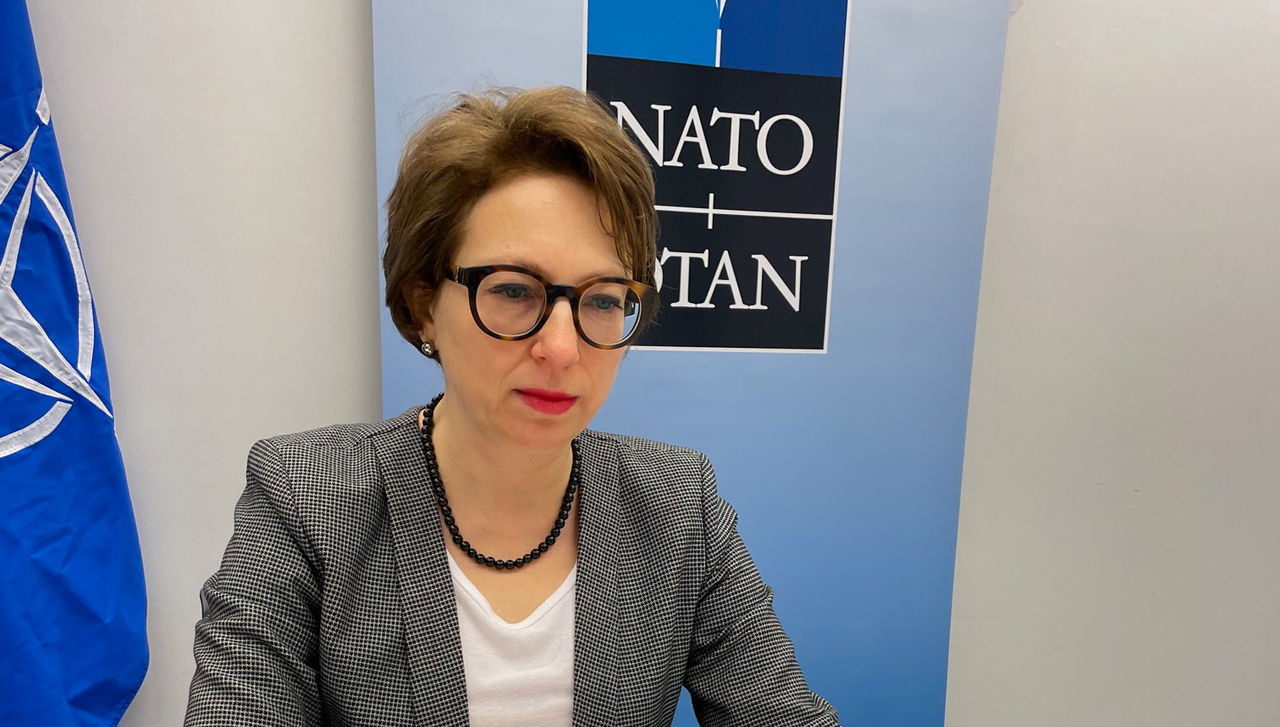
At a virtual meeting of the OSCE’s Forum for Security Co-operation (FSC) on Wednesday (27 January 2021), senior officials from NATO Headquarters and Allied governments briefed on the history, evolution and future of NATO’s forward presence in the eastern and south-eastern part of the Alliance.
Organised by the United States FSC Chairpersonship, the meeting aimed to enhance participants’ understanding of NATO’s forward presence, and promote mutual trust and transparency.
The Director for Operations in NATO’s Operations Division, Burcu San, opened the discussion, addressing representatives from the OSCE’s 57 participating states, including Russia. She stressed that NATO's forward presence – composed of four multinational battlegroups in Estonia, Latvia, Lithuania and Poland, and a number of tailored measures in the Black Sea region – is a strong demonstration of the Alliance’s unity and solidarity. She highlighted that this presence sends a clear message that an attack on one Ally will be regarded as an attack on all.
She explained that NATO’s forward presence in the eastern part of the Alliance is part of NATO’s response to Russia’s illegal and illegitimate annexation of Crimea, ongoing destabilisation of eastern Ukraine, and military build-up in the Baltic region and beyond. She also highlighted the defensive and proportionate nature of this presence, noting that NATO fully respects its international commitments and supports efforts to build confidence and transparency on military activities.
In particular, she pointed out that Allies remain open and transparent about their national contributions to the battlegroups and NATO regularly publishes factsheets illustrating battlegroup personnel and force numbers online. NATO’s forward presence is also subject to arms control and confidence and security building measures under the Vienna Document, the Conventional Forces in Europe Treaty (as applicable), as well as relevant bilateral agreements by host nations.
Senior officials from France, Lithuania, Poland and the United States also briefed participants on other aspects of NATO’s forward presence, including training activities, host nation and public support, and military transparency. A common message of transparency was reinforced by other Allies participating in the meeting.