
Close
Back


From now on you can download videos from our website
If you would also like to subscribe to the newsletter and receive our latest updates, click on the button below.
Enter the email address you registered with and we will send you a code to reset your password.
The password must be at least 12 characters long, no spaces, include upper/lowercase letters, numbers and symbols.
Click the button to return to the page you were on and log in with your new password.
26 January 2021
1 MIN READ
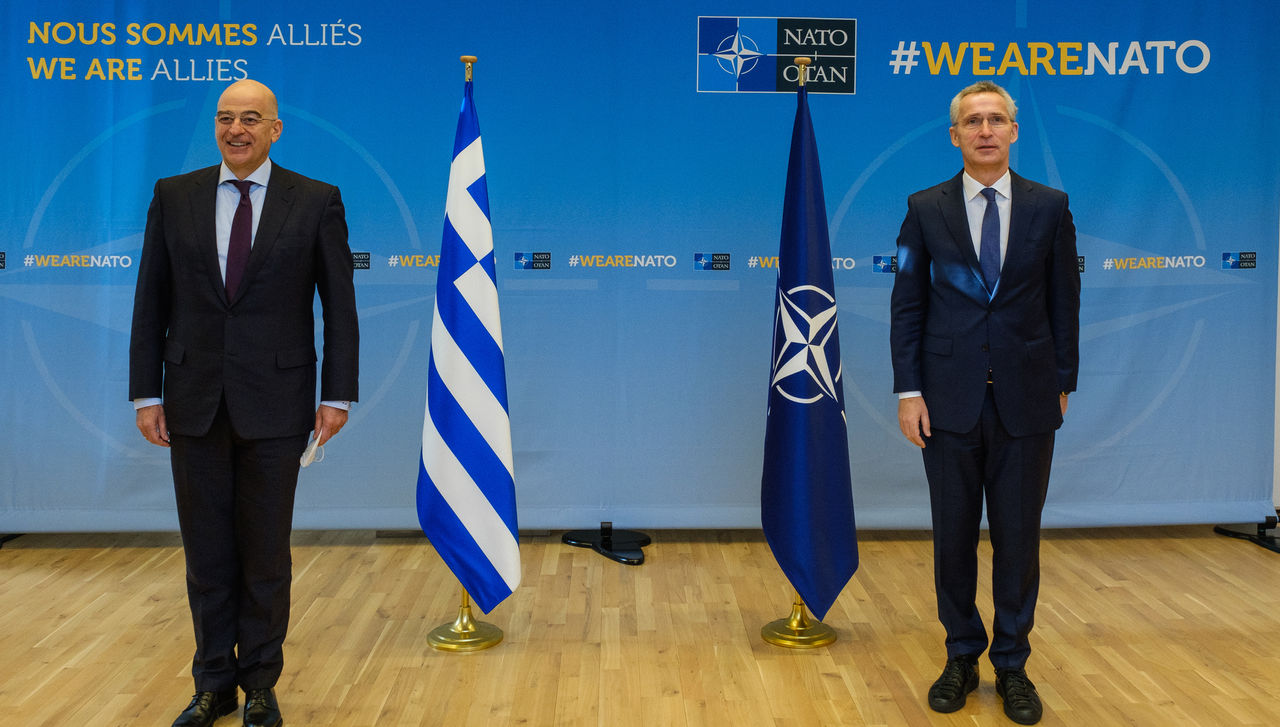
Today (26 January 2021), NATO Secretary General Jens Stoltenberg met with the Foreign Minister of Greece Nikos Dendias at NATO Headquarters. They shared views on a number of topics, including the situation in the Eastern Mediterranean, the Secretary General’s NATO 2030 initiative, and Libya.
The Secretary General welcomed the ongoing talks between Greece and Turkey on a military deconfliction mechanism in the Eastern Mediterranean brokered by NATO. “I am glad to see that tensions have significantly reduced since my visit to Ankara and Athens this past October, and hope we can continue to develop the de-confliction mechanism further,” Mr. Stoltenberg said. “The Exploratory Talks which took place yesterday in Istanbul represent a step in the right direction to resolve the underlying issues,” he added.
With respect to the NATO 2030 initiative, the Secretary General said: “I intend to put forward some recommendations to strengthen the transatlantic bond further – through close and regular consultations with all 30 Allies - including on how to boost NATO’s efforts on resilience, increase investments in new and disruptive technologies, enhance NATO’s political role and its ability to defend the rules-based international order, and build closer partnerships with like-minded democracies, including in the Asia-Pacific.”
On Libya, Mr. Stoltenberg emphasized that Allies follow political developments very closely, and welcome the progress made in the UN-led Libya Political Dialogue Forum. He reaffirmed NATO’s long standing position that the Alliance remains committed to providing advice in the area of defence and security institution building, taking into account political and security conditions.
The Secretary General also thanked Greece for its significant contributions to NATO operations, including with respect to the Standing NATO Maritime Group 2 and the Resolute Support and KFOR missions in Afghanistan and Kosovo, respectively.