
Close
Back


From now on you can download videos from our website
If you would also like to subscribe to the newsletter and receive our latest updates, click on the button below.
Enter the email address you registered with and we will send you a code to reset your password.
The password must be at least 12 characters long, no spaces, include upper/lowercase letters, numbers and symbols.
Click the button to return to the page you were on and log in with your new password.
10 July 2020
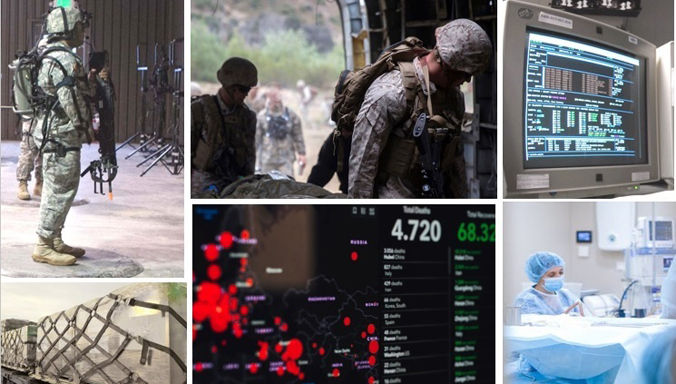
Scientists across Allied and Partner Nations have responded to the challenge set by the NATO Chief Scientist in April to identify solutions to some of the most pressing scientific challenges posed by COVID-19.
Over 40 responses to the Challenge were received. Amongst the most impactful of the responses that are being taken forward in NATO’s collaborative programme of Science & Technology are those that are investigating:
Many of the studies are due to deliver results within months.
NATO Chief Scientist, Dr Bryan Wells said: “This is a tremendous response from the Alliance network of scientists, showing how they are responding rapidly to the challenges of COVID-19 and bringing their scientific expertise to bear on this vital task”.
Other scientific responses to the pandemic are in preparation already or will be investigated, including using the expertise of NATO’s Centre for Maritime Research and Experimentation (CMRE).
The challenge was set to the Alliance network of 6,000 scientists – the largest such network in the world – and to NATO’s own laboratory in La Spezia. The challenge focused on solutions for virus detection, improved situational awareness, resilience and the post-COVID-19 future.