
Close
Back


From now on you can download videos from our website
If you would also like to subscribe to the newsletter and receive our latest updates, click on the button below.
Enter the email address you registered with and we will send you a code to reset your password.
The password must be at least 12 characters long, no spaces, include upper/lowercase letters, numbers and symbols.
Click the button to return to the page you were on and log in with your new password.
08 July 2020
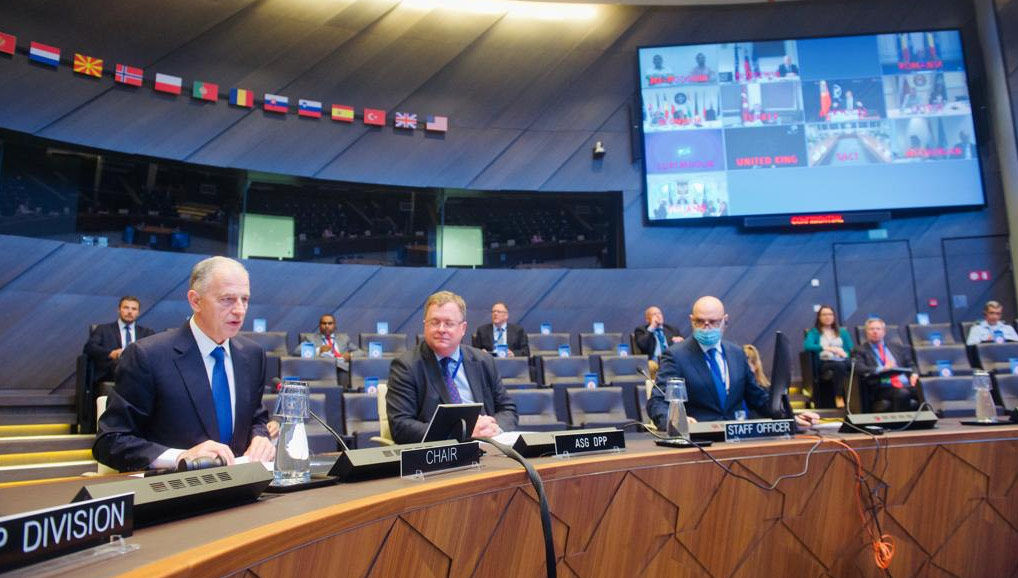
NATO Policy Directors for Civil Preparedness met by secure video conference on Wednesday (8 July 2020), to exchange views and best practices in their response to the COVID-19 crisis and how to strengthen national resilience.
They welcomed the decision by NATO Defence Ministers at their meeting on 18 June 2020 to update NATO’s baseline requirements for resilience, covering critical sectors such as energy, telecommunications and the security of supply chains. The updated baseline requirements will help Allies prepare for possible further pandemic waves, and support a common approach to current and future challenges in the interests of the security of populations across the Alliance.
Deputy Secretary General Mircea Geoană opened the session and highlighted the contribution by the Alliance and Allies’ military forces to the COVID-19 response.
“COVID-19 has demonstrated the indispensable role of civil-military cooperation for resilience and preparedness. Between the months of March and May 2020, over half a million military personnel, supported by innumerable military assets, have worked side-by-side with our civilian authorities in managing the crisis and in serving our citizens”, he said.
Policy Directors also discussed NATO’s approach to learning lessons from COVID-19, including the importance of further cooperation with partners and the EU.