
Close
Back


From now on you can download videos from our website
If you would also like to subscribe to the newsletter and receive our latest updates, click on the button below.
Enter the email address you registered with and we will send you a code to reset your password.
The password must be at least 12 characters long, no spaces, include upper/lowercase letters, numbers and symbols.
Click the button to return to the page you were on and log in with your new password.
07 July 2020
2 MIN READ
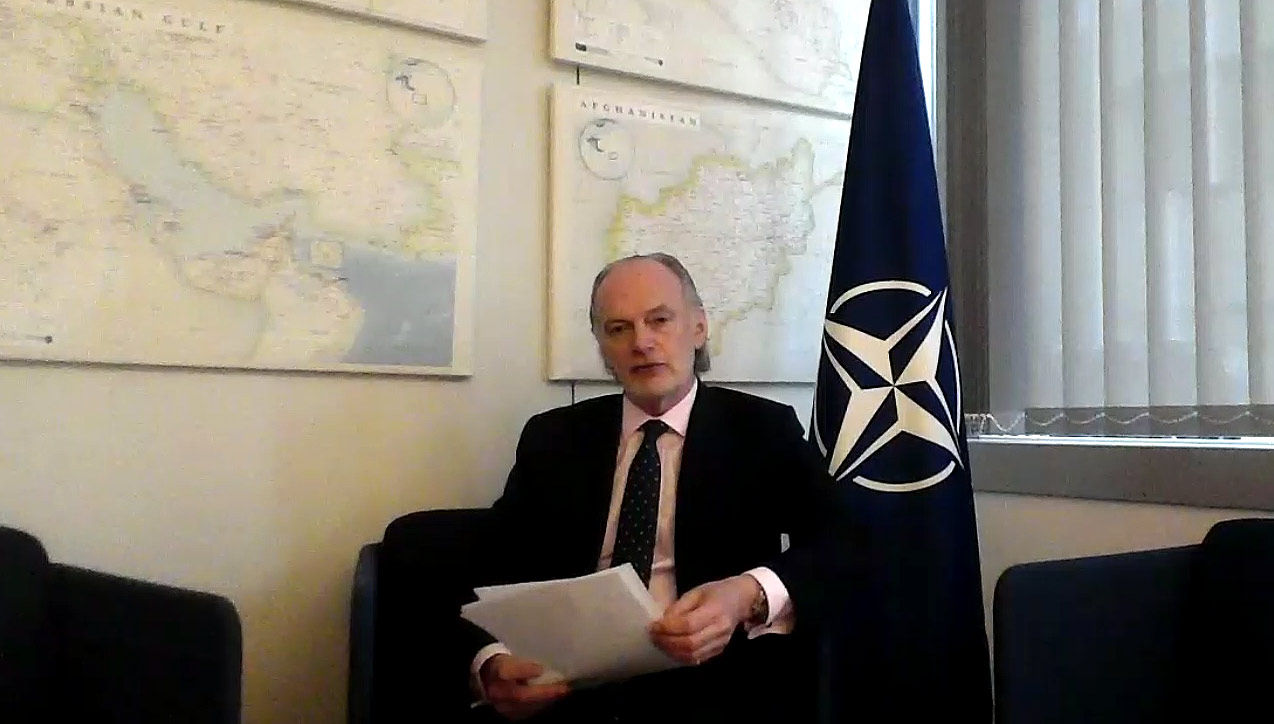
More than 100 high-level participants, ministers and deputy ministers were invited by the Albanian OSCE Chairmanship to share best practices and lessons learned at the virtual conference “Good Governance and the Fight against Corruption in the Digital Era”, on 6 and 7 July 2020. NATO Deputy Assistant Secretary General for Operations Jonathan Parish shared NATO’s experience on the impact of corruption on stability and security.
Representatives from the participating states of the Organization for Security and Co-operation in Europe (OSCE), partners, international organisations, academia and civil society attended. The event was organised under the 2020 Albanian Chairmanship, which has placed anti-corruption at the top of the OSCE's agenda.
The first day addressed key topics such as the impact on combating corruption and enhancing good governance on security, stability and economic growth. Participants also discussed the role of digital technologies and innovation in preventing and combating corruption.
The second day highlighted the role of whistleblowers, media and civil society in tackling corruption. It also examined international police cooperation in the investigation and prosecution of corruption, underlining the crucial role of law enforcement action towards asset recovery.
Building integrity
NATO Deputy Assistant Secretary General Jonathan Parish explained how NATO addresses threats of hybrid nature like corruption and mismanagement of resources, including through the implementation of the NATO Building Integrity Policy, endorsed at the Warsaw Summit in 2016.
He pointed out that advancing a culture of integrity within the defence and related security sector, and having good practices, systems and mechanisms in place, helps tackle corrupt practices, both institutional and personal. "Self-sustaining peace is less probable where integrity, transparency and accountability are missing," he added.
NATO's Building Integrity (BI) initiative contributes to NATO's security as well as its efforts to project stability in the Euro-Atlantic area and beyond. The initiative was originally launched in 2007 in the framework of NATO's Partnership for Peace programme. It provides NATO Allies and partner countries with diagnostic tools and tailored support to strengthen good governance principles and practices, and reduces the risk of corruption in the defence and related security sector. The NATO BI Policy and ensuing BI Action Plan cover NATO civilian, military structures and agencies.