
Close
Back


From now on you can download videos from our website
If you would also like to subscribe to the newsletter and receive our latest updates, click on the button below.
Enter the email address you registered with and we will send you a code to reset your password.
The password must be at least 12 characters long, no spaces, include upper/lowercase letters, numbers and symbols.
Click the button to return to the page you were on and log in with your new password.
29 May 2020
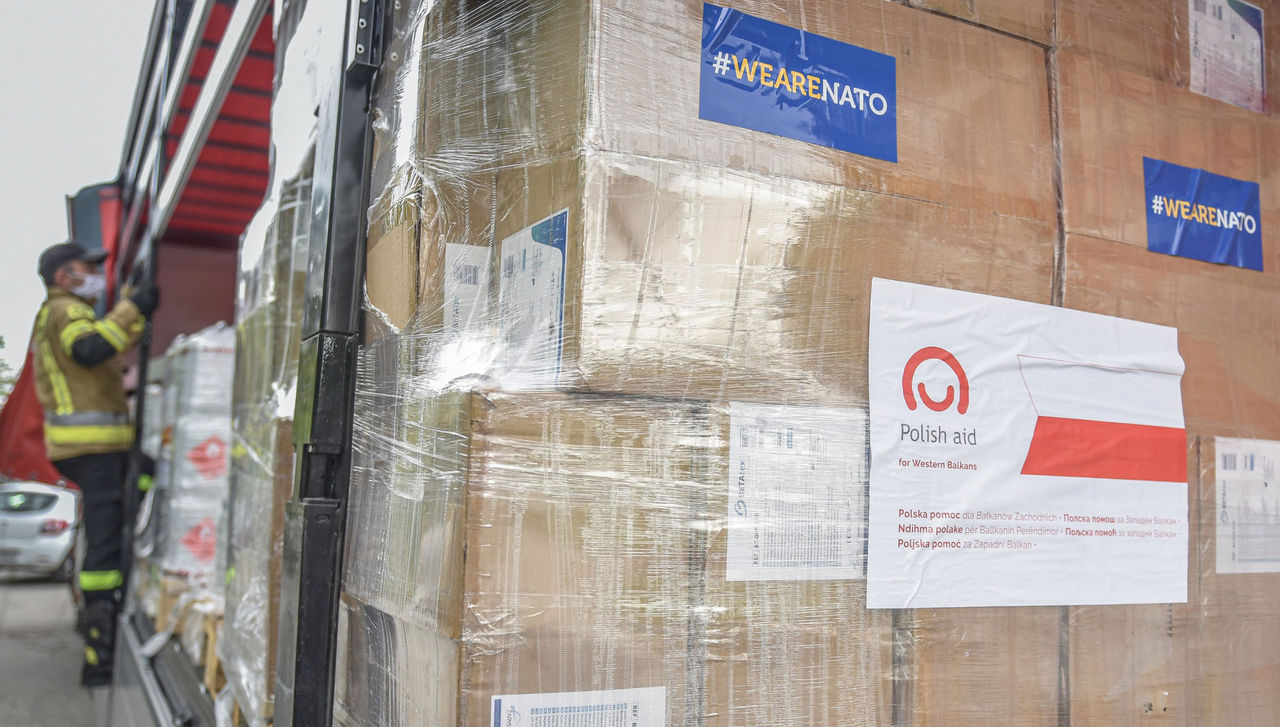
Poland dispatched nearly 70 tonnes of medical supplies to Albania, Bosnia and Herzegovina, Montenegro, North Macedonia, Kosovo and Serbia this week, helping them respond to the COVID-19 pandemic. This aid includes more than 10,000 litres of disinfectant and 100,000 face masks for each recipient. A convoy of seven State Fire Service vehicles set off from Warsaw on Tuesday to transport the supplies.
Poland’s support responds to a request for assistance coordinated through NATO’s Euro-Atlantic Disaster Response Coordination Centre (EADRCC) from Albania, Bosnia and Herzegovina, Montenegro and North Macedonia.
The EADRCC is NATO’s main civil emergency response mechanism. The Centre operates on a 24/7 basis, coordinating requests and offers of assistance. Since the start of the crisis, the EADRCC has coordinated requests from the United Nations Office for the Coordination of Humanitarian Affairs (OCHA) and 15 NATO and partner countries, resulting in dozens of offers of assistance.