
Close
Back


From now on you can download videos from our website
If you would also like to subscribe to the newsletter and receive our latest updates, click on the button below.
Enter the email address you registered with and we will send you a code to reset your password.
The password must be at least 12 characters long, no spaces, include upper/lowercase letters, numbers and symbols.
Click the button to return to the page you were on and log in with your new password.
18 May 2020
1 MIN READ
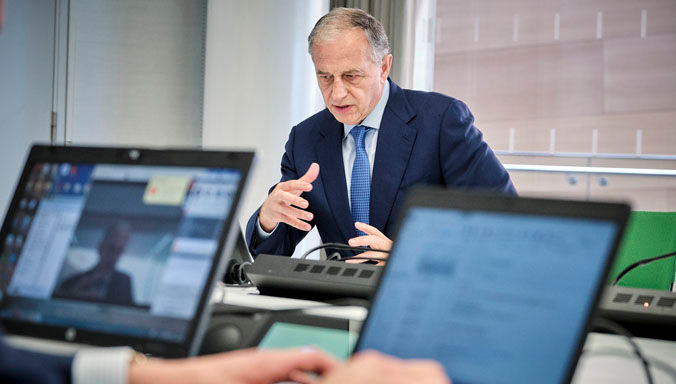
In the context of its ongoing work on Emerging and Disruptive Technologies, NATO’s Emerging Security Challenges Division organized a workshop today (18 May 2020) to discuss NATO’s engagement with non-defence technology companies.
The workshop brought together Allied officials and external experts to talk about key issues as NATO seeks to deepen and strengthen its engagement with technology companies that are increasingly influential in both international affairs and global security.
In his remarks, the Deputy Secretary General Mircea Geoană, emphasized that NATO’s engagement with technology companies matters for our security and defence, but also for the survival of democracy. “We need to work together to remain competitive and keep our edge, but also to preserve our values, our way-of life and our democratic system”, said Geoană.
Echoing the words of the Deputy Secretary General, several speakers suggested it is crucial to foster closer collaboration amongst different technology companies themselves, in addition to the collaboration between these companies, our governments, and our multilateral organisations - including NATO. Given the flexible and fast-moving nature of innovation ecosystems, the public sector needs to adapt the pace of its acquisition procedures in new technologies.
In concluding, Mircea Geoană stressed the need to develop a much more structured strategic dialogue with big tech companies, as well as to leverage the network of start-up tech companies across the Alliance. This matters to keep NATO relevant, vigilant and agile at a time of rapid technological change and growing technological competition.