
Close
Back


From now on you can download videos from our website
If you would also like to subscribe to the newsletter and receive our latest updates, click on the button below.
Enter the email address you registered with and we will send you a code to reset your password.
The password must be at least 12 characters long, no spaces, include upper/lowercase letters, numbers and symbols.
Click the button to return to the page you were on and log in with your new password.
14 February 2019
2 MIN READ
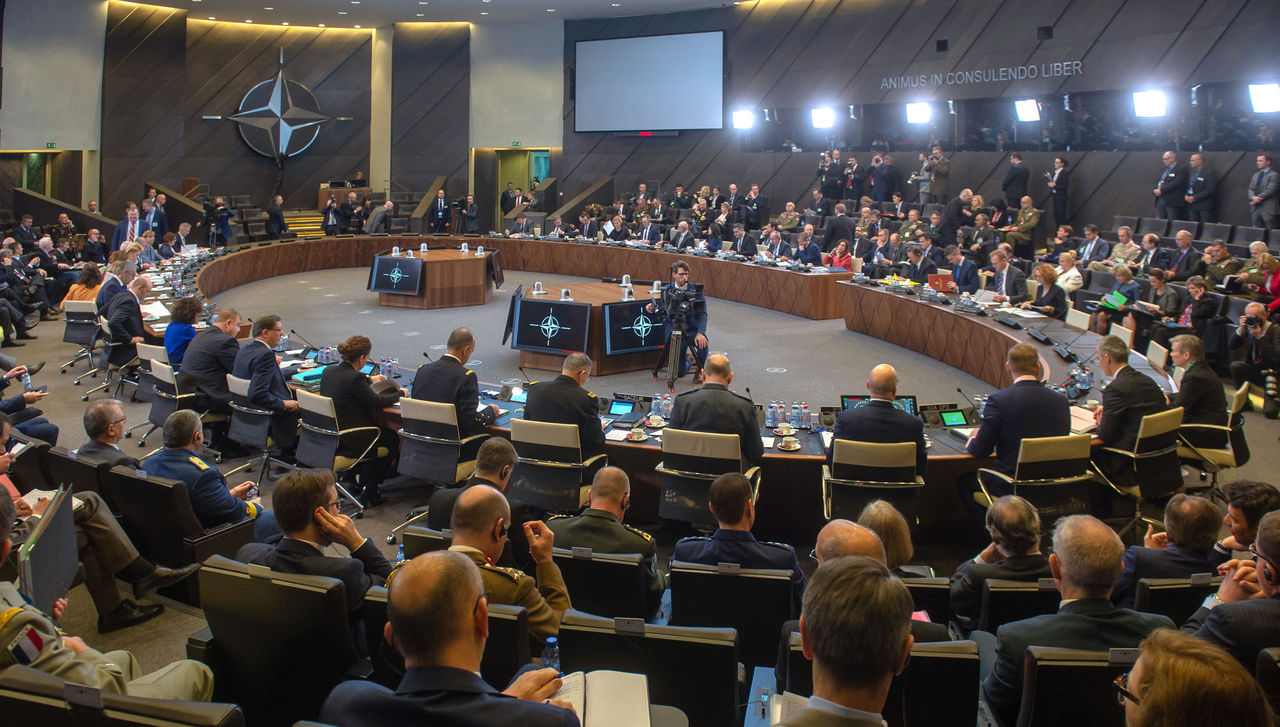
NATO Secretary General Jens Stoltenberg wrapped up two days of important discussions between Allied Defence Ministers in Brussels today (Thursday 14 February 2019). Ministers discussed arms control, current operations and missions, burden-sharing, and European defence. The Secretary General described the Alliance as “in good shape” as its approaches its 70th anniversary in Washington in April.
All Allies agreed that Russia’s violation of the Intermediate-Range Nuclear Forces (INF) Treaty poses a significant threat to transatlantic security. The Secretary General called again on Russia to take this last opportunity to come back into compliance. “All Allies stand ready to engage further with Russia. But we are also preparing for a world without the INF Treaty,” the Secretary General said.
A number of NATO Allies offered contributions to the “Four Thirties” Readiness Initiative, which will ensure 30 combat ships, 30 land battalions, and 30 air squadrons, are ready to deploy within 30 days or less. This will increase NATO’s “ability to respond quickly and decisively to any future crisis.”
Ministers also discussed the critical issue of burden sharing, in terms of cash, capabilities and contributions. According to the latest reports on defense spending, European Allies and Canada will spend an extra $100 billion dollars on defence by the end of 2020. All Allies are modernising their equipment and contributing more to NATO’s missions and operations.
On NATO’s missions and operations, the Secretary General said that NATO Allies are in Afghanistan together “and we will take decisions regarding the future of the mission together.” NATO’s training mission in Iraq “is now up and running, providing training and advice to national security institutions.” NATO’s mission to “keep a safe and secure environment for all the people in Kosovo” remains unchanged, but Ministers are expected to take decisions later in the spring on NATO’s engagement with the Kosovo Security Force.
In a final joint working session with High Representative / Vice President Federica Mogherini and Defence Ministers Jussi Niinistö from Finland and Peter Hultqvist from Sweden, Allies welcomed the European Union’s increased focused on defence as a means to strengthen NATO. The Secretary General called for closer cooperation on defence spending, new capabilities, military mobility, and “ensuring the fullest possible involvement of non-EU NATO Allies.”
NATO is now looking forward to celebrating the 70th anniversary of the Alliance in Washington in April, which is a further opportunity to discuss current and future security challenges.