
Close
Back


From now on you can download videos from our website
If you would also like to subscribe to the newsletter and receive our latest updates, click on the button below.
Enter the email address you registered with and we will send you a code to reset your password.
The password must be at least 12 characters long, no spaces, include upper/lowercase letters, numbers and symbols.
Click the button to return to the page you were on and log in with your new password.
12 February 2019
1 MIN READ
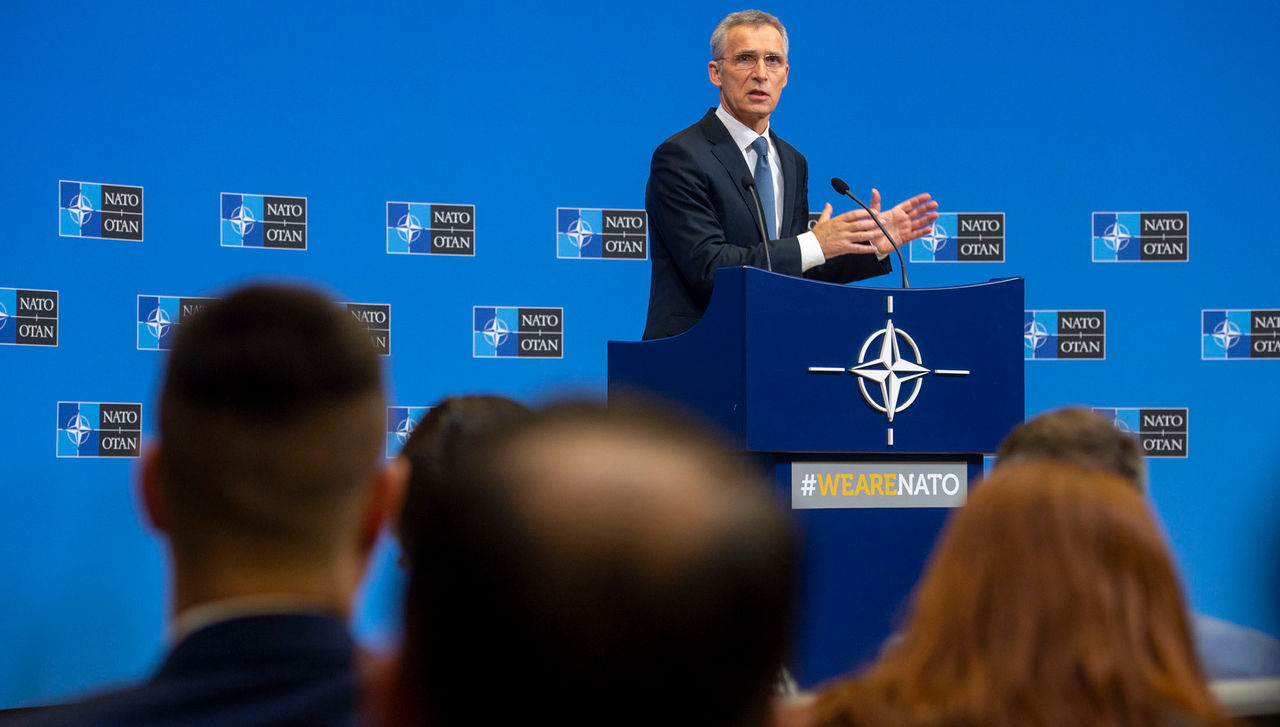
NATO Defence Ministers will meet in Brussels this week at a critical time for transatlantic security. In a press conference (on Tuesday 12 February) ahead of the two-day meeting, NATO’s Secretary General Jens Stoltenberg announced important discussions on the Intermediate-Range Nuclear Forces (INF) Treaty, NATO’s defence and deterrence posture, NATO’s missions and operations, and European cooperation on defence.
The meeting will begin (on Wednesday 13 February 2019) by discussing the future of the INF Treaty and Russia’s ongoing violation of its provisions. The Secretary General called on Russia to seize the last opportunity to “return to compliance and save the INF Treaty.”
Ministers will address maintaining a credible and effective defence and deterrence posture in their second session, including NATO’s so-called “Four Thirties” Readiness Initiative to deploy 30 combat ships, 30 land battalions and 30 air squadrons, within 30 days.
Burden sharing and defence spending will also be high on the agenda. On the Allies’ pledge on cash, capabilities and contributions, the Secretary General said that “the trend is up.” Since 2016, European Allies and Canada have spent $41 billion more on defence and “based on the latest reports, this will rise to $100 billion by next year.”
The second day (on Thursday 14 February 2019) will focus on NATO’s missions and operations, including Afghanistan, Kosovo, Iraq and maritime operations. NATO will continue to support the Afghan security forces to “create the conditions for a peaceful solution,” and to help Iraq “prevent the resurgence of ISIS, or other terrorist groups.”
Finally, Ministers will conclude with a discussion on NATO-EU cooperation and efforts to strengthen the European pillar within NATO. The Secretary General repeated his support for European “efforts that complement and do not compete” with NATO.
The Defence Minister of the future Republic of North Macedonia, Radmila Shekerinska, will take “a seat at NATO’s table” for the first time as an official invitee in all of the Ministerial discussions.