
Close
Back


From now on you can download videos from our website
If you would also like to subscribe to the newsletter and receive our latest updates, click on the button below.
Enter the email address you registered with and we will send you a code to reset your password.
The password must be at least 12 characters long, no spaces, include upper/lowercase letters, numbers and symbols.
Click the button to return to the page you were on and log in with your new password.
On 15 March 2018, Jens Stoltenberg released his fourth annual report as NATO Secretary General.
The Report provides an overview of how NATO has become more agile and innovative in the face of a complex and evolving security environment. It includes details on how the Alliance is strengthening its deterrence and defence, and doing more to fight terrorism and project stability in its neighbourhood. It also illustrates progress that NATO has made on tackling new threats such as cyber-attacks and hybrid warfare, as well as on burden-sharing. The Annual Report includes the details of estimated 2017 national defence expenditures for all 29 NATO Allies.
Below you will find short descriptions of – as well as direct links to – the elements of the annual report.
You can also download the full annual report.
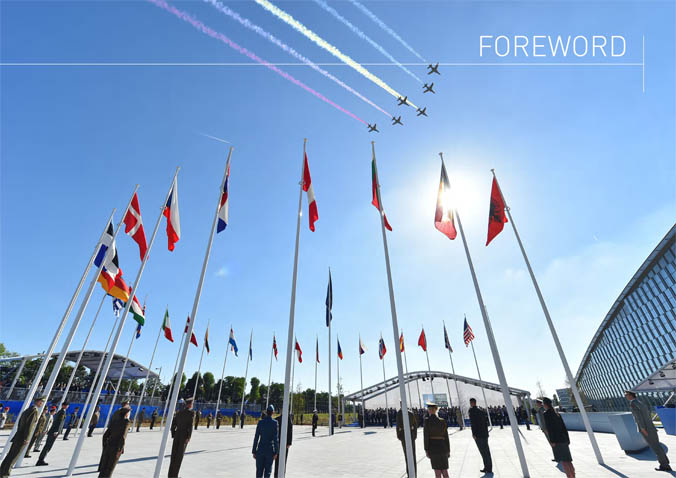
In front of the new NATO Headquarters building in Brussels stand two memorials: a section of the Berlin Wall, and a twisted girder from the wreckage of the Twin Towers in New York.
Those memorials are a powerful symbol of NATO's unshakeable commitment to our collective defence, of our solidarity and resolve in the fight against terrorism, and of the unbreakable bond that ties Europe and North America.
Read the Foreword in the Annual Report (PDF)
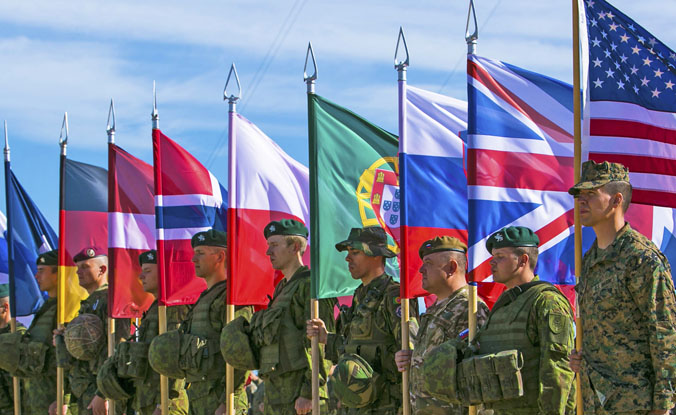
NATO's ability to preserve peace and security relies, above all, on the skill anddetermination of the men and women of Allied and partner countries' armed forces.
In 2017, tens of thousands of Allied and partner personnel were deployed on NATOmissions and operations – on land, at sea and in the air. Their willingness to serve– and the professionalism they display each day – is the single most importantcontribution to the safety of the citizens the Alliance exists to protect.
NATO recognises the debt of gratitude it owes them for the risks they take, and thesacrifices they and their families make. They are the embodiment of the Alliance'svalues and of our commitment to coming to each other's aid.
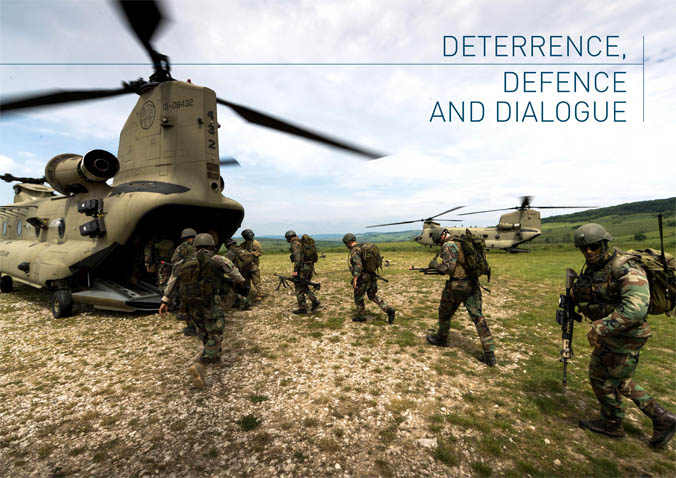
NATO's chief responsibility is to protect its citizens and nations, a task it hassuccessfully carried out for nearly 70 years. To prevent conflict and preserve peace,the Alliance must deter and defend against any security threat, no matterits complexity or origin. In the last twelve months, NATO has continued to adaptin order to do exactly that.
Read the chapter "Deterrence, Defence & Dialogue" in the Annual Report (PDF)
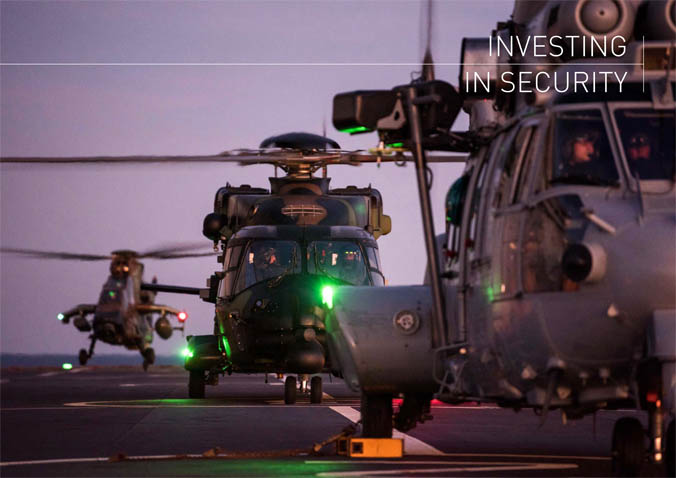
The ability of the Alliance to fulfil all its tasks depends on it having the right tools andcapabilities. That, in turn, means appropriate investment in defence, with all 29 Alliescontributing their fair share.
Read the chapter "Investing in Security" in the Annual Report (PDF)
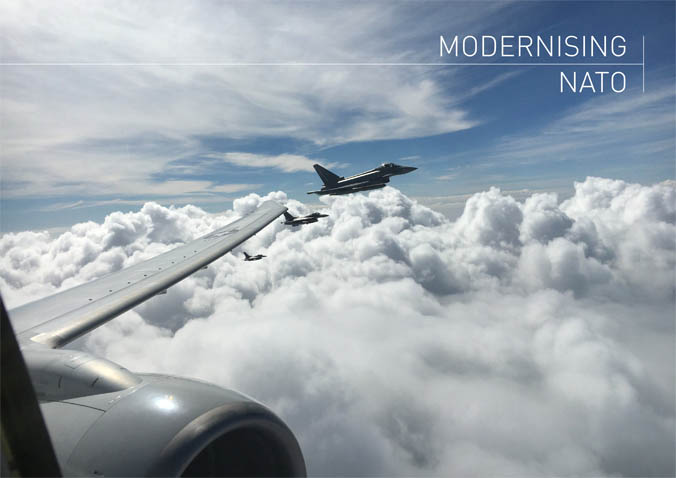
One of NATO's greatest strengths is its ability to adapt to the changing securityenvironment – something it has done again and again since its creation in 1949.In 2017, the Alliance continued to modernise and innovate to meet the challengesof a more complex security environment.
Read the chapter "Modernising NATO" in the Annual Report (PDF)
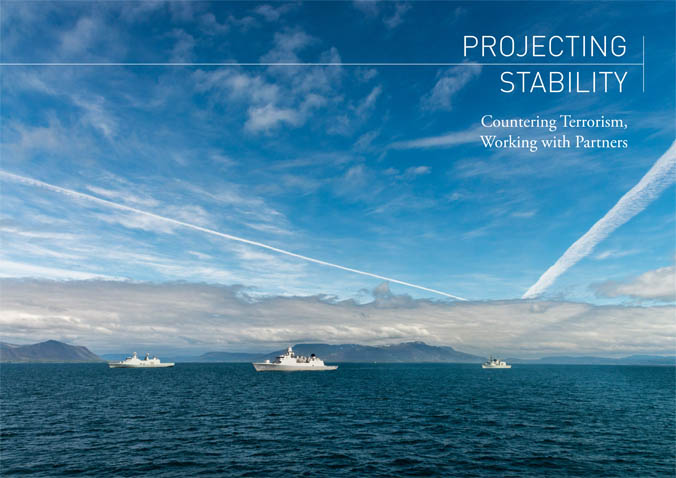
NATO's chief responsibility is the security of its 29 nations. To fulfil this mission,the Alliance needs to maintain a strong defence and deterrence at home and tofight terrorism and project stability abroad. In 2017, NATO continued to work withits partners to ensure the security of the Alliance and to help promote peace andstability beyond its borders.
Read the chapter "Projecting Stability: Countering Terrorism, Working with Partners" in the Annual Report (PDF)
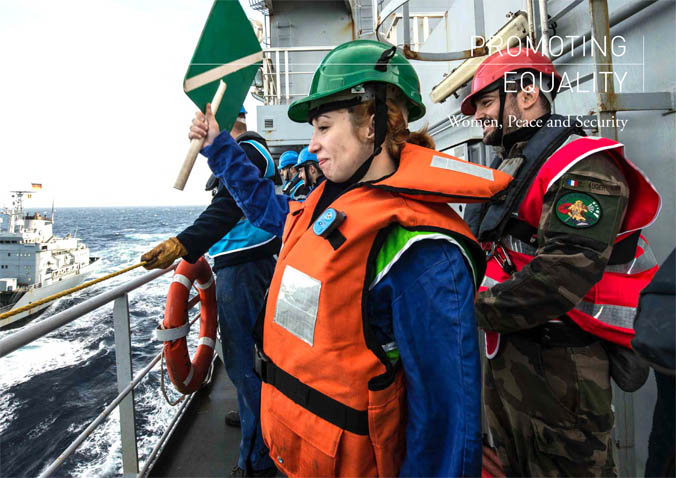
NATO has a responsibility to be a leadingprotector of women's rights. The SecretaryGeneral has stated that strengthening the role ofwomen in the armed forces is both the right andthe smart thing to do. Allies acknowledge thatintegrating gender perspectives throughout NATO'score tasks contributes to a more modern, ready andresponsive Alliance. The Alliance is committed topromoting the role of women in peace and securityand to supporting the implementation of UnitedNations Security Council Resolution 1325 andrelated resolutions on this subject.
Read the chapter "Promoting Equality: Women, Peace and Security" in the Annual Report (PDF)
A political-military alliance of 29 countries, NATO is also an adaptable organisation,committed to being efficient, flexible and accountable. 2017 was an important yearfor NATO's continuing adaptation and innovation.
Read the chapter "Organisation" in the Annual Report (PDF)

The Resolute Support Mission is a NATO-led mission totrain, advise and assist the Afghan security forces andinstitutions. The mission was launched on 1 January2015, immediately following the stand-down of theInternational Security Assistance Force.
Read the annex"Resolute Support Mission" in the Annual Report (PDF)
The NATO-led Kosovo Force's mission is to contributeto maintaining a safe and secure environmentas mandated by United Nations Security CouncilResolution 1244. In carrying out its mission, NATOcooperates and assists the United Nations, theEuropean Union and other international actors, asappropriate, to support the development of a stableand peaceful Kosovo. The Kosovo Force supports thedevelopment of professional, democratic and multiethnicsecurity structures in Kosovo. This includesNATO's support for the ongoing development of theKosovo Security Force through the provision of advice,training and capacity-building at Kosovo Security ForceBrigade level and above. The Kosovo Security Force isas an all-voluntary, professional, multi-ethnic, lightlyarmedforce. Its basic missions include crisis response,assistance to civilian authorities in responding tonatural and other disasters, explosive ordnancedisposal and civilian protection tasks.
Read the annex"Kosovo Force" in the Annual Report (PDF)
NATO collects defence expenditure data from Allies on a regular basis and presents aggregates and subsets of this information. Each Ally's Ministry of Defence reports current and estimated future defence expenditure according to an agreed definition of defence expenditure. The amounts represent payments by a national government actually made, orto be made, during the course of the fiscal year to meet the needs of its armed forces, those of Allies or of the Alliance. NATO also makes use of up-to-date economic and demographic information available from the Directorate-Generalfor Economic and Financial Affairs of the European Commission, and the Organisation for Economic Co-operationand Development.
Read the annex"Defence Expenditure of NATO Countries" in the Annual Report (PDF)