
Close
Back


From now on you can download videos from our website
If you would also like to subscribe to the newsletter and receive our latest updates, click on the button below.
Enter the email address you registered with and we will send you a code to reset your password.
The password must be at least 12 characters long, no spaces, include upper/lowercase letters, numbers and symbols.
Click the button to return to the page you were on and log in with your new password.
28 November 2017
2 MIN READ
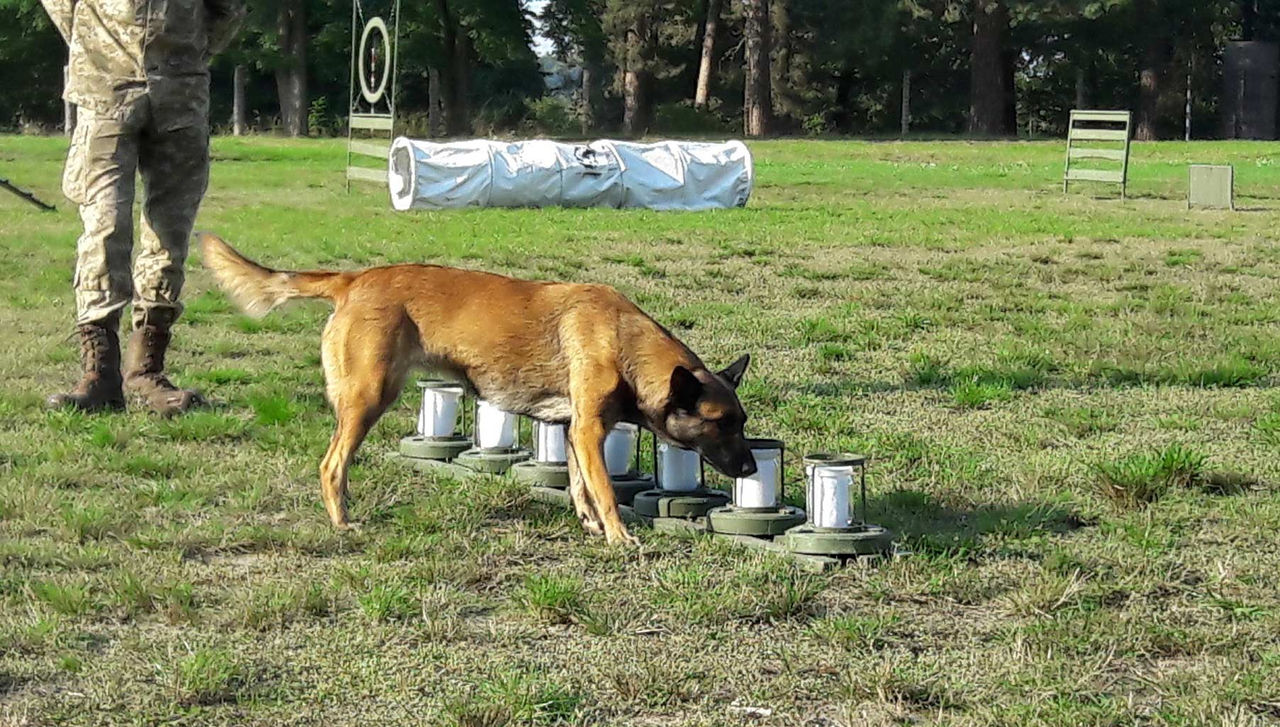
The first dog-handling, counter-narcotics training course for ten Central Asian officers started at the Dog Handling Centre of the State Border Guard of Latvia on 27 November 2017 in Rezekne, eastern Latvia. The training is part of a counter-narcotics training project that NATO has been developing with the United Nations Office on Drugs and Crime (UNODC) since early 2016.
The project provides a unique, combined approach to countering drugs-trafficking by connecting the target countries of the drugs trade in Europe and North America with the source and transit countries. During training, officers from Afghanistan, Central Asia and Pakistan can create links with their European and North American counterparts, which enable them to better combat cross-border narcotics trafficking.
Trainees can follow a range of courses at various levels. The information provided during classes is often based on the latest cases investigated by the instructors themselves, combining theoretical approaches with practical exercises. Through their participation in the course, trainees can establish a personal and professional network with their colleagues at national, regional and international levels.
“Building technical capacities and skills is the most sustainable way to empower countries as a reflection of shared responsibility, vision and commitment to address the drug control challenges that impact the world,” says Ashita Mittal, Regional Representative at the UNODC Regional Office for Central Asia based in Tashkent. “The UNODC-NATO partnership is one such example of the unique technical cooperation initiatives that provides an excellent opportunity for cross fertilisation of expertise and experiences for multiple law enforcement officers to build capacities to address the complex challenges of counter narcotics in the region.”
Training is carried out by academies and instructors from NATO and partner countries. The main training provider for the project is the Turkish International Academy against Drugs and Organised Crime (TADOC) based in Ankara, which provides training in Turkey as well as mobile training courses across the region. Training is also provided by Italy, Latvia and the United States. Earlier this year, Ukraine, a key NATO partner, also provided specialised canine training for Central Asian units in the use of sniffer dogs to detect drugs, at a training centre in the Lviv region.
Since the project began in 2016, 203 counter narcotics officers have received training, while a total of 450 are due to have passed through the NATO-UNODC courses by the end of 2017.
The partnership between NATO and UNODC allows both organisations to contribute to promoting peace, justice and strong institutions through strengthening international cooperation in combating illicit drug trafficking.
The project also contributes NATO’s Partnership for Peace (PfP) programme by increasing stability, diminishing threats to peace, and building strengthened security relationships between individual Euro-Atlantic partners and NATO, as well as among partner countries. PfP serves as a forum for practical bilateral cooperation between individual Euro-Atlantic partner countries and NATO.