
Close
Back


From now on you can download videos from our website
If you would also like to subscribe to the newsletter and receive our latest updates, click on the button below.
Enter the email address you registered with and we will send you a code to reset your password.
The password must be at least 12 characters long, no spaces, include upper/lowercase letters, numbers and symbols.
Click the button to return to the page you were on and log in with your new password.
07 November 2017
1 MIN READ
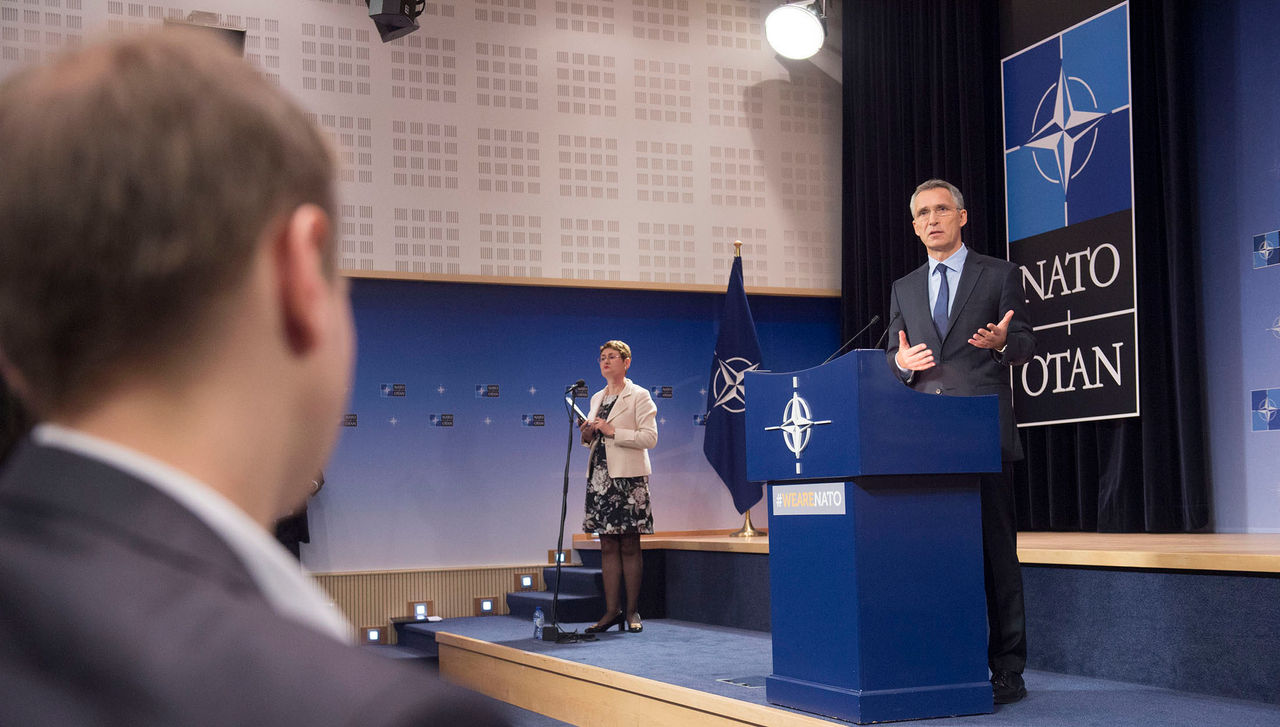
At a meeting of NATO Defence Ministers tomorrow (8 November 2017), the Alliance will address a range of issues – including NATO’s Command Structure, North Korea and Afghanistan.
Speaking at a press conference ahead of the gathering, Secretary General Jens Stoltenberg said he expected ministers to agree the basis for a revision of the Allied Command Structure – NATO’s “backbone” – ensuring it can continue to provide deterrence and defence at home, and project stability abroad. This will include “a new Command to help protect sea lines of communication between North America and Europe, and another Command to improve the movement of troops and equipment within Europe”, he said
Building on recent progress NATO has made in enhancing the ability to rapidly reinforce Allies, Mr. Stoltenberg said ministers would consider what else the Alliance can do to guarantee “our ability to move forces”. He highlighted the need for “close coordination across national governments and with the private sector”, as well as the importance of NATO and the EU continuing to work closely on this “vital issue”. Cyber-attacks are a growing threat to Allied security, and the revised NATO Command Structure would also make sure the Alliance can respond to cyber threats as effectively as it can “against attacks from land, sea or air”.
The Secretary General said another key focus of discussion among ministers would be North Korea’s ballistic missile and nuclear programmes, which are “a threat to NATO Allies, to our partners, and to the international non-proliferation regime.” He added that NATO has “the capabilities” and “the resolve to respond to any aggression”.
Finally, on Thursday, Defence Ministers and partners will review the situation in Afghanistan, and discuss commitments made by Allies and partners to send more troops to NATO’s Resolute Support training mission. Reflecting on his recent visit to Afghanistan, Mr. Stoltenberg praised the “bravery, determination and increasing capability” shown by the Afghan Security Forces.
In the margins of the NATO ministerial discussion, US Secretary of Defense James Mattis will chair a meeting of the Global Coalition to Defeat ISIS.