
Close
Back


From now on you can download videos from our website
If you would also like to subscribe to the newsletter and receive our latest updates, click on the button below.
Enter the email address you registered with and we will send you a code to reset your password.
The password must be at least 12 characters long, no spaces, include upper/lowercase letters, numbers and symbols.
Click the button to return to the page you were on and log in with your new password.
11 October 2017
1 MIN READ
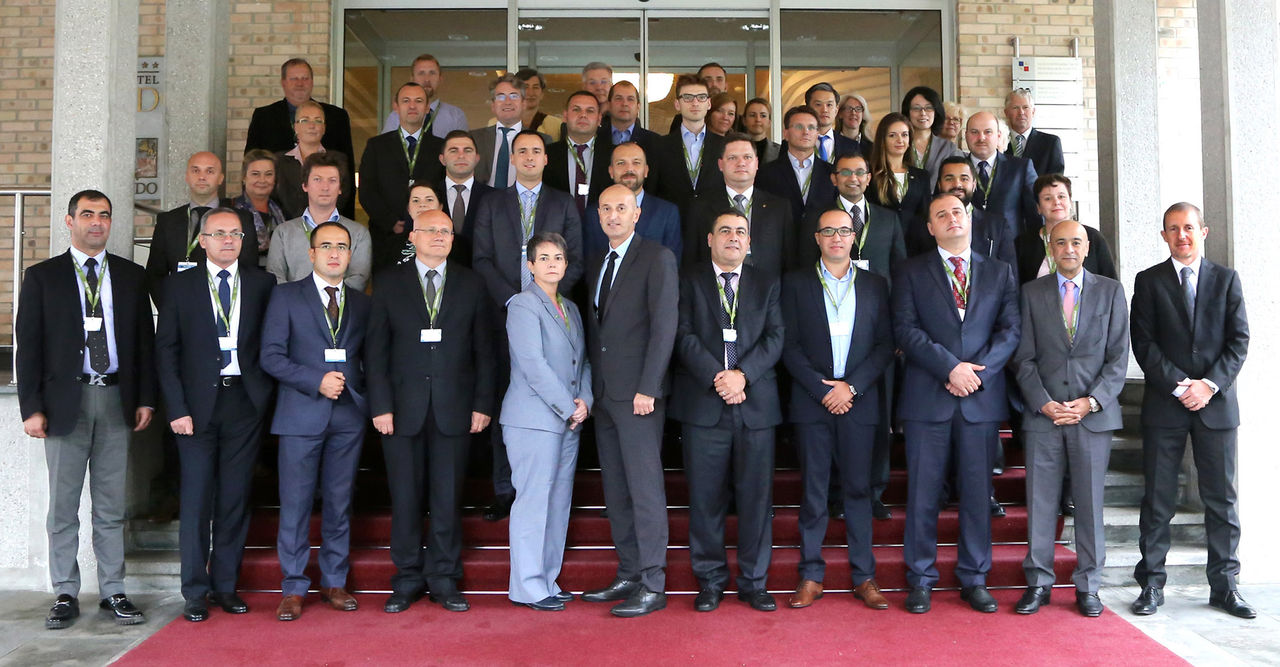
The NATO Office of Security (NOS) hosted a Security Workshop from 25 to 29 September 2017 in Brdo pri Kranju, Slovenia. Representatives came from 14 partner countries, four international organisations and the National Security Authority of Slovenia, which assisted in organising the event.
NATO speakers delivered a high-level overview of NATO security policy, procedures and standards, while inviting participants to provide insights from their perspective. The discussions focused on collaboration to share understanding and best practices.
Topics covered included elements within five domains of security: communication and information systems (CIS), industrial, information, personnel and physical. NOS officials provided guidance relating to security risk assessment, emphasising its importance in the current climate where cyber threats are a key security challenge.
They also described the role of a strong national security authority in establishing and maintaining security agreements with NATO, while Slovenia and Switzerland outlined the establishment and role of their respective national security authorities and registries. The NOS representatives elaborated on the principles behind the security agreements and arrangements that are established with non-NATO countries and international organisations for specific activities, and the objectives of and modalities for the related compliance programmes.
Participants took part in challenging syndicate exercises that allowed more informal discussions to take place while tackling security-related scenarios. The NATO team thanked them for their input during the week, and for their ideas for the content of potential future workshops.
The NATO Office of Security, as part of the Joint Intelligence and Security Division, is responsible for the overall coordination of security and for ensuring the correct implementation of NATO security policy across the Alliance.