
Close
Back


From now on you can download videos from our website
If you would also like to subscribe to the newsletter and receive our latest updates, click on the button below.
Enter the email address you registered with and we will send you a code to reset your password.
The password must be at least 12 characters long, no spaces, include upper/lowercase letters, numbers and symbols.
Click the button to return to the page you were on and log in with your new password.
06 October 2017
1 MIN READ
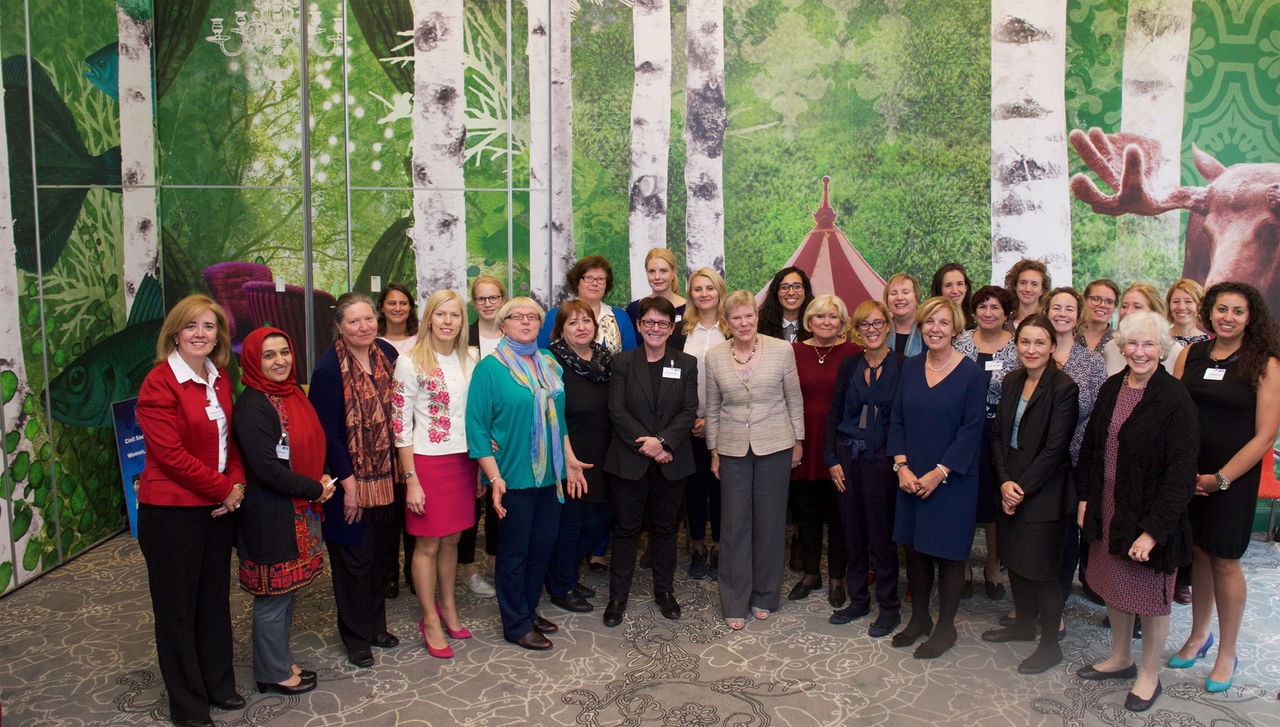
The second annual meeting of the Civil Society Advisory Panel (CSAP) took place from 1 to 3 October 2017 in Brussels. Discussions focused on increasing understanding of NATO’s achievements and challenges in implementing its United Nations Security Council Resolution (UNSCR) 1325 Policy and Action Plan and contributions to its upcoming revision. The Panel also reviewed more effective governance and working mechanisms for the CSAP and identified priorities for the year ahead.
NATO Deputy Secretary General Rose Gottemoeller joined the meeting for an exchange of views on NATO’s overall implementation of the Women, Peace and Security (WPS) agenda and took part in a question and answer session with Panel members. She welcomed the opportunity to engage with representatives of civil society. “Thank you for making NATO better,” she said.
The CSAP also met with representatives from Allied and partner nations and provided an initial overview of its key findings. The Panel’s recommendations and advice on the implementation of the WPS agenda will be shared with NATO’s staff and command structure.
The CSAP is made up of representatives from civil society organisations and networks working with conflict prevention and resolution, as well as human rights advocates, community leaders and academics. It is intended to function as a channel for dialogue and civil society feedback to NATO on the implementation of the WPS agenda. The annual meetings are facilitated by an external facilitator, the Geneva Centre for Democratic Control of Armed Forces (DCAF). The CSAP liaises on a regular basis with the office of the NATO Secretary General’s Special Representative for WPS, which serves as the high-level focal point on all aspects of NATO’s contributions to the UNSCR 1325 agenda.