
Close
Back


From now on you can download videos from our website
If you would also like to subscribe to the newsletter and receive our latest updates, click on the button below.
Enter the email address you registered with and we will send you a code to reset your password.
The password must be at least 12 characters long, no spaces, include upper/lowercase letters, numbers and symbols.
Click the button to return to the page you were on and log in with your new password.
21 September 2017
1 MIN READ
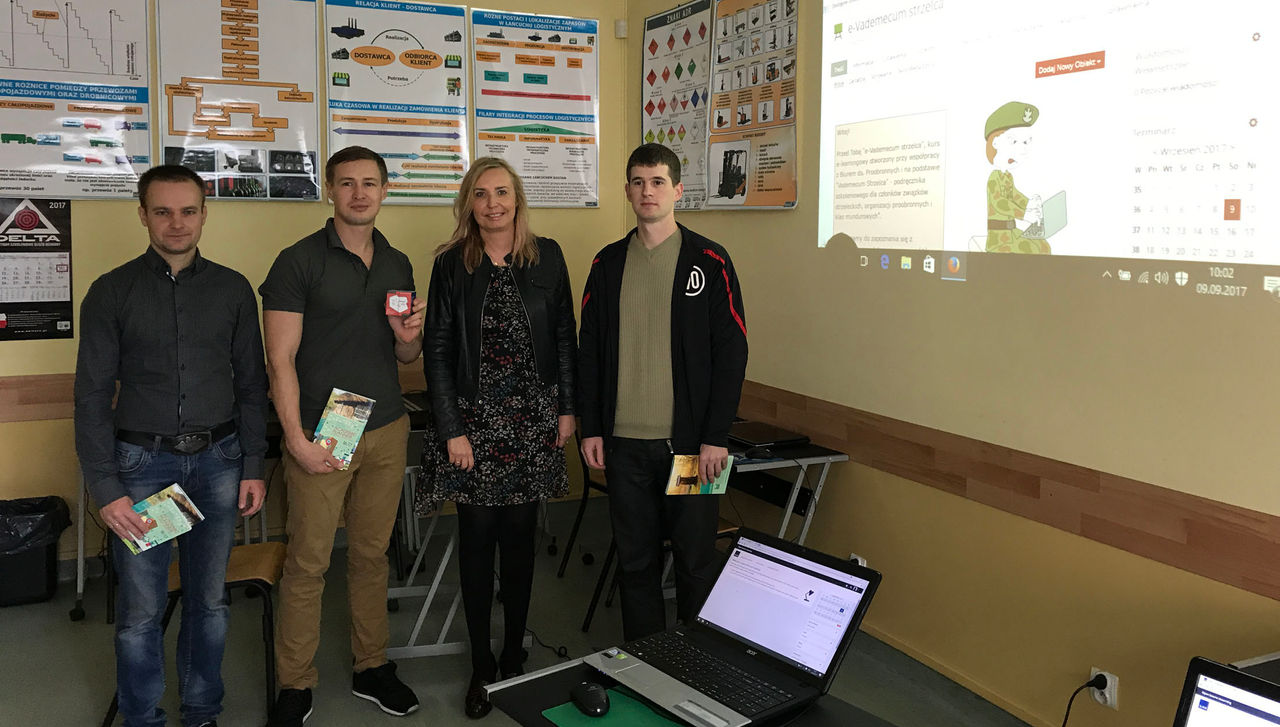
A group of ten specialists from the National Defence University (NDU) of Ukraine completed a course in electronic learning (e-learning) at the Cuiavian University in Wloclawek, Poland from 8 to 12 September 2017. They received their certification from the Rector of the Cuiavian University, Professor Stanislaw Kunikowski. The course was part of NATO’s work with Ukraine to further develop its defence education system under the Organization’s Defence Education Enhancement Programme (DEEP).
Through DEEP, Ukraine successfully completed four e-learning trainings in March, June and September this year. The graduates will form a pool of critical specialists at the newly established Advance Distributed Learning Centre to further enhance capacity in this field. The NDU is planning to develop its own e-learning courses for officers that will complement the current stationary courses and enable focusing on a practical and case-scenario based instruction.
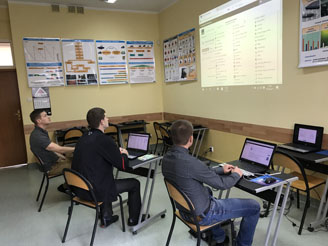
E-learning is an education method that is delivered electronically through a computer or other device. It uses online services that enable users to create courses, simulations, or other educational experiences. It is becoming an essential part of professional military education and is also one of the fastest growing areas of NATO’s education and training capabilities in the area of technology. DEEP uses this tool to provide education, training and performance support to partner countries.
DEEPs are tailored programmes through which the Alliance advises partners on how to build, develop and reform educational institutions in the security, defence and military domain. Projects are currently running in 12 countries: Afghanistan, Armenia, Azerbaijan, Georgia, Kazakhstan, Kyrgyzstan, Mauritania, the Republic of Moldova, Serbia, the former Yugoslav Republic of Macedonia1, Tunisia and Ukraine. They focus in particular on faculty building and curriculum development, covering areas such as teaching methodology, leadership and operational planning.