
Close
Back


From now on you can download videos from our website
If you would also like to subscribe to the newsletter and receive our latest updates, click on the button below.
Enter the email address you registered with and we will send you a code to reset your password.
The password must be at least 12 characters long, no spaces, include upper/lowercase letters, numbers and symbols.
Click the button to return to the page you were on and log in with your new password.
13 September 2017
2 MIN READ
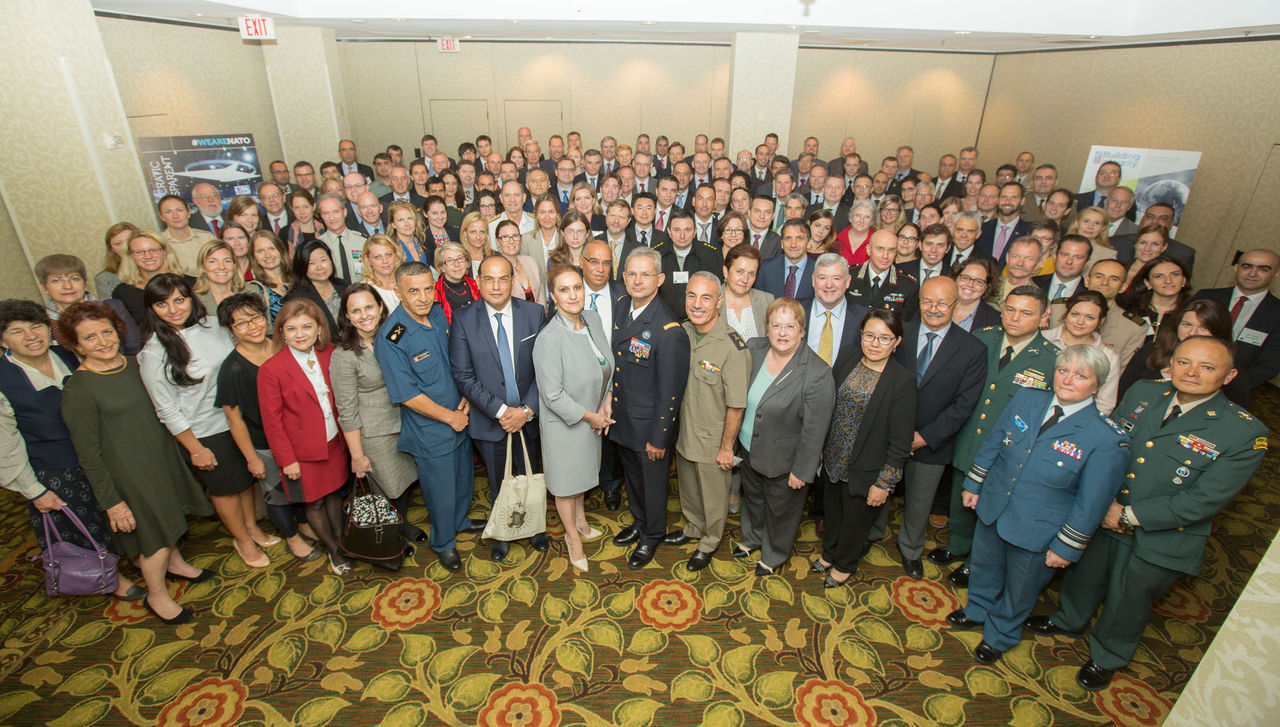
NATO’s Building Integrity (BI) Programme and the United States Department of Defense hosted the biannual conference “Projecting Stability through Good Governance and Institutional Building” from 11 to 13 September 2017 in Washington DC.
The conference marked the 10th anniversary of the NATO BI Programme and attracted more than 185 participants from NATO and partner nations, non-governmental and international organisations and subject matter experts, as well as from NATO Headquarters, Commands and Agencies. The event served as a forum for exploring new ideas for mainstreaming BI into NATO’s core tasks, and enhancing its contribution to projecting stability beyond Alliance territory.
NATO Assistant Secretary General for Political Affairs and Security Policy Alejandro Alvargonzález highlighted the importance that NATO and NATO Allies attach to this topic. “NATO is an alliance of values, human rights, democracy, etc. These values are important for NATO, our collaboration on these issues makes NATO stronger,” he said. “Building integrity means building defence institutions on the foundations of transparency, accountability and integrity.” He added, “The BI Programme is a great example of NATO’s efforts to strengthen good governance”.
Acting United States Assistant Secretary of Defense for Strategy, Plans and Capabilities Todd Harvey reassured conference participants, telling them, “the United States is committed to working to bring BI into the three core tasks of the Alliance: crisis management, collective defence, and cooperative security”. Affirming that counter-corruption is a top priority for United States Secretary of Defense Mattis, Mr Harvey underlined, “Probity at all levels of oversight and management is a vital precursor for long-term stability and security, both at home and abroad”.
Civilian and military participants agreed that from a strategic and practical point of view, this topic is of crucial importance for global peace and stability. They also stressed the importance of having a strategic common approach to understanding of corruption as a security risk and proposed concrete steps and initiatives to strengthen transparency, accountability and integrity in the defence and related security sector.
Supreme Allied Commander Transformation General Denis Mercier addressed the complexity of the security environment as the new norm. “It is impossible to tackle security problems as a single country or entity, it is collaboration forums like the BI Conference that help us overcome them,” he stressed.
Ambassador Maciej Popowski, Deputy Director-General for Neighbourhood Policy and Enlargement Negotiations from the European Commission, said, “In capacity building you never walk alone, you always do it with others and that is why I am happy to have NATO with us as the security partner of choice”. He confirmed that the European Union (EU) has taken the decision to make a financial contribution of 2 million Euros to NATO BI.
Ms Susan Pond from NATO’s Political Affairs and Security Policy Division said, “We have made significant progress since BI was launched at NATO HQ in 2007. The decisions to develop a NATO BI Policy and to recognise BI as a NATO education and training discipline provide the strategic framework to ensure sustainability.” She added, “BI is part of NATO’s DNA. Looking to the future, I am also grateful for the offers from nations to host future BI events and for the financial contributions from Luxembourg and the EU to support BI 2018-2020”.
The BI Programme is a defence capacity-building programme that contributes to the Alliance’s mission to safeguard the freedom and security of its members. It provides Allies and partner countries with tailored support to reduce the risk of corruption in the defence and related security sector and to embed good governance principles and practices in their defence establishments.