
Close
Back


From now on you can download videos from our website
If you would also like to subscribe to the newsletter and receive our latest updates, click on the button below.
Enter the email address you registered with and we will send you a code to reset your password.
The password must be at least 12 characters long, no spaces, include upper/lowercase letters, numbers and symbols.
Click the button to return to the page you were on and log in with your new password.
19 October 2016
2 MIN READ
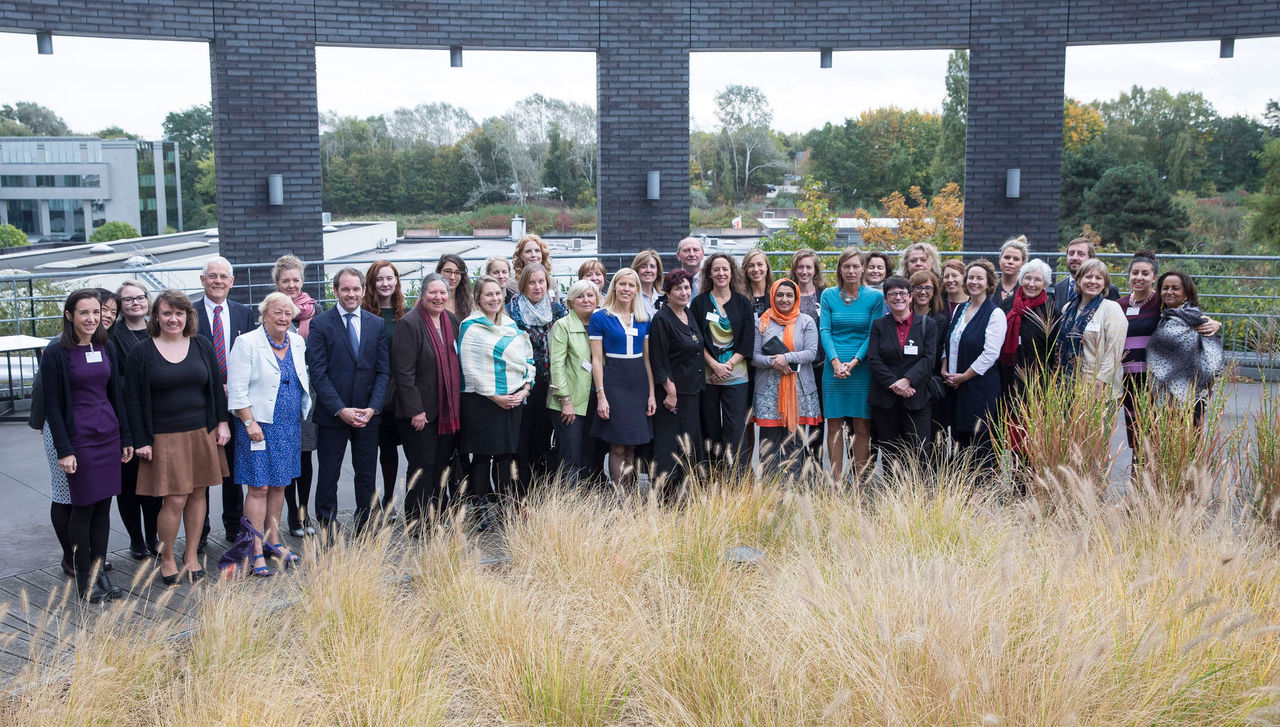
Today’s complex security challenges make it ever more important to hear the voices of men and women directly affected by conflict and insecurity. NATO is breaking new ground in institutionalising sustained dialogue with representatives of civil society who work on conflict prevention and resolution, security and women’s empowerment, from grassroots activism to national and international policy. Convened by Marriet Schuurman – the NATO Secretary General’s Special Representative for Women, Peace and Security – the Civil Society Advisory Panel on Women, Peace and Security met for the first time on 18 October 2016, in Brussels.
Women’s rights organisations, human rights advocates, community leaders, academics and peace organisations have a deep understanding of the challenges faced in seeking to build inclusive security and sustainable peace.
NATO already has come to appreciate the value of engaging with civil society in areas where it leads operations, particularly in Kosovo and Afghanistan. NATO now wishes to harness such insights and to benefit from civil society contributions more broadly and more systematically as it strengthens its implementation of United Nations Security Council Resolution (UNSCR) 1325 and related Resolutions on Women, Peace and Security. As Marriet Schuurman stated, “If peace is to be sustainable, we must be inclusive.”
The Panel views its role as “the voice of the people that NATO should protect and answer to the needs of boys, girls, women and men in conflict-affected countries”. It brings together 28 individuals and institutions from countries and areas experiencing conflict, including Afghanistan and Ukraine, as well as countries engaged in supporting peacebuilding. They bring a wide range and depth of expertise in peace negotiations, community security, training, research, and development and monitoring of National Action Plans on Women, Peace and Security.
The Panel met with NATO staff for an initial discussion on NATO’s policy and action plan for the implementation of UNSCR 1325 and related Resolutions on Women, Peace and Security across NATO’s core tasks. It agreed its work methods for advising NATO on the implementation and revision of this policy and action plan and planned a series of activities.
The Civil Society Advisory Panel will meet each year and engage on an ongoing basis with the Special Representative for Women, Peace and Security and NATO staff. The results of the Panel’s work will be shared and discussed across NATO’s staff and command structure to help inform work in a number of areas where gender perspectives are integrated and barriers to women's equal participation removed.