
Close
Back


From now on you can download videos from our website
If you would also like to subscribe to the newsletter and receive our latest updates, click on the button below.
Enter the email address you registered with and we will send you a code to reset your password.
The password must be at least 12 characters long, no spaces, include upper/lowercase letters, numbers and symbols.
Click the button to return to the page you were on and log in with your new password.
19 May 2016
2 MIN READ
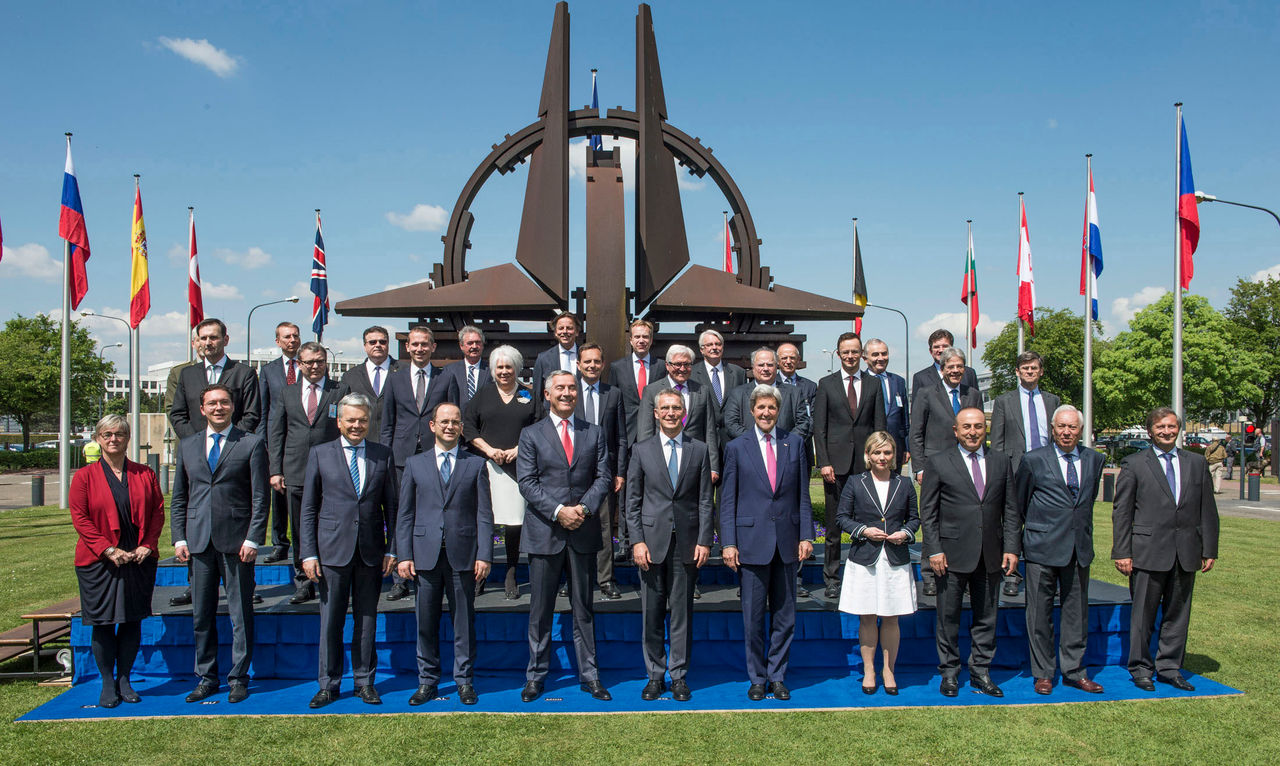
Foreign Ministers agreed on Thursday (19 May 2016) that NATO should do more to project stability beyond the Alliance’s borders. While stressing that NATO must retain the ability to deploy combat forces when needed, Secretary General Jens Stoltenberg said “we must also do more to train up local forces, to secure their own territory, and push back against extremist groups.” He underlined that such efforts are important for “preserving security here at home”.
Ministers reviewed the Alliance’s support for partners to the south and the east, and considered how to expand NATO’s efforts. Ongoing initiatives include training for hundreds of Iraqi officers in Jordan; cyber defence projects with Jordan; and help developing special forces training and a national intelligence centre for Tunisia. To the east, NATO provides capacity-building help to Georgia and Moldova, and helps support Ukraine with its ongoing reforms.
The Secretary General announced that he would send “an assessment team to Iraq as soon as possible,” following a request by Prime Minister Al-Abadi to expand NATO training into Iraq. Ministers also discussed how the Alliance could further support the Global Coalition to Counter ISIL, including with AWACS surveillance planes.
Ministers also decided to continue preparatory work with a view to assisting Libya strengthen its defence and security institutions, provided the Libyans so request.
“We also agreed that the Alliance can do more in the Mediterranean Sea, in cooperation with the European Union and other actors,” said the Secretary General. He explained that NATO’s Operation Active Endeavour in the Mediterranean will become a broader maritime security operation, including tasks such as upholding freedom of navigation, interdiction, and supporting maritime counter-terrorism.
NATO has a long history of projecting stability, through operations in Afghanistan and Kosovo, military training missions such as in Iraq, and capacity-building for over 40 partners. “But we can and should do more,” concluded Mr. Stoltenberg.