
Close
Back


From now on you can download videos from our website
If you would also like to subscribe to the newsletter and receive our latest updates, click on the button below.
Enter the email address you registered with and we will send you a code to reset your password.
The password must be at least 12 characters long, no spaces, include upper/lowercase letters, numbers and symbols.
Click the button to return to the page you were on and log in with your new password.
02 April 2016
1 MIN READ
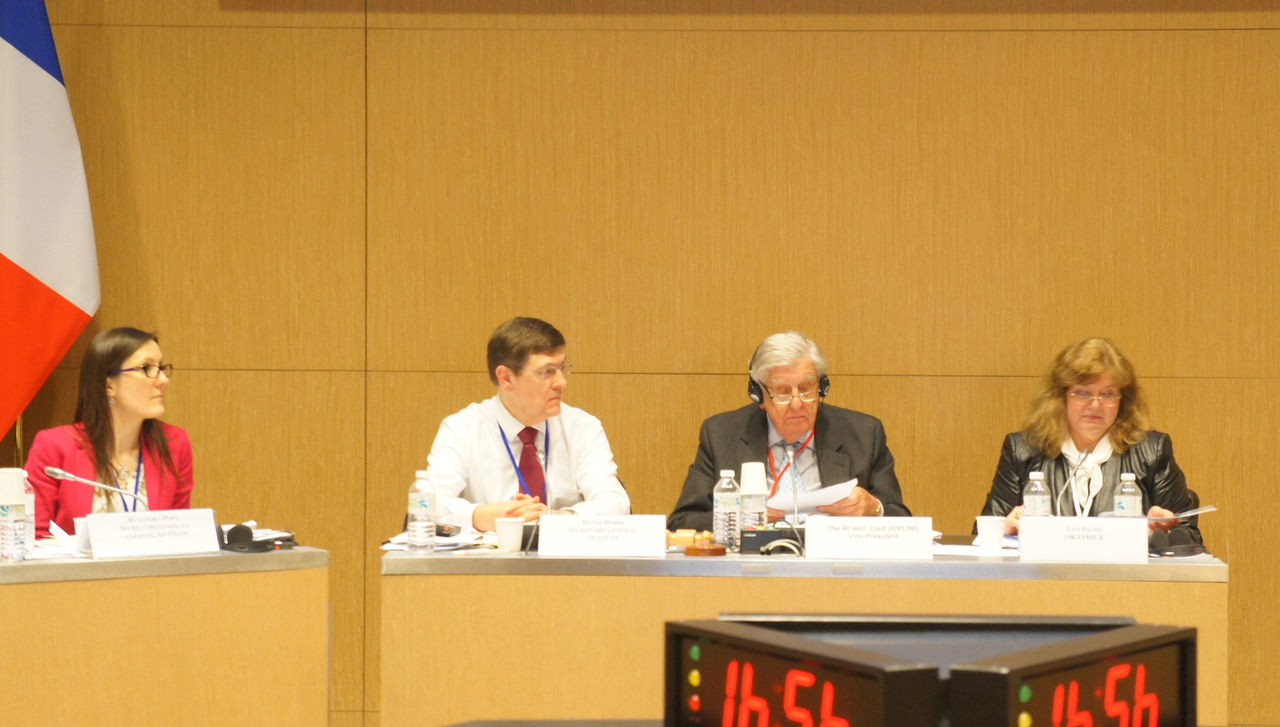
On 2 April 2016, the Chairman of the International Board of Auditors for NATO (IBAN) Ms Lyn Sachs provided a briefing to the NATO Parliamentary Assembly (NPA) at its Spring Standing Committee Meeting. She presented the audit findings of the NPA accounts and the Parliamentary Assembly Provident fund.
Ms Sachs also updated the audience on the advances on the financial transparency and accountability of NATO and the push to make financial statements public. For instance, the NATO accounting framework, the NATO financial regulations, and executive summaries of the military and civilian budgets are published on the NATO website.
She briefed the audience on areas of improvement such as timeliness of audit reports; consistent look and presentation of financial statements; new NATO financial regulations expectations in the areas of internal auditing and risk management; and the increase in the number of IBAN performance audits and their impact.
To conclude, Ms Sachs explained that there is not one financial picture of NATO that combines NATO’s financial position, performance, cash flows and budgets relevant to all NATO bodies. There are separate financial statements from, for instance Allied Command Operations, Allied Command Transformation, the Science and Technology Organization, the International Staff, the International Military Staff and the NATO Communications and Information Agency. She therefore recommended consolidating the financial statements of all common-funded NATO bodies to allow readers of the financial statements, including member states, NATO governing bodies and the public, to have a single document that would allow them to more clearly understand the total amount of funding NATO receives and how this funding is used.