
Close
Back


From now on you can download videos from our website
If you would also like to subscribe to the newsletter and receive our latest updates, click on the button below.
Enter the email address you registered with and we will send you a code to reset your password.
The password must be at least 12 characters long, no spaces, include upper/lowercase letters, numbers and symbols.
Click the button to return to the page you were on and log in with your new password.
30 September 2015
1 MIN READ
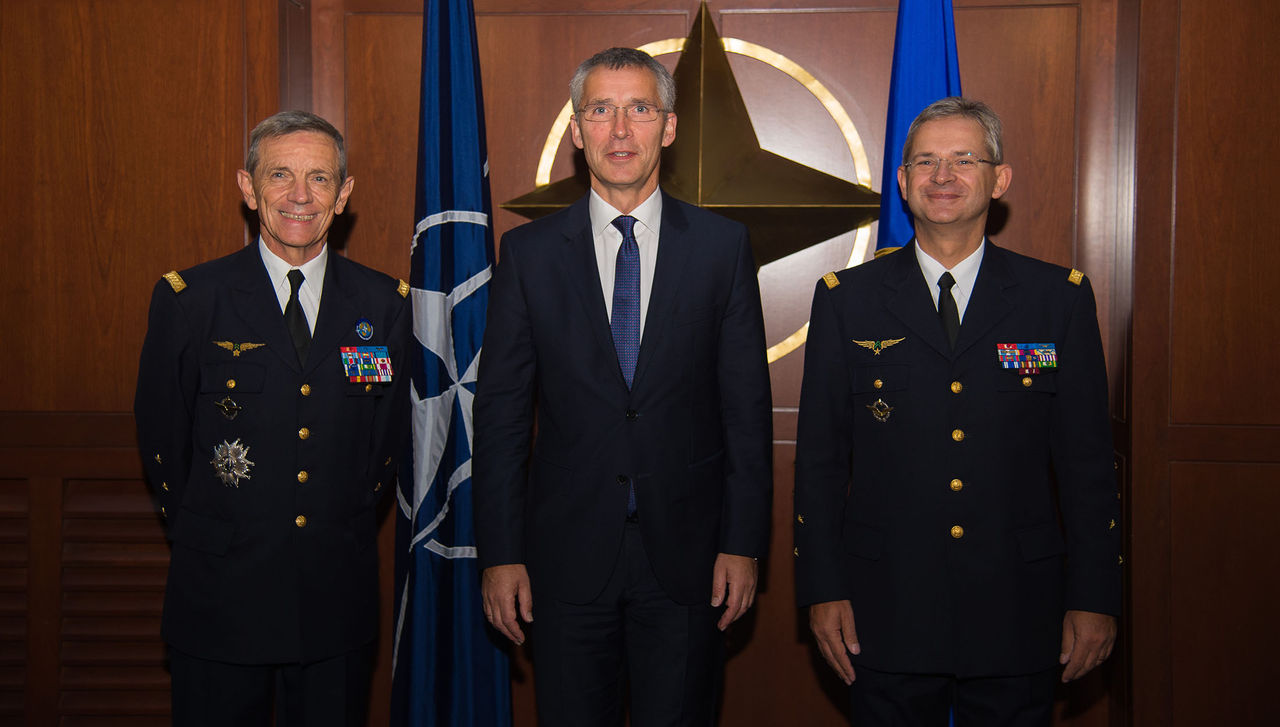
NATO Secretary General Jens Stoltenberg, together with Deputy Secretary General Ambassador Alexander Vershbow, Ambassadors from the North Atlantic Council and members of the Military Committee attended Wednesday’s (30 September 2015) change-of-command ceremony at Allied Command Transformation (ACT) headquarters in Norfolk, Virginia. The ceremony marked the official handover of the post of Supreme Allied Commander Transformation (SACT) from General Jean-Paul Paloméros to General Denis Mercier.
The Secretary General thanked French Air Force Gen. Paloméros for his contributions as SACT over the past three years and presented him with the NATO Meritorious Service Medal. “Thanks to your leadership the Alliance is now in a better position to face the future,” said Mr. Stoltenberg. He welcomed Gen. Mercier, the former Chief of Staff for the French Air Force, to his new command.
During his visit to Norfolk, the Secretary General participated in a tree-planting ceremony on the site where the NATO command has been since 1952. He also met with NATO staff, thanking them for their important work to ensure Allies have the right capabilities and equipment to keep NATO strong amid a changed security environment. The Secretary General lauded the local community in Norfolk for welcoming and supporting NATO staff for more than sixty years.
The Supreme Allied Commander Transformation is one of NATO’s two strategic commanders. Allied Command Transformation is responsible for promoting and overseeing the continuing transformation of Alliance forces and capabilities. The command helps to identify and prioritise future capability and interoperability requirements and channels the results into NATO’s defence planning process. ACT is also responsible for NATO’s training and education programmes.