
Close
Back


From now on you can download videos from our website
If you would also like to subscribe to the newsletter and receive our latest updates, click on the button below.
Enter the email address you registered with and we will send you a code to reset your password.
The password must be at least 12 characters long, no spaces, include upper/lowercase letters, numbers and symbols.
Click the button to return to the page you were on and log in with your new password.
24 June 2015
2 MIN READ
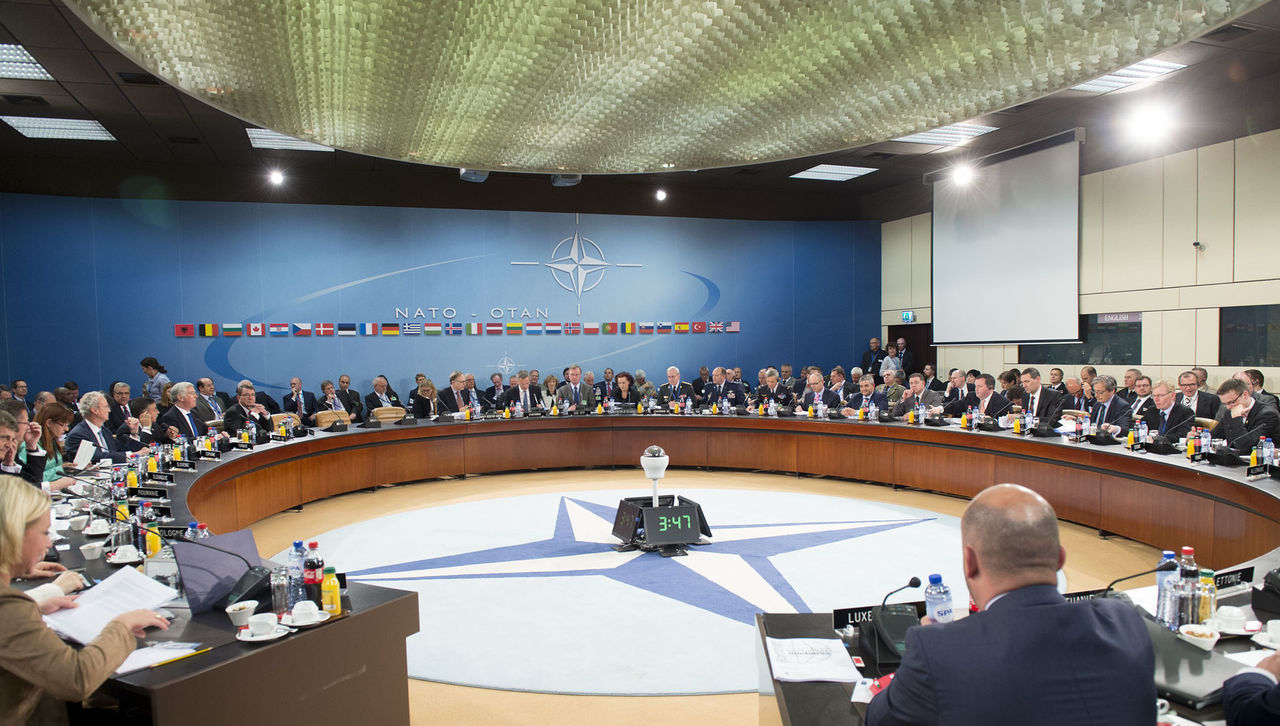
Defence Ministers on Wednesday (24 June 2015) took key decisions on strengthening the Alliance’s collective defence, including by increasing the strength and capability of the NATO Response Force. “We have just taken another step forward in adapting NATO to our changed and more challenging security environment,” said Secretary General Jens Stoltenberg, adding “we are clearly making a lot of progress”.
NATO Defence Ministers decided on air, maritime, and special forces components of the enhanced NATO Response Force (NRF). The NRF will now consist of up to 40,000 personnel – a major increase from the previous level of 13,000. Ministers further took measures to speed up political and military decision-making, including authority for NATO’s Supreme Allied Commander Europe to prepare troops for action as soon as a political decision is made. Allies also approved a new concept of advance planning.
Allies finalized details on the six small headquarters being set up in Bulgaria, Estonia, Latvia, Lithuania, Poland, and Romania. “They will each consist of around 40 people, and will play a key role in planning, exercises, and assisting potential reinforcement,” the Secretary General explained. In addition, ministers decided to establish a new Joint Logistics Headquarters, to facilitate the rapid movement of forces when necessary.
“We are carefully assessing the implications of what Russia is doing, including its nuclear activities,” the Secretary General said. He added that NATO is working on how to deal with hybrid threats, including through close cooperation with the European Union. “We do not seek confrontation, and we do not want a new arms race,” Mr. Stoltenberg said. He stressed, “we want to keep our countries safe... this is our job.”
The Secretary General welcomed that NATO’s very high readiness force “is now operational”, and that next year, it “will available to respond rapidly to any contingency.” He further welcomed the announcement by US Secretary of Defense Ash Carter on the pre-positioning of equipment and enablers in Europe, calling it proof of “a truly transatlantic effort to reinforce our collective defence.”
Ministers reviewed defence spending figures, in light of the commitment made by Allied leaders last September to increase defence spending over the coming decade. “The picture is mixed,” the Secretary General said, adding that “while some progress has been made, we need to see more.”
The defence ministers also endorsed a defence capacity building package for Moldova. The Secretary General noted that Allies look forward to finalizing a defence capacity building package for Iraq “as soon as possible.”