
Close
Back


From now on you can download videos from our website
If you would also like to subscribe to the newsletter and receive our latest updates, click on the button below.
Enter the email address you registered with and we will send you a code to reset your password.
The password must be at least 12 characters long, no spaces, include upper/lowercase letters, numbers and symbols.
Click the button to return to the page you were on and log in with your new password.
03 June 2014
2 MIN READ
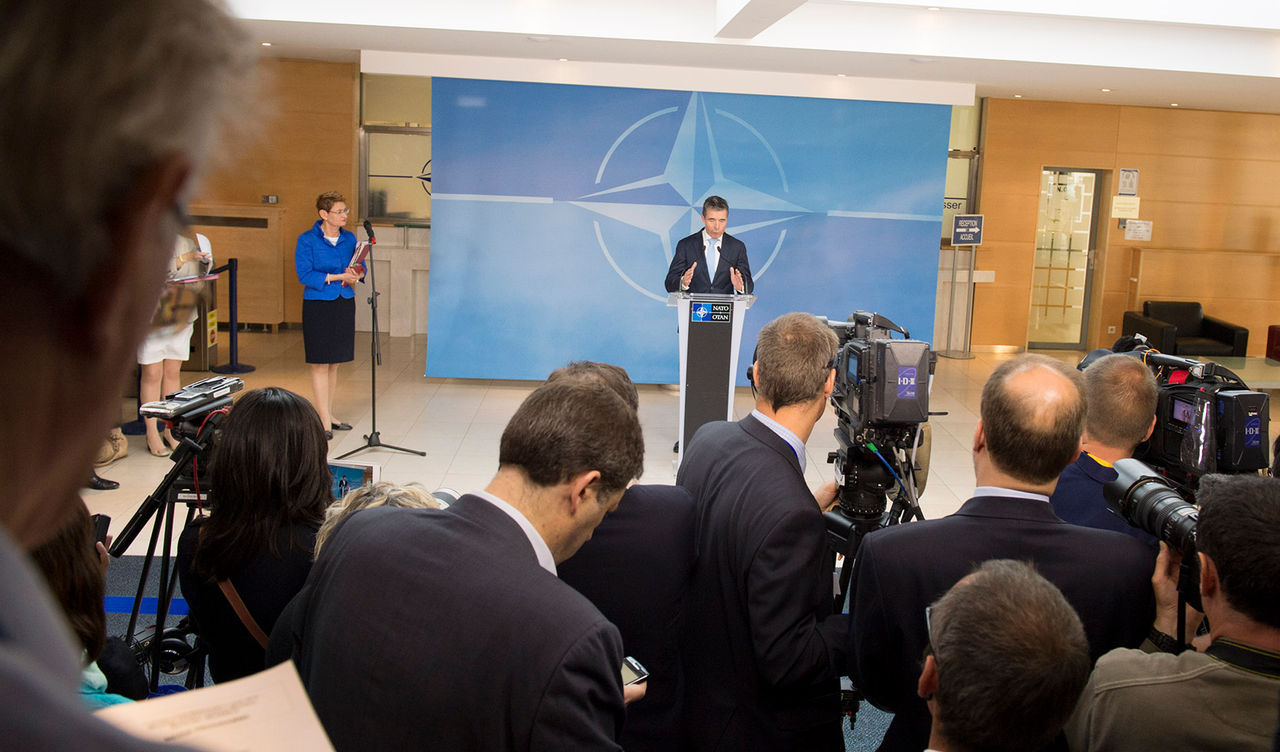
NATO Defence Ministers will review collective defence measures in the wake of the Russia-Ukraine crisis and discuss preparations for the NATO Summit in Wales, NATO Secretary General Anders Fogh Rasmussen said at the start of the two-day Ministerial on Tuesday (3 June 2014). “We are facing a new security landscape because of Russia’s aggression against Ukraine”, the NATO Secretary General said. “We have already taken immediate steps. In a strong show of solidarity, every single Ally, from both sides of the Atlantic, contributes to bolstering our collective defence, including deployment of ships, aircraft and troops. It really is all for one and one for all”, Mr Fogh Rasmussen added.
In the first working session Ministers will review the measures to enhance collective defence that were taken immediately after the start of the Russia-Ukraine crisis, and look at the longer term implications of Russia’s aggression against Ukraine.
The NATO Secretary General said the Ukraine crisis has shown that the range of security threats NATO is facing is increasing and becoming more unpredictable. “We need to make NATO fitter, faster and more flexible. We will do that through a Readiness Action Plan, to make sure our forces are even more responsive, with the right capabilities, the right training and the right resources. This work is already ongoing, but the crisis makes it more urgent”, Mr Fogh Rasmussen said.
The 28 Allies will also discuss the broader preparations for the Wales Summit in terms of readiness, military capabilities and defence investment.
Ministers will also hold a session of the NATO-Ukraine Commission to discuss the security situation in Ukraine and priorities for defence cooperation between NATO and Ukraine in light of the crisis and following the landmark presidential election.
On the second day of the Ministerial meeting, the NATO-Georgia Commission will examine the current status of Georgia’s defence reforms, and plans for further work. Defence Ministers will also discuss the wider regional implications of the Russia-Ukraine crisis.
The ministerial will conclude with a meeting of ISAF troop contributing nations and the Afghan defence minister. The European Union High Representative for Foreign Affairs and Security Policy, Catherine Ashton and the United Nations Secretary General’s Special Representative for Afghanistan, Jan Kubis have also been invited. They will assess the current security situation, progress in the transition of security responsibility to Afghan security forces and planning for NATO’s new non-combat mission to train, advise and assist the Afghan forces after 2014. Ministers will also review the political transition following the 5 April elections, including with a view to the second round in June.