
Close
Back


From now on you can download videos from our website
If you would also like to subscribe to the newsletter and receive our latest updates, click on the button below.
Enter the email address you registered with and we will send you a code to reset your password.
The password must be at least 12 characters long, no spaces, include upper/lowercase letters, numbers and symbols.
Click the button to return to the page you were on and log in with your new password.
22 May 2014
1 MIN READ
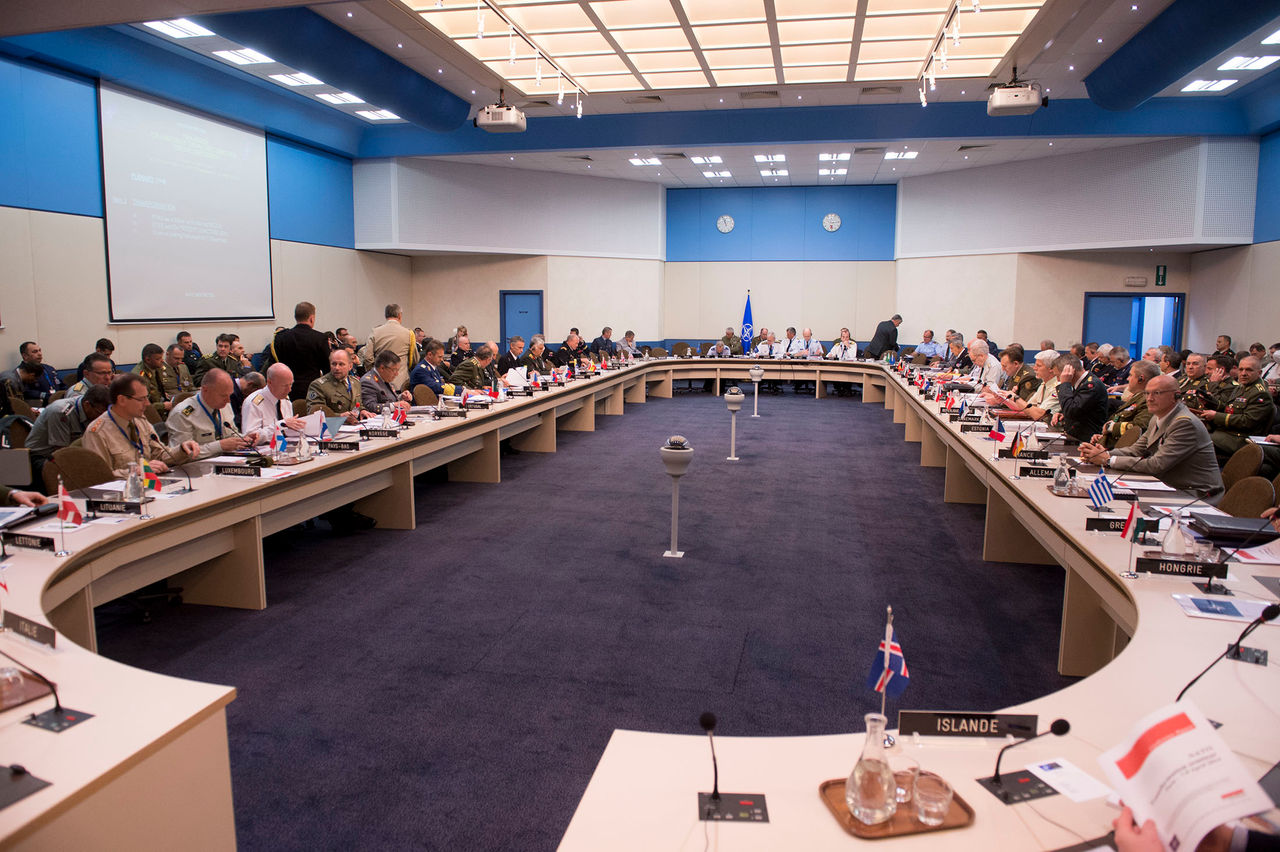
In a two-day Military Committee meeting, Chiefs of Defence of the 28 Allied nations discussed a wide range of security issues and provided clear and unequivocal military advice to Ministers and Heads of State and Government on the key Summit themes.
The 171st Military Committee in Chiefs of Defence session came at a challenging moment for the Alliance. Ahead of the NATO Summit in Wales in September and taking into account the significance of recent events in Ukraine, NATO Chiefs of Defence reaffirmed the need for NATO to be ready for a wide range of potential threats both near and far abroad. “Be these threats conventional or asymmetrical, the days of binary solutions are gone... The challenges we face are global and we must address them as such,” General Knud Bartels, Chairman of the NATO Military Committee stated.
In order to ensure capability, readiness and usability of military forces, NATO Chiefs of Defence agreed to operationalize the Alliance Maritime Strategy and enhance Education, Training, Exercises and Evaluation. They also agreed that NATO and its member nations need to address capability shortfalls, training and readiness through investment, activity and cooperation. “Certainly, investments cost money but the price for insecurity is much more expensive and we all agree to that,” stressed General Bartels.
From a military perspective, NATO Chiefs of Defence emphasised the benefits of cooperation with partners in terms of interoperability and mutual understanding. “Partners have a great deal to offer and we should continue to focus on strengthening relationships and interoperability, especially with those Partners who express their will to operate alongside NATO,” noted General Bartels.
Finally, the Defence Chiefs reaffirmed their solid commitment to the ISAF mission and to establish a new training mission after 2014, once the necessary legal framework is in place. “The Taliban have failed to disrupt the first round of presidential elections in April. That was a clear blow to them and other enemies of Afghanistan and it reflects that the Afghan National Security Forces are very capable of dealing with the security situation in Afghanistan. The Afghan people, and we, can be justifiably proud of our collective achievements to date,” concluded General Bartels.