
Close
Back


From now on you can download videos from our website
If you would also like to subscribe to the newsletter and receive our latest updates, click on the button below.
Enter the email address you registered with and we will send you a code to reset your password.
The password must be at least 12 characters long, no spaces, include upper/lowercase letters, numbers and symbols.
Click the button to return to the page you were on and log in with your new password.
31 March 2014
1 MIN READ
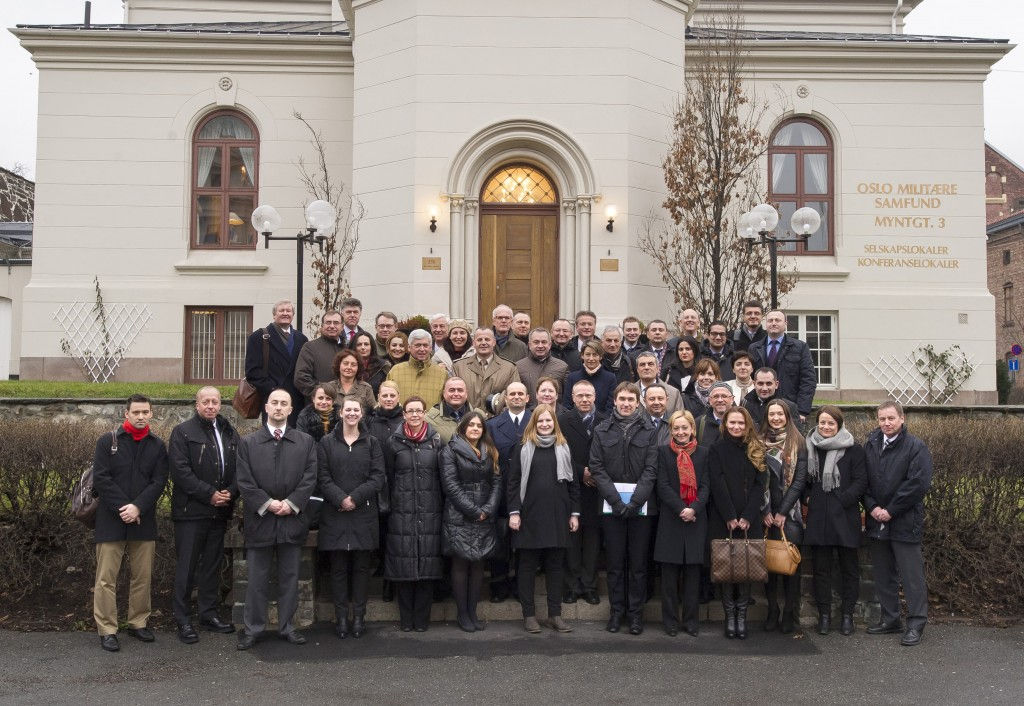
Representatives from 19 NATO and partner countries gathered in Norway to discuss plans to build integrity in the defence and security sector at a conference held at the Oslo Military Society from 3 to 6 March.
The event provided participants with comprehensive knowledge on how to develop an integrity plan for a country. Ine Eriksen Søreide, Norwegian Minister of Defence, highlighted that such integrity tools are important for any country in adhering to the internationally recognised rules and principles in fighting corruption. “As a starting point, I think we may agree that all countries, not only those emerging from conflict or in a transition from a non-democratic system of government, should spend time addressing the issue of corruption,” she said.
As one of the lead nations for NATO’s Building Integrity programme, Norway has been exemplary in completing the self-assessment questionnaire and the peer review process, which are both official NATO tools for enhancing transparency, accountability and integrity in the defence and security sector.
Dr Alberto Bin, Director of NATO’s Integration, Partnerships and Cooperation Directorate also underlined the importance of a cooperative approach to preventing corruption. “In the current economic climate, with public expenditures decreasing across the board, all nations are faced with the challenge of finding the financial resources to maintain and enhance capabilities,” he explained. “Our operational experience confirms that corruption has a direct impact on security and the ability of commanders to achieve objectives. Simply put, corruption costs money and it costs lives,” he concluded.
More than 60 participants attended the conference, which was the first major event hosted by the Norwegian Centre for Integrity in the Defence Sector since it became the Department Head for the Building Integrity programme in September 2013.