
Close
Back


From now on you can download videos from our website
If you would also like to subscribe to the newsletter and receive our latest updates, click on the button below.
Enter the email address you registered with and we will send you a code to reset your password.
The password must be at least 12 characters long, no spaces, include upper/lowercase letters, numbers and symbols.
Click the button to return to the page you were on and log in with your new password.
26 February 2014
1 MIN READ
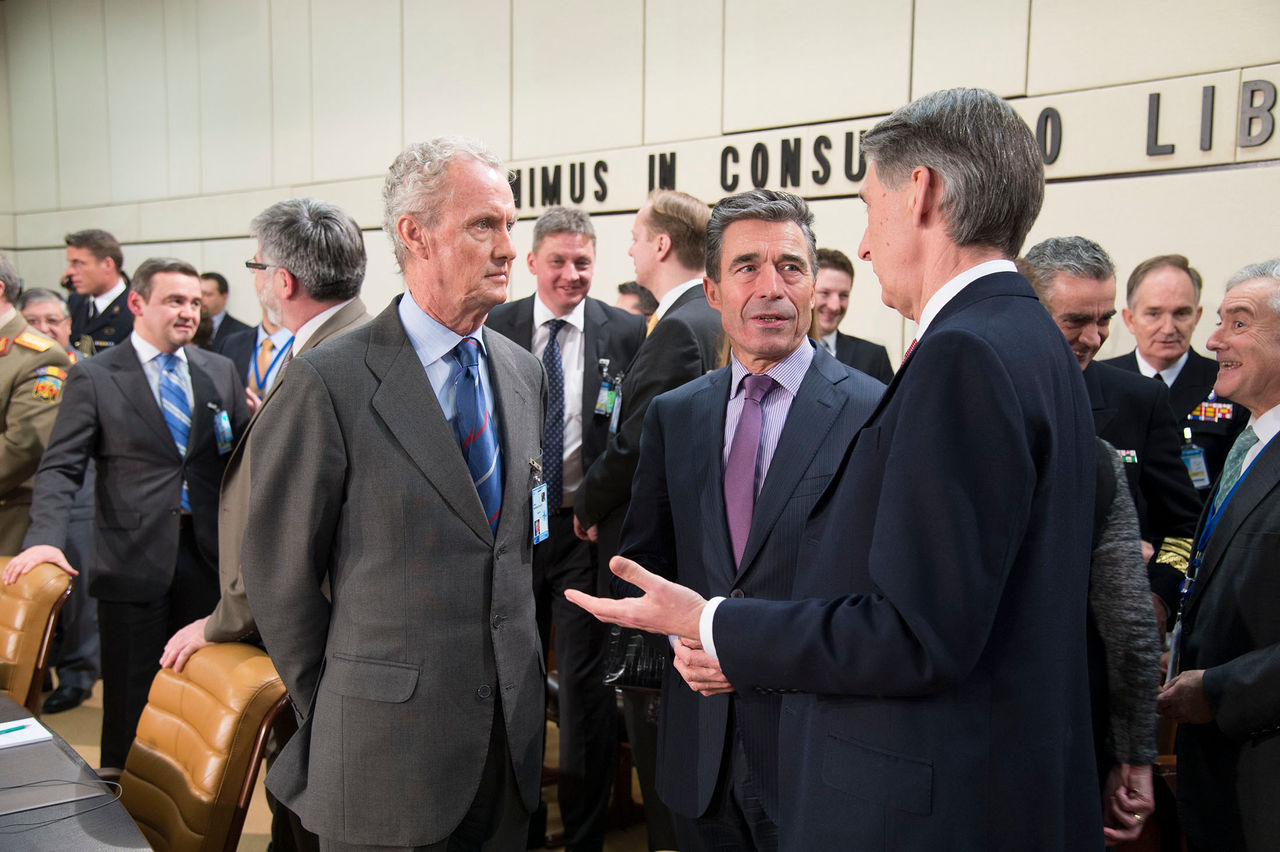
NATO Defence Ministers agreed on Wednesday (26 February 2014) to move ahead with plans to improve a set of defence capabilities which are key to dealing with future security challenges. “Through our operations, including Libya and Afghanistan, we have identified the areas where our capabilities do not go far enough or too few countries have them,” NATO Secretary General Anders Fogh Rasmussen said.
The recent Libya operation revealed shortfalls in precision-guided munitions, intelligence, surveillance and reconnaissance assets. There are also shortfalls in trained experts to interpret the data from those assets, the Secretary General said. Ministers also looked at ways to maintain the interoperability among Allies and with partners in the framework of the Connected Forces Initiative.
Supporting security reforms through capacity building in countries that need help was discussed during the second working session. Ministers also discussed ways to enhance cyber defence and maritime security. “Our task is to make sure that NATO is and remains ready and able to face the challenges of the future and we have taken some important steps today to prepare this with a view to the summit,” said Mr. Fogh Rasmussen. He stressed that since the 2010 Lisbon Summit, “we have achieved much and now we need to maintain the momentum through to the Wales Summit and beyond.”