
Close
Back


From now on you can download videos from our website
If you would also like to subscribe to the newsletter and receive our latest updates, click on the button below.
Enter the email address you registered with and we will send you a code to reset your password.
The password must be at least 12 characters long, no spaces, include upper/lowercase letters, numbers and symbols.
Click the button to return to the page you were on and log in with your new password.
11 December 2013
2 MIN READ
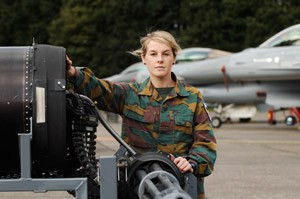
NATO invited participants from other international organisations, non-governmental organisations and academia to participate in a workshop dedicated to drawing lessons learned and discussing the way ahead on the implementation of gender perspectives in crisis management and operations.
The initiative to organise the workshop was taken following the publication in October of the Review of the Practical Implications of UN Security Council Resolution (UNSCR) 1325 for the Conduct of NATO-led Operations and Missions. This independent review found that ‘significant progress’ has been made in implementing UNSCR 1325 on Women, Peace and Security in NATO-led operations in Afghanistan and Kosovo, but said there is ‘ample room for improvement’.
Held at NATO Headquarters on 9 December, the workshop aimed to share experiences with and collect recommendations from other international organisations, such as the United Nations, the European Union, the Organization for Security and Co-operation in Europe and the African Union, as well as civil society.
NATO’s Assistant Secretary General for Public Diplomacy, Ambassador Kolinda Grabar-Kitarovic, underscored NATO’s commitment to implementing UNSCR 1325 on Women, Peace and Security: “NATO, as a key player in international security, and as an Alliance of democracies is, together with other international organisations, taking the issue of UNSCR 1325 on Women, Peace and Security very seriously.”
Looking forward to the 2014 NATO Summit and the 15th anniversary of UNSCR 1325 in 2015, Mari Skaare, the NATO Secretary General’s Special Representative for Women, Peace and Security, said that these occasions would provide new opportunities to promote the agenda of gender mainstreaming in international security.
As NATO continues to play its part in this international effort, Ambassador Stephen Evans, Assistant Secretary General for Operations, emphasised “the importance of sharing experiences and ideas with the UN, the European External Action Service and the African Union.”
Participants welcomed the opportunity to exchange lessons learned: “It is very exciting that NATO brought us together to get our message out beyond our own organisations,” said Litha Musyimi-Ogana, Director of the Women, Gender and Development Directorate of the African Union Commission.
Discussions focused on issues ranging from social roles in conflict to the role of local grassroots associations in promoting the gender agenda, and resulted in concrete recommendations for NATO. Participants agreed on the need to coordinate international efforts and focus on implementation in order to “translate words into action”.