
Close
Back


From now on you can download videos from our website
If you would also like to subscribe to the newsletter and receive our latest updates, click on the button below.
Enter the email address you registered with and we will send you a code to reset your password.
The password must be at least 12 characters long, no spaces, include upper/lowercase letters, numbers and symbols.
Click the button to return to the page you were on and log in with your new password.
05 May 2010
2 MIN READ
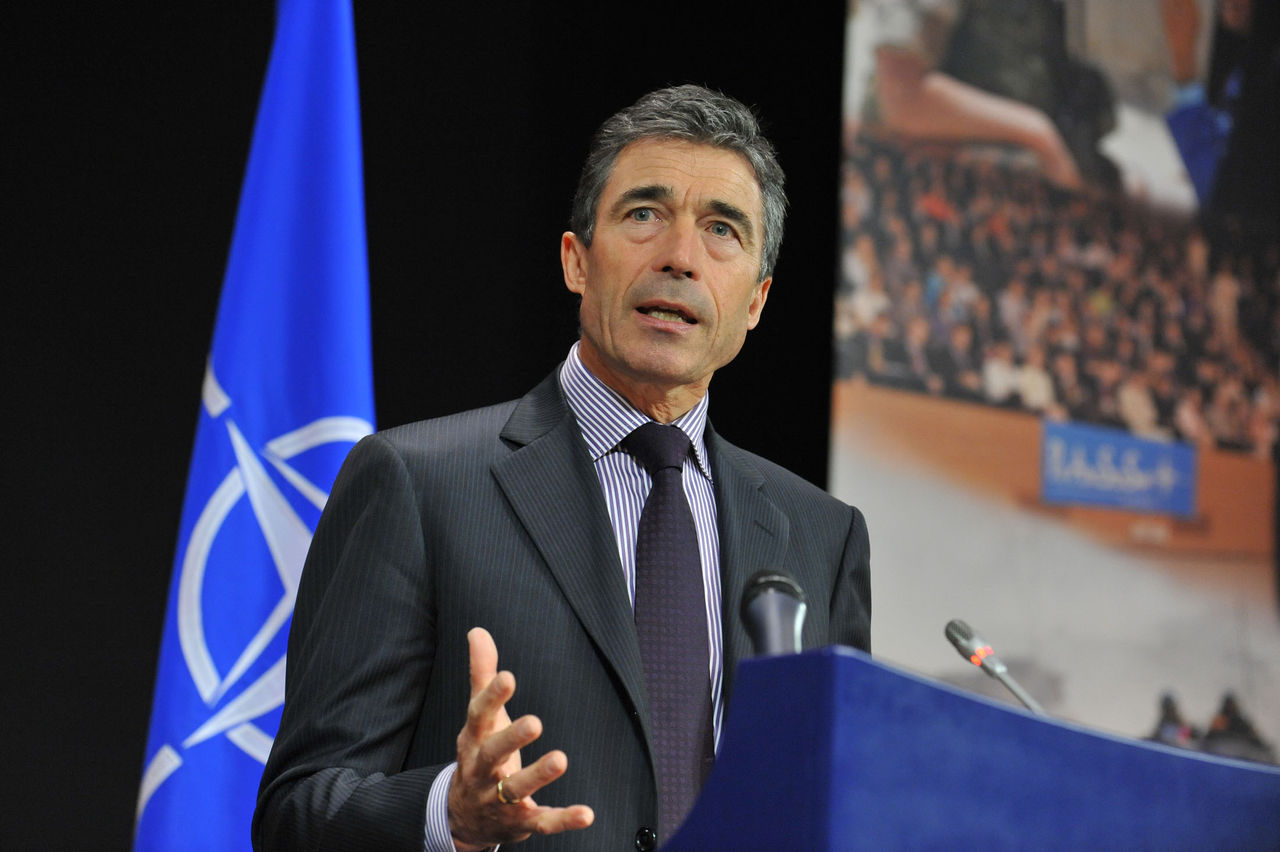
At his monthly press conference on 5 May, Secretary General Anders Fogh Rasmussen discussed the process leading to the Alliance’s new Strategic Concept, the future of missile defence for NATO, and the integration of southeastern Europe, particularly Bosnia and Herzegovina.
Speaking about NATO’s new Strategic Concept, the Secretary General explained that the Group of Experts, headed by Dr Madeleine Albright, will present their report on 17 May. He said that the group has taken into account “the broadest possible range of views”, as requested, and that the report will be made public at a press conference and published on NATO’s website.
After close examination and discussions with Allied capitals, Mr Rasmussen will begin drafting the initial Strategic Concept draft this summer, with the final document to be agreed by all Allies at the Lisbon Summit in November this year.
On missile defence, the Secretary General said that Allies would decide by Lisbon on whether NATO should take on territorial missile defence as an Alliance mission. His view, he said, is simple: “We should. Because there is a growing threat. Because Europe needs to continue to contribute to its own defence. And because it makes political and military sense to talk with Russia about cooperation on missile defence.”
He said the cost would be manageable: “NATO is already building a missile defence system to protect our armed forces, when they go out on mission. The cost of expanding that system to cover not only our soldiers, but also our populations … is less than 200 million Euros. Over ten years. Spread among the 28 NATO countries.”
On southeastern Europe, Mr Rasmussen said that he sensed “there is new momentum for building lasting stability, if political leaders seize the opportunity”.
“The recent decision by NATO Ministers to grant Membership Action Plan (MAP) to Bosnia-Herzegovina gives a clear signal that we see that country’s future in NATO. It sets out clear steps that the political leadership needs to take to make progress,” he said.
“I call on all political leaders in Bosnia-Herzegovina to have the courage to take this step, in order to activate the MAP, for the good of all the people of the country. Because the MAP can unlock change that leads to a better future for them.”