
Close
Back


From now on you can download videos from our website
If you would also like to subscribe to the newsletter and receive our latest updates, click on the button below.
Enter the email address you registered with and we will send you a code to reset your password.
The password must be at least 12 characters long, no spaces, include upper/lowercase letters, numbers and symbols.
Click the button to return to the page you were on and log in with your new password.
05 February 2010
3 MIN READ
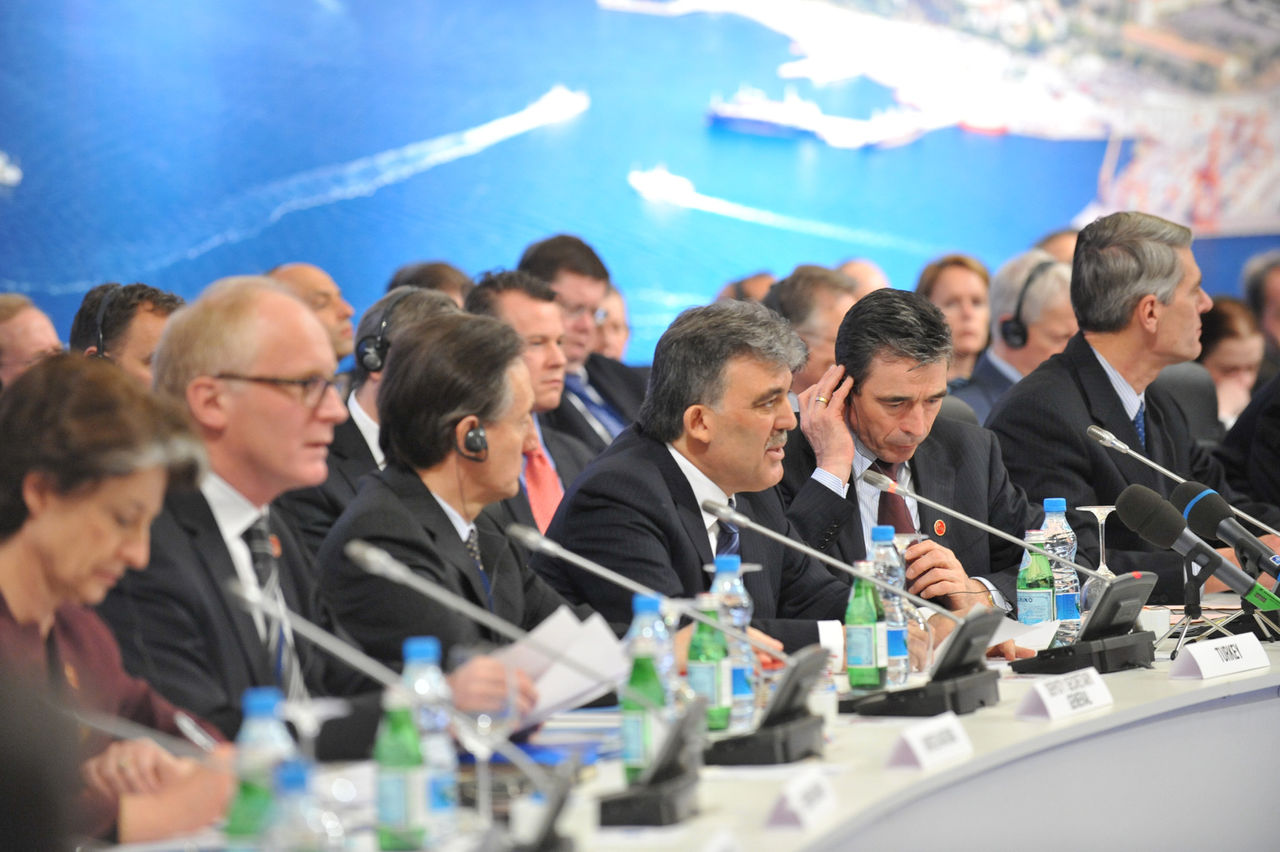
On 5 February, NATO Ministers met with their non-NATO ISAF partners to review the main priorities in Afghanistan for 2010.
During the meeting, the ISAF nations had the opportunity to review progress made during the London conference on Afghanistan on 28 January. There was general consensus that the conference successfully demonstrated the commitment and resolve of the international community to the Afghan Government and its people.
The NATO Secretary General, Anders Fogh Rasmussen, reaffirmed that ISAF will continue to focus on improving security, on building Afghan capacity, and on setting conditions to enable Afghans to assume key responsibilities.
Supreme Allied Commander Europe (SACEUR), Admiral Stavridis, and ISAF Commander, General McChrystal, briefed the Ministers on the situation in Afghanistan and on the way ahead throughout 2010.
Ministers also discussed the current issues underpinning NATO and ISAF partner support to the mission in Afghanistan. General McChrystal highlighted that as resources continue to flow into Afghanistan to enable the implementation of NATO's refreshed strategy, the conditions are now set to make substantive progress in 2010.
Key to making progress will be accelerating the development and size of the Afghan National Security Forces. The Secretary General welcomed commitments by 36 ISAF nations to provide additional commitments of nearly 40,000 additional troops and trainers to the mission. At the same time, he reminded all the participants of the shortfalls in trainers and mentors for the Afghan security forces, requesting that all nations look once again to see what more they might provide for this important mission.
Ministers also considered initiatives to improve protection of ISAF service personnel from the significant threat of Improvised Explosive Devices (IEDs). In particular, Ministers warmly welcomed an offer from the United States to share a package of measures to better protect ISAF forces from IEDs. These include better access to intelligence; offers of counter-IED technology, including jammers and detectors; and the making available of mine resistant vehicles across the ISAF family.
In addition, another important issue considered by Ministers was to identify ways and means of providing faster and more effective access to medical care for ISAF troops wounded in Afghanistan and ways to increase the number of deployable helicopters to NATO operations. This can be achieved by linking nations who have helicopters with those who can support the operational sustainability of these assets with money or technical assistance.
The Secretary General highlighted that the measures being taken in Afghanistan will speed up transition to ownership by the Afghan authorities for their own affairs. It is expected that substantive progress will be made in 2010, but that this will be based on conditions on the ground rather than calendar-driven.
Afghan-led operations will start shortly in Central Helmand Province to underpin both the capability and determination to succeed.
The ISAF meeting in Istanbul was attended by the Afghan Minister of Interior, Mr. Mohammad Hanif Atmar; Minister of Defence, Mr. Abdul Rahim Wardak; Special Representative of the United Nations Secretary General, Ambassador Kai Eide, as well as representatives of the European Union.