
Close
Back


From now on you can download videos from our website
If you would also like to subscribe to the newsletter and receive our latest updates, click on the button below.
Enter the email address you registered with and we will send you a code to reset your password.
The password must be at least 12 characters long, no spaces, include upper/lowercase letters, numbers and symbols.
Click the button to return to the page you were on and log in with your new password.
04 December 2009
2 MIN READ
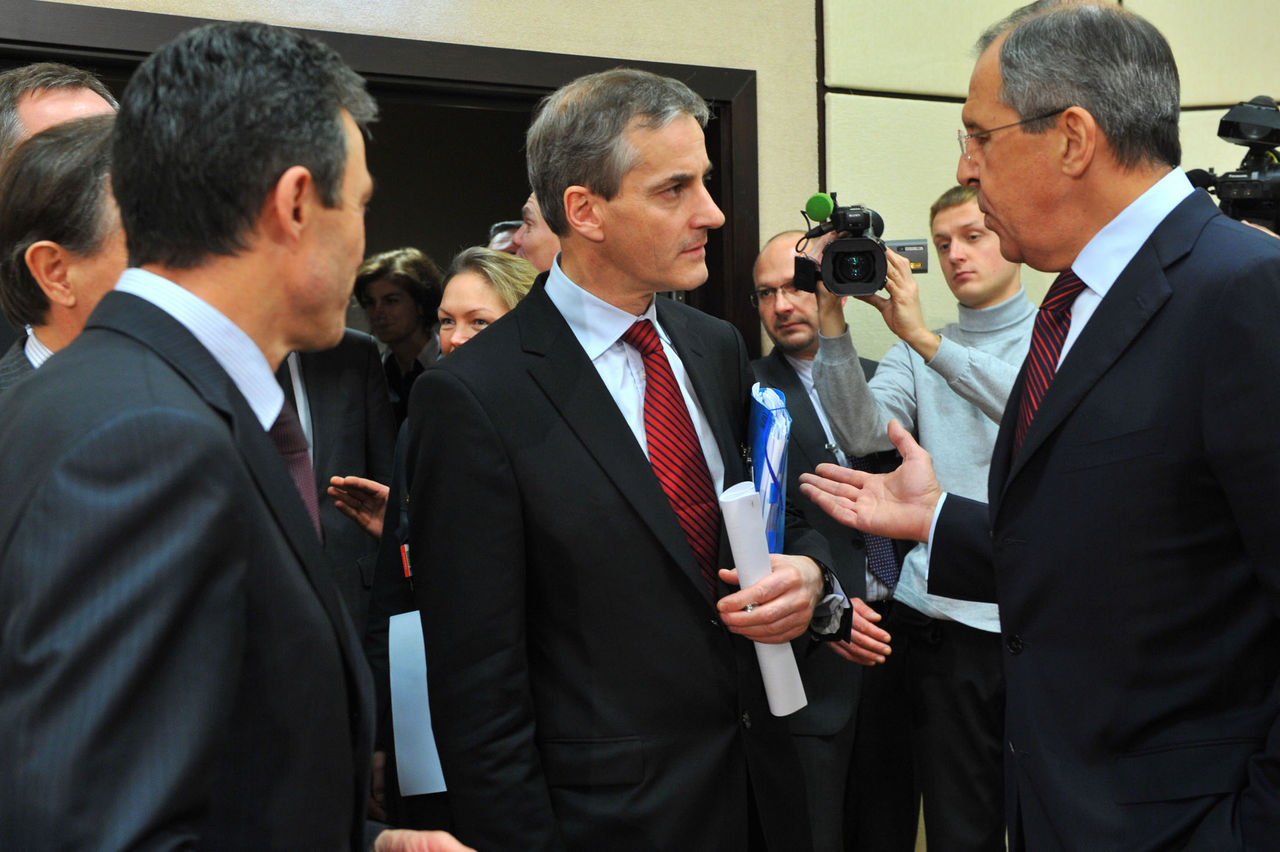
The NATO-Russia Council (NRC) held its formal session on 4 December 2009, with the participation of Allied Foreign Ministers and Russian Foreign Minister Sergei Lavrov.
“A trusting, productive NATO-Russia relationship is important not just for European security, but indeed for global security,” said the Chairman of the NRC, Anders Fogh Rasmussen, upon opening the session. “Our goal should be to build a true strategic partnership between NATO and Russia, based on trust, shared views and shared goals. That may not be for tomorrow – but today’s meeting will be an important step in the right direction.”
Ministers thoroughly debated political and security issues facing the Euro-Atlantic area. In particular they exchanged views on the situation in Afghanistan, whose stability is considered a shared goal for all 29 members of the NRC. They agreed that there is real potential to build on existing cooperation and offer more support for the efforts of the Afghan authorities to improve security in that country.
Reflecting a new political climate in the NATO-Russia partnership, ministers took a number of important decisions aimed at re-invigorating this relationship.
First, they agreed on the NRC Work Programme for 2010. It is an ambitious set of undertakings, centred on a number of priority areas such as political dialogue, practical cooperation and military-to-military cooperation. The list of projects is a comprehensive one, covering cooperation on Afghanistan, the fight against terrorism, missile defence, civil emergency planning and civil protection, scientific cooperation, public diplomacy, and numerous other areas.
Second, ministers approved a set of measures aimed at improving the working methods of the NRC itself, to make it an even more result-oriented and politically relevant structure.
Third, Foreign Ministers pressed a launch button on a Joint Review of 21st Century Common Security Challenges. The idea for such a review was first put forward by the NATO Secretary General, Anders Fogh Rasmussen, in a key speech delivered in Brussels in September this year.
At this stage, 29 NRC members identified the following topics to be the subject of the review: Afghanistan, terrorism (including the vulnerability of critical infrastructure), piracy, proliferation of weapons of mass destruction and their means of delivery, as well as natural and man-made disasters. Substantive work on the review is expected to produce a document by the end of next year.