
Close
Back


From now on you can download videos from our website
If you would also like to subscribe to the newsletter and receive our latest updates, click on the button below.
Enter the email address you registered with and we will send you a code to reset your password.
The password must be at least 12 characters long, no spaces, include upper/lowercase letters, numbers and symbols.
Click the button to return to the page you were on and log in with your new password.
04 December 2009
2 MIN READ
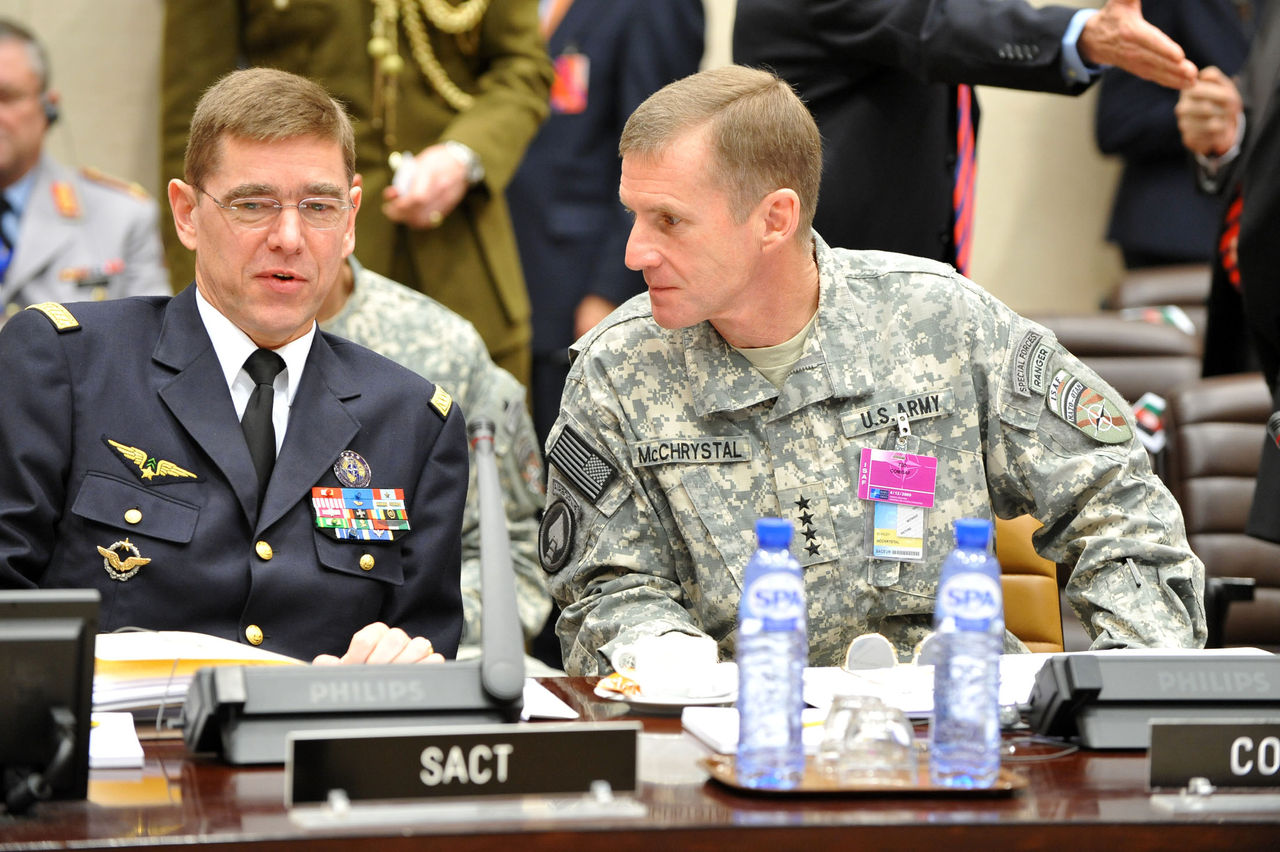
On 4 December, Foreign Ministers of ISAF troop contributing nations met to discuss key priorities for Afghanistan, namely protecting Afghan people, building Afghan security capacity, and facilitating governance and development. They adopted a common declaration, agreeing on the main principles guiding ISAF’s support of reintegration and reconciliation processes.
The meeting was attended by Foreign Minister Rangin Dadfar Spanta of the Islamic Republic of Afghanistan, Baroness Catherine Margaret Ashton, the EU’s new High Representative for Foreign Affairs and Security Policy, and Kai Eide, the United Nations Special Representative to Afghanistan.
Following General McChrystal’s August 2009 assessment of the situation in Afghanistan and this week’s announcement by President Barack Obama on the sending of 30 000 additional US troops, ISAF Foreign Ministers reiterated their collective objective to hand over lead security responsibility to the Afghan forces, starting next year, when conditions allow. To this end, nations pledged to invest more in training, equipping and sustaining the Afghan National Security Forces, through the NATO Training Mission-Afghanistan.
Allies and Partners adopted a declaration outlining a new approach for Afghanistan in which the protection of the Afghan people is given a particular focus. In support of this approach, at least 25 Allies and Partners committed around 7 000 troops for 2010, with the possibility of more contributions to come.
The NATO Secretary General characterised the meeting as a show of unity of purpose. “We have solidarity over the mission backed up by action,” he said.
Recognising that military forces are not sufficient to ensure success, Allies and Partners also pledged resources for development assistance, and a better delivery of that aid, to help the Afghan people lead better lives.
By the same token, ministers welcomed President Karzai’s commitment to improve governance, fight corruption and strengthen the rule of law. They encouraged the new Afghan Government to deliver rapid and tangible results in this respect.
Ministers also discussed the need to find a political solution in parallel to existing efforts on security, governance and development. This implies supporting the two complementary processes of reintegration and reconciliation.
As agreed by ISAF ministers, ISAF efforts will focus on reintegration, in other words persuading low-level fighters to lay down their arms and reintegrate into Afghan society.
On request of the Afghan Government, ISAF may have a role to play in supporting reconciliation efforts.
“In sum, this meeting has launched a new phase in this mission,” said the Secretary General. “No one should expect instant results, but with the right approach and the right resources we will succeed – and we have both.”