
Close
Back


From now on you can download videos from our website
If you would also like to subscribe to the newsletter and receive our latest updates, click on the button below.
Enter the email address you registered with and we will send you a code to reset your password.
The password must be at least 12 characters long, no spaces, include upper/lowercase letters, numbers and symbols.
Click the button to return to the page you were on and log in with your new password.
19 November 2009
1 MIN READ
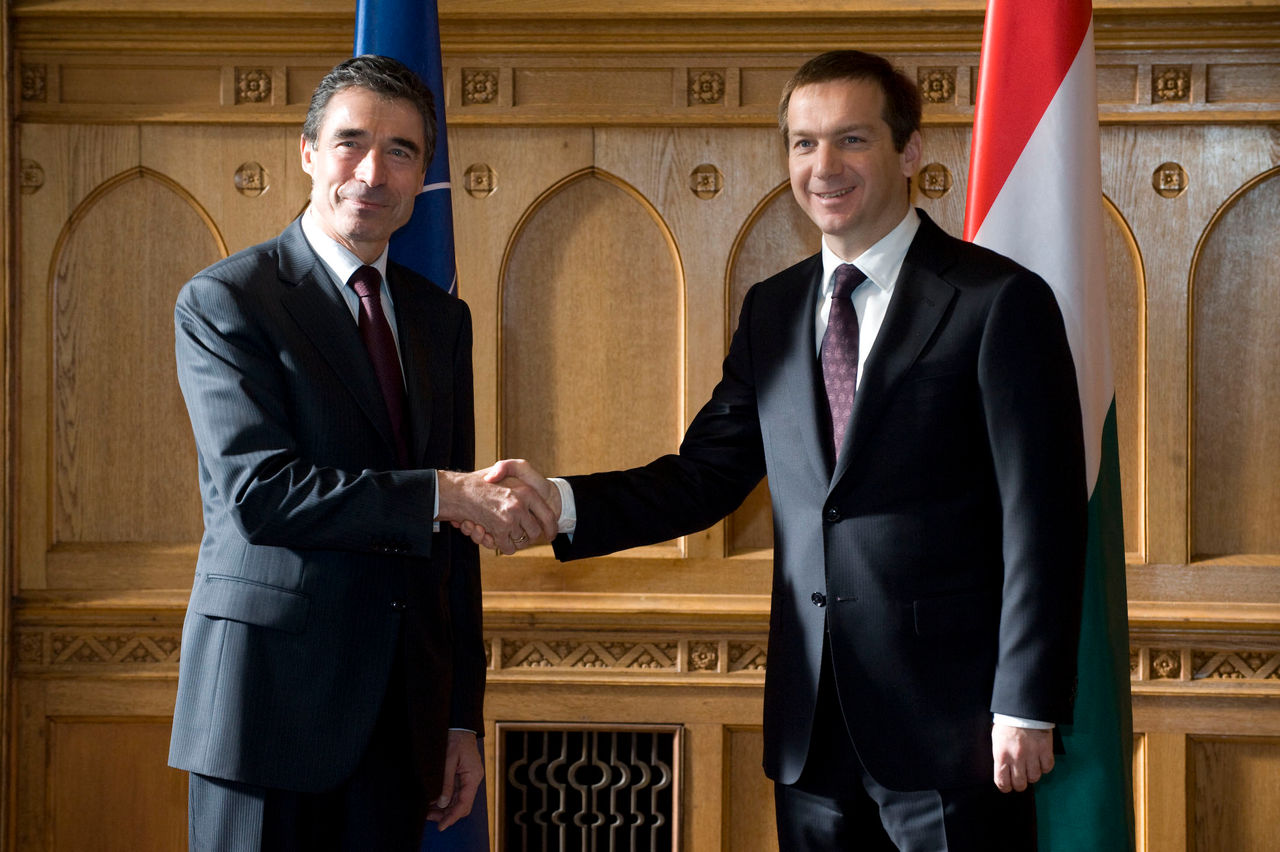
The Secretary General of NATO, Anders Fogh Rasmussen, traveled to Hungary on 19 November 2009 where he met Prime Minister Gordon Bajnai, Foreign Minister Peter Balazs, Defence Minister Imre Szekeres and Speaker of Parliament Béla Katona.
Mr Rasmussen also took part in the opening of the conference “NATO at 60 – traditional values and new threats”. In his keynote speech, he laid out three central aspects the Alliance needs to address to meet current and future challenges.
“NATO’s core task was, is, and will remain, the defence of our territory and our populations,” he said, explaining the first key area. “For our Alliance to endure, all members must feel that they are safe and secure.”
The second area where a sense of common purpose is critical, he said, is the building of an undivided and democratic Europe. “We must leave NATO’s door open for those countries that fulfil our demanding criteria for membership,” Mr Rasmussen said.
“At the same time, building an undivided Europe means more than keeping NATO’s door open. It means strengthening our ties with those Partner countries who do not wish to be members of NATO. And it also means building a new relationship with Russia.”
The third key area, he said, lays in adapting the Alliance to deal with new risks and threats. “We have seen how cyber attacks or energy cutoffs can seriously destabilise a country. We have seen piracy turn into a multi-million dollar business.”
In concluding his speech, the Secretary General stressed that the Alliance’s new Strategic Concept will “help us to get things right”.
“It won’t be a detailed manual for how to deal with the entire spectrum of today’s security challenges. But by bringing together the different strands of NATO’s adaptation into a single, conherent framework, it will offer a focal point for a modernised Alliance.”
The drafting of NATO’s new Strategic Concept, the most inclusive and transparent so far, will come to an end in a year’s time, when the final document should be agreed by Allies at the NATO Summit in Portugal.