
Close
Back


From now on you can download videos from our website
If you would also like to subscribe to the newsletter and receive our latest updates, click on the button below.
Enter the email address you registered with and we will send you a code to reset your password.
The password must be at least 12 characters long, no spaces, include upper/lowercase letters, numbers and symbols.
Click the button to return to the page you were on and log in with your new password.
12 November 2009
1 MIN READ
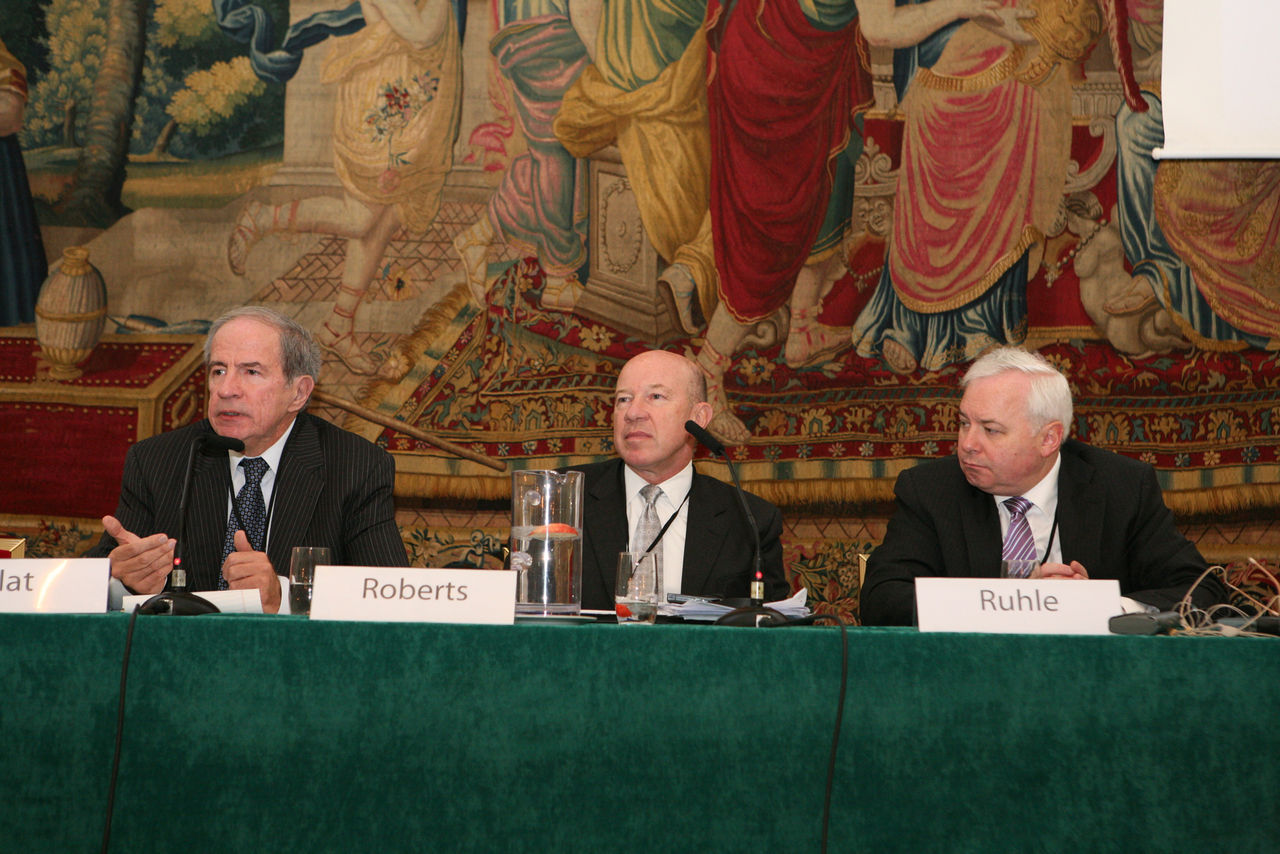
A candid and open exchange of views on deterrence concepts, nuclear doctrine and related issues took place among senior staff and experts from Russia and NATO countries, at a seminar in Oslo, Norway, on 9 and 10 November
The event gave participants further insight into the role of nuclear weapons in the evolving security environment. The NATO-Russia Council’s four nuclear powers (France, Russia, the United Kingdom and the United States) explained their respective current nuclear doctrines. Independent experts also gave presentations on a range of deterrence-related issues.
“For a long time, nuclear weapons played a central role in the military strategy in the East as well as the West,” said Guy Roberts, NATO’s Deputy Assistant Secretary General for Weapons of Mass Destruction Policy, who chaired the meeting. “Today, the salience of nuclear weapons is thankfully very much reduced.”
“We welcome the reductions in the strategic systems – further reductions of these systems in the United States and in the Russian Federation are being negotiated at present,” he added.
“Furthermore, the remaining nuclear forces are no longer targeted at any country. NATO has significantly reduced the readiness of nuclear forces and the number of weapons has dropped drastically as a consequence of the much improved international security situation.”
The seminar aimed to promote mutual understanding, openness and transparency in this field, as part of a continuing NATO-Russia dialogue on nuclear weapons issues.
Cooperation in this area was highlighted as a priority in the 1997 NATO-Russia Founding Act and the 2002 Rome Declaration on mutual cooperation between NATO and Russia, which established the NATO-Russia Council (NRC).
Participants included senior staff members and experts dealing with nuclear policy issues from NRC nations' defence and foreign ministries, as well as representatives of national delegations at NATO Headquarters, the NATO Military Authorities and NATO’s International Staff.
A similar seminar took place in Garmisch-Partenkirchen, Germany, in July 2005. Moreover, since then several field exercises focusing on responses to nuclear incidents have been conducted in the four NRC nuclear weapons states between 2004 and 2007. Future NRC nuclear activities and exercises are now under active consideration.