
Close
Back


From now on you can download videos from our website
If you would also like to subscribe to the newsletter and receive our latest updates, click on the button below.
Enter the email address you registered with and we will send you a code to reset your password.
The password must be at least 12 characters long, no spaces, include upper/lowercase letters, numbers and symbols.
Click the button to return to the page you were on and log in with your new password.
23 October 2009
2 MIN READ
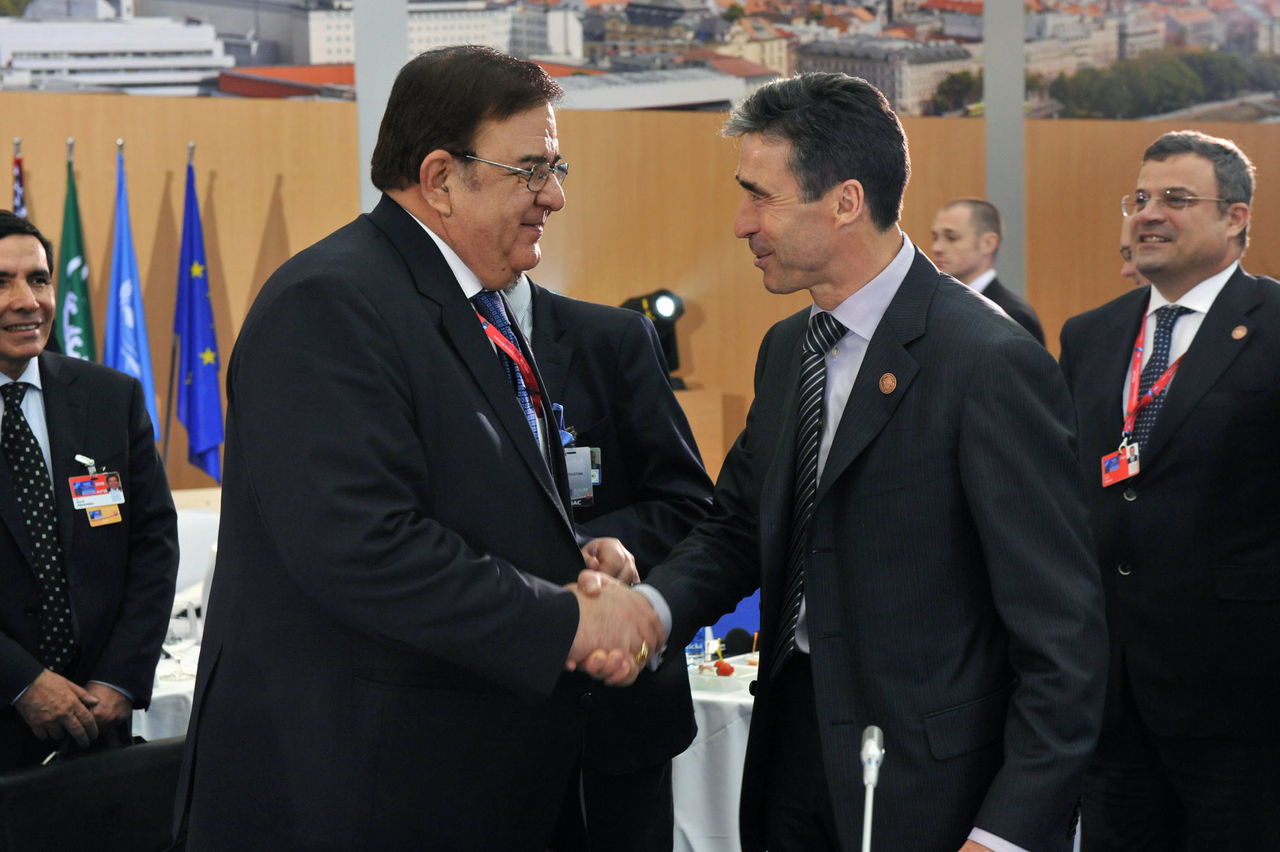
NATO Defence Ministers met in Bratislava today where, together with their counterparts from the non-NATO ISAF contributing nations, they agreed on a set of key priorities for Afghanistan for the end of 2009 and 2010, and on a strategic concept for the transition to an Afghan lead for security when the conditions are right.
The meeting was chaired by the NATO Secretary General Anders Fogh Rasmussen. Admiral Giampaolo Di Paola, Chairman of the NATO Military Committee, the Supreme Allied Commander Europe, Admiral James Stavridis and Commander ISAF, General Stanley McChrystal were also in attendance. The meeting also welcomed Afghan Minister of Defence, General Abdul Rahim Wardak, the Special Representative of the UN Secretary General for Afghanistan, Ambassador Kai Eide and Mme Claude-France Arnould, representing the EU High Representative.
The Commander of ISAF, General McChrystal, briefed the participants on the current situation in Afghanistan and on his assessment of the mission. Allies and Troop Contributing Nations offered broad support for COMISAF’s assessment although there was no detailed discussion of the resource implications which will follow at a later stage. The discussion resulted in an adoption of four key NATO priorities for the coming period. These are to place the Afghan population at the core of NATO-ISAF’s collective effort; an enhanced effort to build the capacity of the Afghan National Security Forces; to work more closely and effectively with our international and Afghan partners to promote better governance, and to engage effectively with Afghanistan’s neighbours, particularly Pakistan.
In addition, Ministers approved the Strategic Concept for Transition to Afghan lead. Following the success of the transition to Afghan Security Forces lead in Kabul Province last year, this agreement will allow the NATO military authorities to define the conditions for the adoption of the Transition Phase of the ISAF operation at a later stage.
“Getting consensus on these priorities will better focus our efforts and the efforts of our Afghan partners” said the Secretary General. “It was a very worthwhile discussion, and I am pleased that we now have an agreed understanding on how we are going to transition from a NATO security lead to an Afghan lead,” he added.
Ministers agreed that training of the Afghan National Security Forces is crucial to a transition to Afghan lead and that the NATO Training Mission in Afghanistan (NTM-A) will need to be fully resourced in order to build the capacity necessary.
On NTM-A, NATO’s Secretary General stressed that to make it effective, ISAF will need more training teams and money to sustain the growing Afghan forces.
The Secretary General also recalled that transition cannot be solely military and that, in addition to a strong army and police, Afghanistan needs a credible government taking active, visible steps to show that it is cleaning up corruption, improving efficiency and delivering services to the people effectively.