
Close
Back


From now on you can download videos from our website
If you would also like to subscribe to the newsletter and receive our latest updates, click on the button below.
Enter the email address you registered with and we will send you a code to reset your password.
The password must be at least 12 characters long, no spaces, include upper/lowercase letters, numbers and symbols.
Click the button to return to the page you were on and log in with your new password.
23 October 2009
1 MIN READ
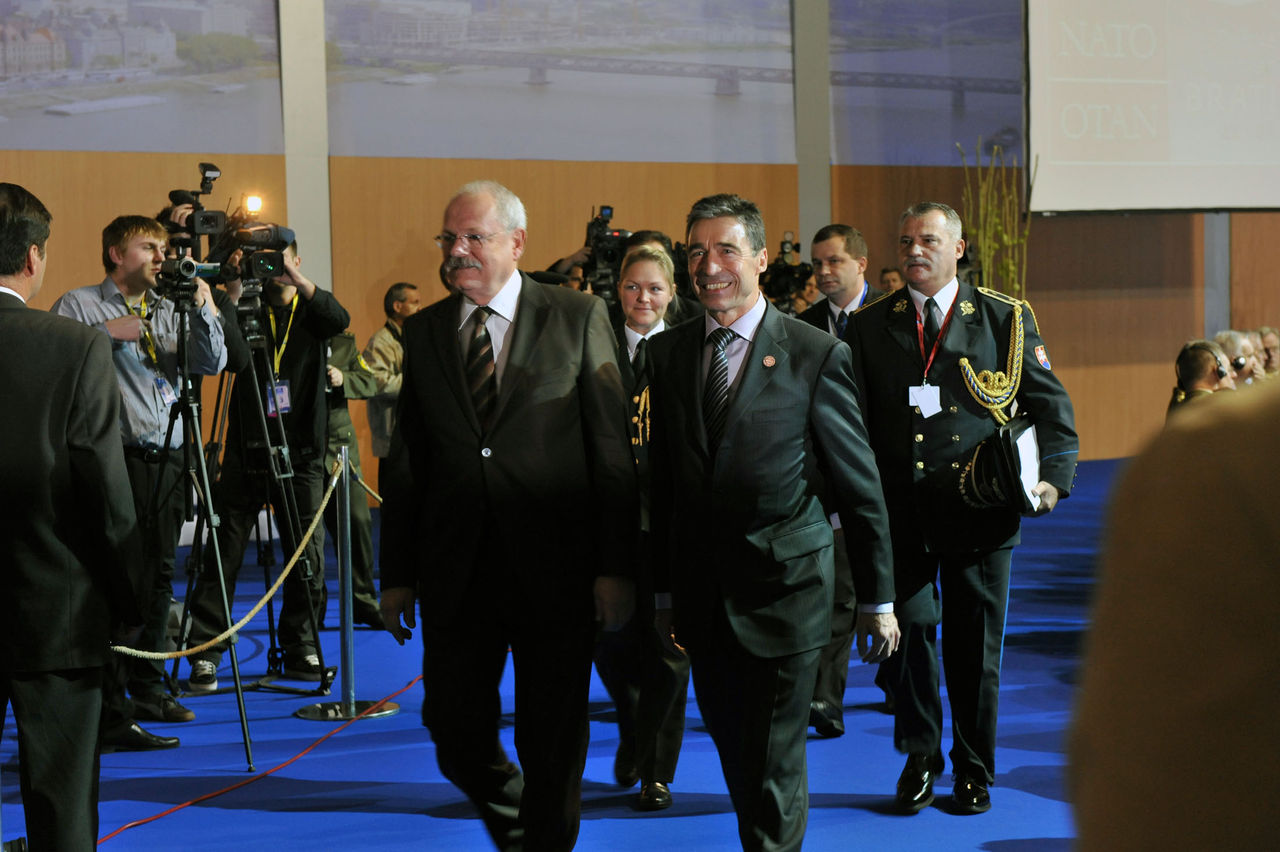
The Allied Defence Ministers began their deliberations in Bratislava with a focus on defence transformation and missile defence at a working dinner on 22 October and a morning session the next day.
Following the morning session, NATO´s Secretary General, Mr. Anders Fogh Rasmussen, described the debate´s objective to the press: “To me, the discussion on transformation is very simple: we need more capability for the money we spend on defence. And we are not doing well enough.“
In their debate, ministers devoted much attention to the prioritisation of resources. Against the background of a challenging economic climate, hard budgetary choices are needed and this applies both to national and NATO budgets. To tackle this question directly, ministers supported the Secretary General´s decision to appoint a high-level group of officials from defence ministries.
Discussion also confirmed interest and appreciation for innovative and collective projects that allow Allies to pool resources and share assets. Allies welcomed the successful implementation of initiatives such as Allied Ground Surveillance and Strategic Airlift Capability. A signing ceremony is planned on the afternoon of 23 October for a Declaration of Intent on a project that would secure HIP helicopters for theatres of operation such as Afghanistan. Other topics raised in the morning session included NATO Response Force (NRF), common funding and usability benchmarks for NATO forces.
Missile defence was the other key issue discussed. A debate followed a briefing by the US Secretary of Defence Robert Gates, who provided additional details of the new US approach to European missile defence.
In the words of the Secretary General, “...ministers welcomed the fact that the new US approach puts European missile defence more in a NATO context. That is good for the Alliance. It is good for solidarity. And to my mind, it is important for the defence of Europe.“
All ministers stressed the indivisibility of Allied security and confirmed readiness to continue working towards a NATO missile defence system in preparation for the Lisbon summit next year. They also highlighted important opportunities in this context for cooperation with the Russian Federation.