
Close
Back


From now on you can download videos from our website
If you would also like to subscribe to the newsletter and receive our latest updates, click on the button below.
Enter the email address you registered with and we will send you a code to reset your password.
The password must be at least 12 characters long, no spaces, include upper/lowercase letters, numbers and symbols.
Click the button to return to the page you were on and log in with your new password.
30 April 2009
2 MIN READ
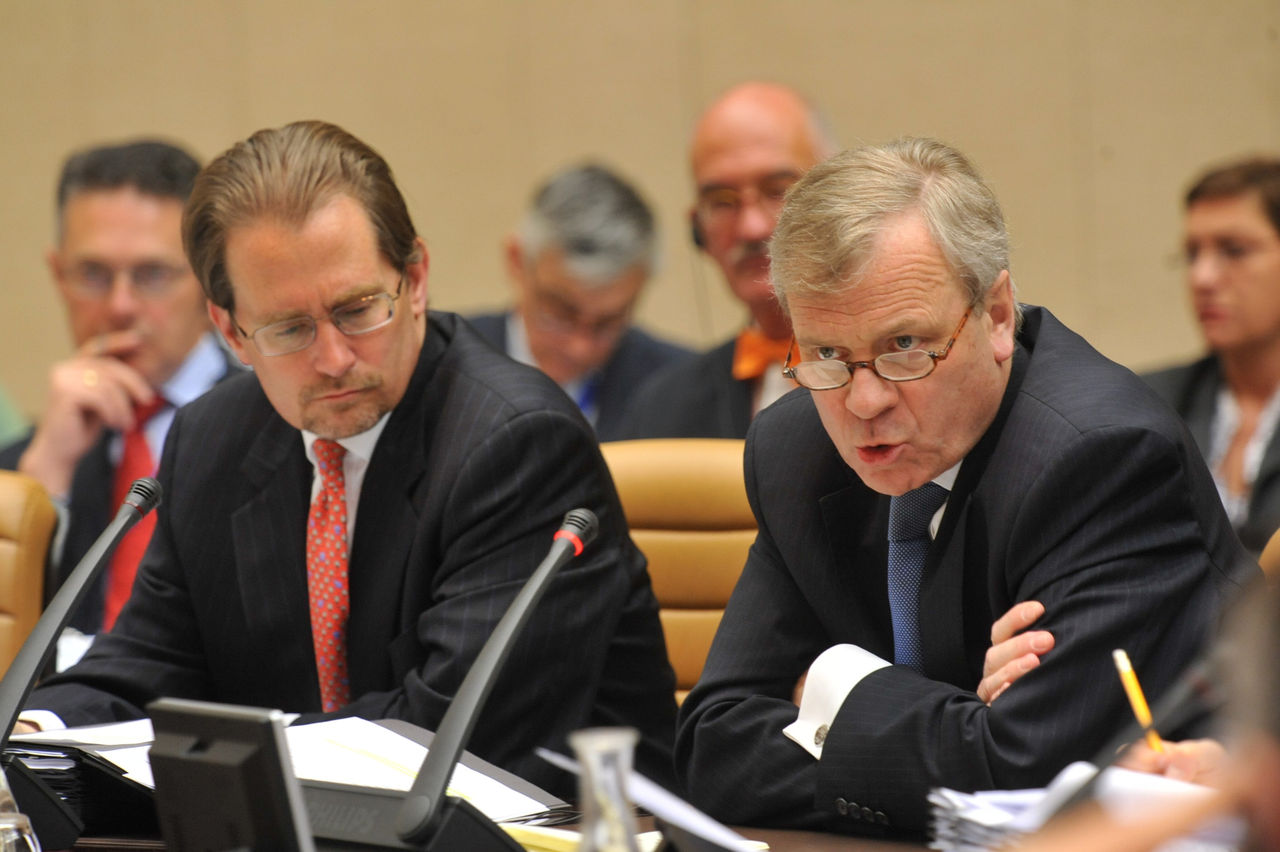
National Armaments Directors from the 28 NATO member countries met for the biannual Conference of National Armaments Directors (CNAD) at NATO Headquarters. The CNAD focused its attention on meeting capability requirements for NATO operations in Afghanistan, Kosovo, the Mediterranean as well as the Horn of Africa.
NATO Secretary General Jaap de Hoop Scheffer and Admiral Luciano Zappata, Deputy Supreme Allied Commander Transformation, told Armaments Directors that they were playing a critical role in equipping Allied forces to face new, emerging challenges. In particular, they stressed the need for critical capabilities such as Alliance Ground Surveillance (AGS) to support NATO forces in the field.
Armaments Directors discussed a way forward for several Strasbourg/Kehl Summit taskings related to missile defence, including one to study a possible expanded role of the Active Layered Theatre Ballistic Missile Defence Programme (ALTBMD) to include territorial missile defence.
For the Defence Against Terrorism Programme of Work (DAT PoW), NATO countries leading a range of initiatives showcased progress achieved thus far to develop and deploy practical countermeasures to mitigate terrorist attacks.
To address the Alliance’s shortfall of helicopters in operations in Afghanistan, Armaments Directors reviewed work on proposed short and longer-term solutions as well as the status of the Future Heavy Transport Helicopter initiative. Alexander Weiss, Chief Executive of the European Defence Agency (EDA), also talked about collaboration between EDA and NATO. Mr Weiss saw the helicopter issue as a catalyst for working together and was “convinced this paves a way ahead.”
In light of the recent extension of the Alliance’s Operation Allied Protector off the Horn of Africa, Armaments Directors quickly took up the issue and looked at how to help nations develop new capabilities or adapt existing ones to counter the growing threat from pirates. They charted a plan to continue these efforts. The Armaments Directors also discussed NATO Headquarters Reform and its implications for the CNAD’s work.
Peter C.W. Flory, Assistant Secretary General for Defence Investment and the Permanent Chairman of the CNAD, reminded Armaments Directors that in addition to concentrating on immediate operational priorities, they needed to continue looking to future needs.
A consistent theme throughout the conference was the understanding that member countries are much more effective in increasing their capabilities by working together than on their own. For “certain critical enabling capabilities,” the Secretary General said, “multinational approaches will be the only viable and affordable solution. This is why I remain firmly convinced that well-managed multinational programmes hold the key to improving our overall capabilities, and particularly in these times of economic constraints.”