
Close
Back


From now on you can download videos from our website
If you would also like to subscribe to the newsletter and receive our latest updates, click on the button below.
Enter the email address you registered with and we will send you a code to reset your password.
The password must be at least 12 characters long, no spaces, include upper/lowercase letters, numbers and symbols.
Click the button to return to the page you were on and log in with your new password.
29 November 2007
1 MIN READ
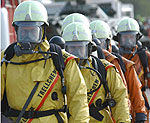
The General Inspectorate for Emergency Situations, within the Romanian Ministry of the Interior and Administrative Reform, is hosting the biannual Senior Civil Emergency Planning Committee (SCEPC) plenary session in Poiana Brasov, Romania on 28-29 November 2007.
The plenary session brings together the heads of the national civil emergency planning organizations from NATO and partner countries to discuss and review topical issues in civil emergency planning.
The SCEPC is the top NATO advisory body for the protection of civilian populations and the use of civil resources in support of NATO’s objectives. The Committee focuses on how to better support national civil authorities and NATO’s military authorities, when possible.
The plenary session will examine how to better support national authorities in the event of natural disasters; with recent experiences underlining the challenge in preparing for and dealing with such events. Emphasis is placed on the exchange of experience in the areas of training and exercises. In this context, the work of the Euro-Atlantic Disaster Response Coordination Centre (EADRCC) will be an important element. The status of the various prior activities and policy initiatives already undertaken will also be reviewed.
The committee is expected to present the updated “Civil Emergency Planning Action Plan for the Improvement of Civil Preparedness against Possible Attacks with Chemical, Biological, Radiological and Nuclear (CBRN) Agents.” The action plan was first launched in 2001 for the protection of populations against the effects of CBRN incidents and was last revised in 2005.
In the area of support to national authorities, the developments in critical infrastructure protection, including cyber defence, will also be addressed.
Romanian government officials: Cristian David, the Minister of Interior and Administrative Reform, and Victor Paul Dobre, the Secretary of State, will open the plenary session with Martin Howard, the NATO Assistant Secretary General for Operations.