
Close
Back


From now on you can download videos from our website
If you would also like to subscribe to the newsletter and receive our latest updates, click on the button below.
Enter the email address you registered with and we will send you a code to reset your password.
The password must be at least 12 characters long, no spaces, include upper/lowercase letters, numbers and symbols.
Click the button to return to the page you were on and log in with your new password.
25 October 2007
1 MIN READ
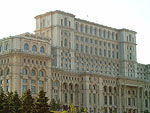
Ukraine presented its White Book outlining reform plans for the intelligence and security services at a meeting of the NATO-Ukraine Working Group on Civil and Democratic Control of the Intelligence Sector in Bucharest, Romania, on 24 and 25 October.
Defence and security-sector reform is essential to consolidating Ukraine's democratic transformation and to promoting its goal of closer Euro-Atlantic integration. Ensuring civil and democratic control of its security services is a key element in this process.
Although there is no single model for civilian oversight of the intelligence sector, it can be useful for countries facing this challenge to share experience with others that have gone through a similar process. During the meeting, Romania and Poland gave accounts of their respective experiences of demilitarizing their intelligence and security services.
Meeting participants also discussed the extension of the Professional Development Programme for Civilian Personnel in Ukraine to its security and intelligence sectors. This programme is being implemented under the auspices of the NATO-Ukraine Joint Working Group on Defence Reform (JWGDR). It seeks to strengthen the role of civilians in defence and security-sector institutions as well as to improve the ability of the government to introduce and sustain systemic reforms in these institutions.
The meeting in Bucharest was the 5th meeting of the Working Group on Civil and Democratic Control of the Intelligence Sector, which was established in 2006. Its aims are to provide expert advice and recommendations for the democratic reform and transformation of Ukraine intelligence community agencies in accordance with Euro-Atlantic standards, as well as to assist Ukraine in the implementation of such reforms. The group operates under and receives guidance from the JWGDR.