
Close
Back


From now on you can download videos from our website
If you would also like to subscribe to the newsletter and receive our latest updates, click on the button below.
Enter the email address you registered with and we will send you a code to reset your password.
The password must be at least 12 characters long, no spaces, include upper/lowercase letters, numbers and symbols.
Click the button to return to the page you were on and log in with your new password.
20 June 2006
1 MIN READ
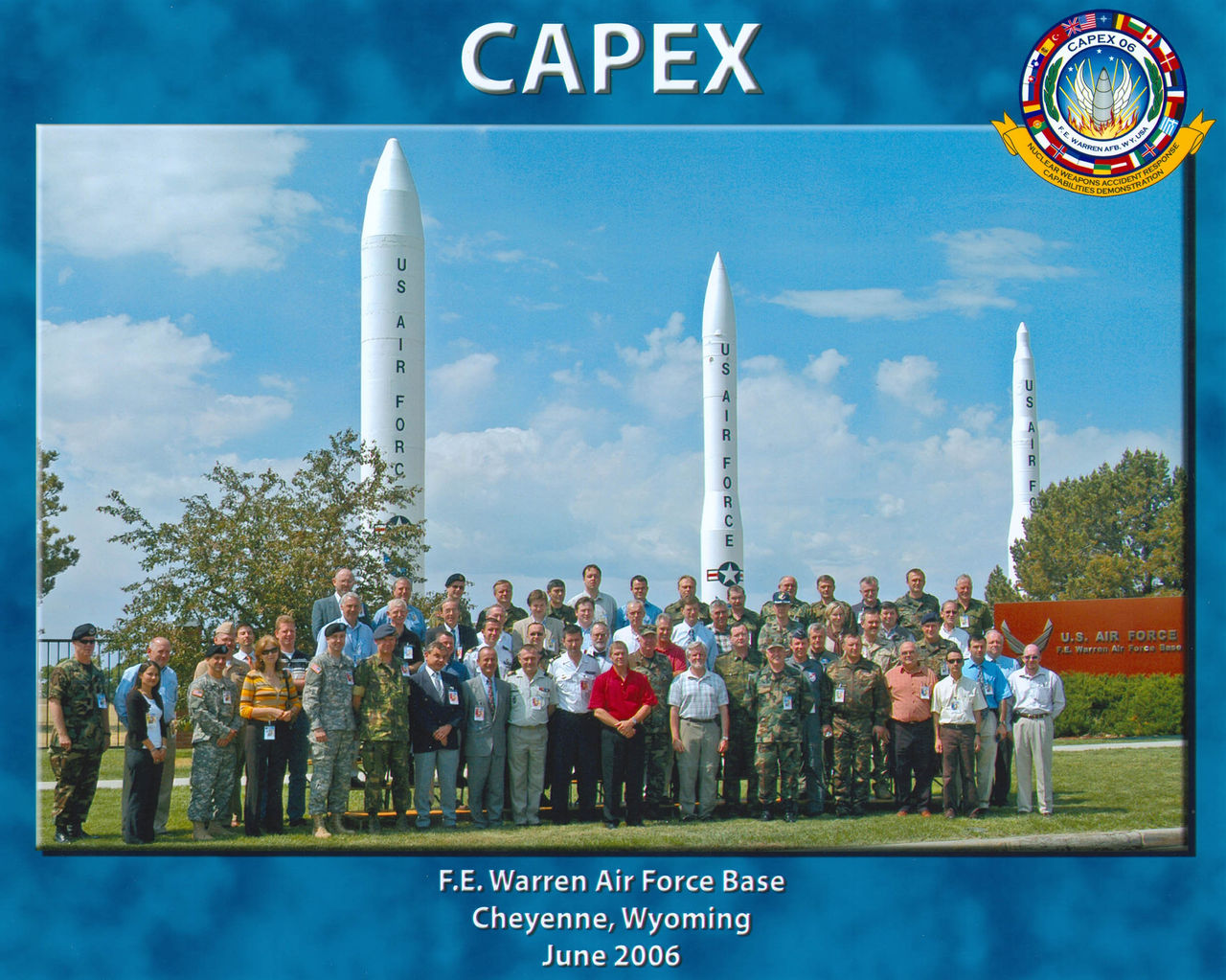
From 20 till 22 June 2006 , NATO and Russian experts observed a U.S. nuclear weapon accident response capabilities demonstration exercise, CAPEX 06. The event was held at a military site near the city of Cheyenne in Wyoming , U.S.A, as part of the NATO-Russia Council (NRC) work programme.
The U.S. invited the NATO-Russia Council Group of Nuclear Experts to attend the exercise, the third one in a series of field demonstrations organized by NRC nuclear powers. The attendance of representatives of NATO-Russia Council member nations at CAPEX 06 served to enhance practical co-operation and common understanding between NATO and Russia of nuclear weapon accident response procedures.
CAPEX 06 simulated a scenario in which a nuclear weapon convoy was involved in a road accident. It focused on safeguarding weapon components and mitigating any consequences. The exercise was part of a regular series of U.S. exercises held to practice interagency response procedures and to test the preparedness of emergency response services to safely and efficiently manage any possible incidents involving nuclear weapons. It involved civilians and servicemembers of the U.S. Department of Energy and Department of Defense, as well as local emergency services (police, fire and medical personnel).
About 45 civilian and military experts from NATO, Russia and NATO HQs attended the exercise. It was the first time that Alliance and Russian Federation representatives together observed a U.S. exercise of this kind.