
Close
Back


From now on you can download videos from our website
If you would also like to subscribe to the newsletter and receive our latest updates, click on the button below.
Enter the email address you registered with and we will send you a code to reset your password.
The password must be at least 12 characters long, no spaces, include upper/lowercase letters, numbers and symbols.
Click the button to return to the page you were on and log in with your new password.
11 May 2006
1 MIN READ
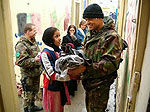
Protecting civilian populations and responding to disasters was the focus of the Plenary Sessions of NATO’s Senior Civil Emergency Planning Committee in Brussels, 11-12 May.
These biannual meetings bring together senior national representatives of NATO member and Partner countries to discuss and give direction to the Alliance’s civil emergency planning work.
The meetings discussed various initiatives aimed at improving civil preparedness for possible terrorist attacks against civilian populations with chemical, biological, radiological or nuclear agents.
In addition, the plenary meetings also considered the role of the Euro-Atlantic Disaster Response Coordination Centre (EADRCC), especially its involvement in the various humanitarian disaster relief operations in 2005 and 2006.
Discussions focused in particular on the EADRCC’s involvement in the disaster relief support efforts to the US following hurricane Katrina as well as its role in NATO’s relief efforts following the earthquake in Pakistan.
Civil emergency planning has long been one of the mainstream activities of NATO. Its main role is to provide support for national authorities in civil emergencies, particularly in the protection of civilian populations.