
Close
Back


From now on you can download videos from our website
If you would also like to subscribe to the newsletter and receive our latest updates, click on the button below.
Enter the email address you registered with and we will send you a code to reset your password.
The password must be at least 12 characters long, no spaces, include upper/lowercase letters, numbers and symbols.
Click the button to return to the page you were on and log in with your new password.
29 April 2002
1 MIN READ
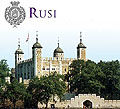
On 29-30 April, a high-level conference was held at the Royal United Services Institute (RUSI), London, on ''NATO and Mediterranean Security''. Lord Robertson gave the keynote address, entitled ''NATO and the Mediterranean - Moving from dialogue to partnership'', in which he outlined how security in the Mediterranean is linked to that of Europe and the need for NATO to enhance its relationship with countries in the region.
He explained why enhancing relations with the Mediterranean was essential, explaining the potential for instability in the region, the threat of terrorism, the proximity of the Middle East, the issue of proliferation of weapons of mass destruction, energy security, economic disparities and migration. He then continued by proposing three preliminary measures toward greater NATO cooperation within the framework of its Mediterranean Dialogue: more military cooperation activities, greater attention to the needs of each individual Mediterranean Dialogue country and an enhanced political and practical dimension through more high-level meetings and cooperation in specific areas such as civil emergency planning.
Lord Robertson concluded by saying that "I personally believe very strongly that the time has come to move NATO's Mediterranean Dialogue from the sidelines to centre stage." Seven countries currently participate in NATO's Mediterranean Dialogue: Algeria, Egypt, Israel, Jordan, Mauritania, Morocco and Tunisia.
The conference was attended by senior scholars and academics from NATO and Mediterranean Dialogue countries, as well as by NATO officials. It was organised by RUSI and co-sponsored by NATO.