
Close
Back


From now on you can download videos from our website
If you would also like to subscribe to the newsletter and receive our latest updates, click on the button below.
Enter the email address you registered with and we will send you a code to reset your password.
The password must be at least 12 characters long, no spaces, include upper/lowercase letters, numbers and symbols.
Click the button to return to the page you were on and log in with your new password.
07 May 2025
3 MIN READ
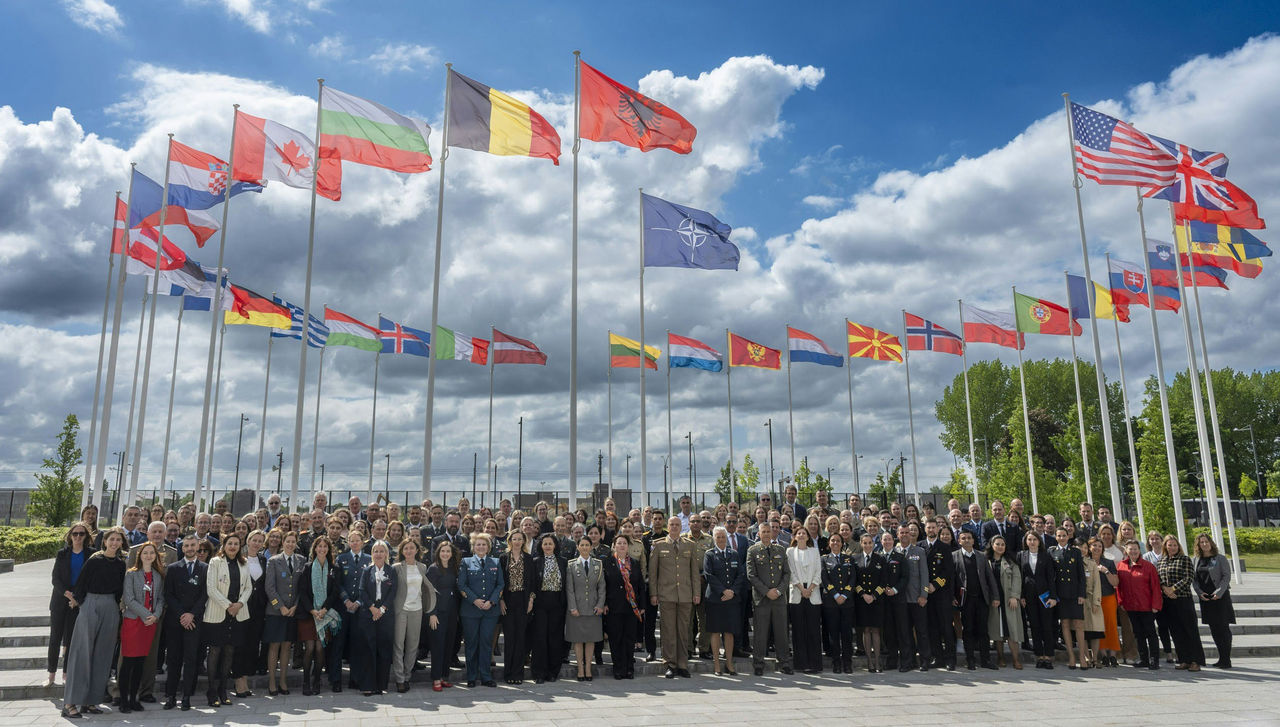
Brussels, NATO Headquarters, 5 to 7 May 2025 – Senior NATO military and civilian leaders, gender advisors, policymakers, and civil society representatives from Allied and Partner Nations gathered for the 2025 Annual Conference of the NATO Committee on Gender Perspectives (NCGP), at NATO Headquarters in Brussels. The conference celebrated a milestone year for the Women, Peace and Security (WPS) agenda, celebrating 25 years since the adoption of United Nations Security Council Resolution (UNSCR) 1325, a foundational framework for the inclusion of women in all aspects of peace and security.
Opening the conference, the Chair of NATO’s Military Committee, Admiral Giuseppe Cavo Dragone, underscored the operational importance of integrating gender perspectives across the Alliance: “Over the past quarter-century, we have witnessed undeniable progress. Consider this: what was once a marginal idea — that peace and security are not gender-neutral — is now integrated into NATO’s strategic outlook, operational conduct, and institutional policy.”
Discussions reflected on NATO’s implementation of the WPS Agenda, highlighting achievements, identifying persistent gaps, and developing practical recommendations for future action. One major focus was on gender-responsive leadership, including the role of training, education and accountability in embedding gender perspectives into daily planning and operations. Participants also explored how these approaches can enhance NATO’s deterrence and defence posture in increasingly complex security environments.
The Chair of the NATO Committee on Gender Perspectives, LtCol Rosa-Linda Lucchesi, stressed the importance of leadership in advancing these efforts: “We have achieved tremendous progress over the past 25 years, but we must now push further,” said Lt Col Lucchesi. “Strengthening leadership, building accountability and embedding gender perspectives into all aspects of NATO's work are vital for future success.”
The second day of the conference examined lessons from the integration of gender-considerations in current conflicts, and the future of UNSCR 1325 from the perspective of international stakeholders. Several case studies offered valuable insight to better understand the differentiated impacts of conflict on women and men, and the strategic advantages of gender-responsive policies for NATO and its partners.
Furthermore, the conference explored relevant approaches to the whole-of-society resilience, examining how integrating gender perspectives can strengthen societal preparedness against various security threats. Syndicate work sessions provided opportunities to reflect on NATO’s WPS Strategic Objectives and consider enhancements for the WPS Action Plan, aiming to ensure its continued relevance and effectiveness in addressing the evolving challenges facing the Alliance.
Background Information
The NCGP is dedicated to advancing gender mainstreaming and the integration of gender perspectives into the design, implementation, monitoring, and evaluation of policies, programs, and military operations. Through its work program, the NCGP provides expert advice to the NATO Military Committee on gender-related topics, aiming to enhance operational effectiveness and support the Alliance’s objectives across its core tasks. The Annual Conference serves as a key platform for this exchange and collaboration.
UNSCR 1325, adopted in 2000, established a foundational framework for the inclusion of women in all aspects of the peace and security agenda. NATO and its Allied nations have committed to the principles of WPS by recognizing that integrating gender perspectives enhances operational effectiveness, improves mission outcomes, and supports stability in complex conflict environments. The new NATO Policy on WPS, endorsed at the Washington Summit in July 2024, outlines four strategic objectives: strengthening gender-responsive leadership and accountability; increasing women’s participation at all levels; preventing threats that have a disproportionate impact on women and girls; and protecting women and girls against gender-based violence.