
Close
Back


From now on you can download videos from our website
If you would also like to subscribe to the newsletter and receive our latest updates, click on the button below.
Enter the email address you registered with and we will send you a code to reset your password.
The password must be at least 12 characters long, no spaces, include upper/lowercase letters, numbers and symbols.
Click the button to return to the page you were on and log in with your new password.
05 May 2023
1 MIN READ
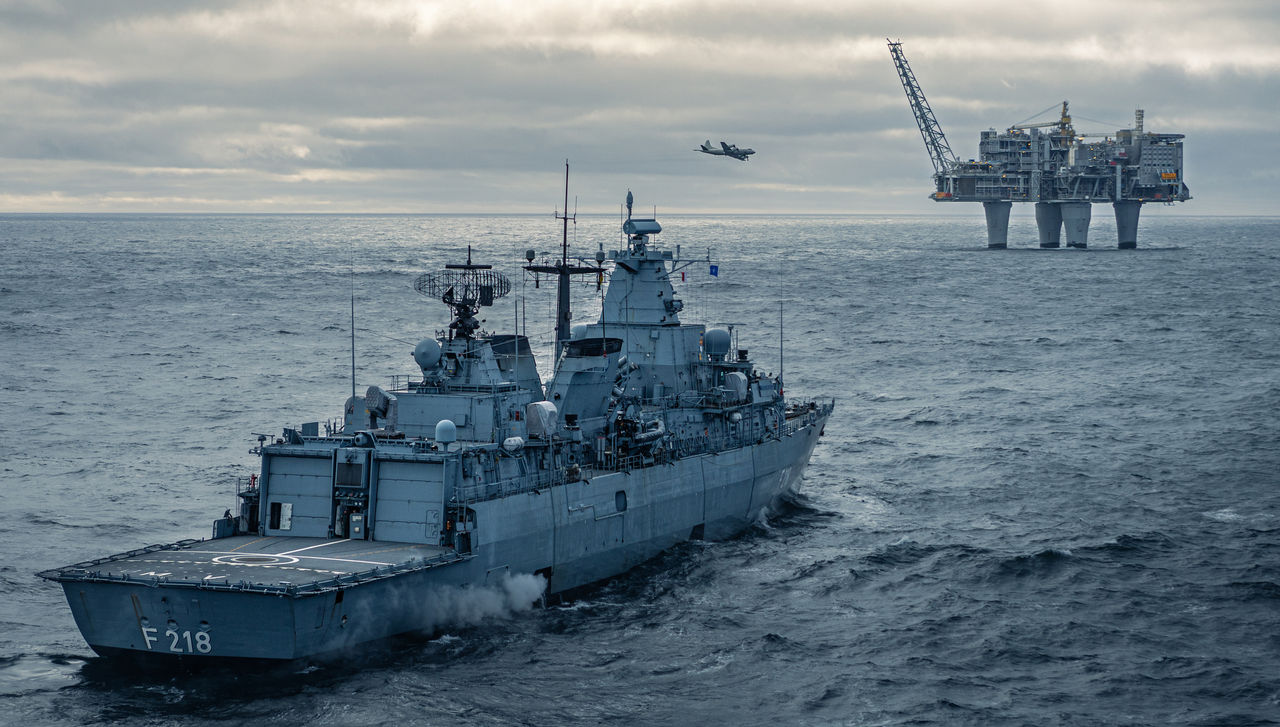
NATO Secretary General Jens Stoltenberg met with industry leaders in energy and communications infrastructure on Thursday (4 May 2023) to discuss NATO’s role in contributing to the security of critical undersea infrastructure and cooperation with industry.
The Secretary General opened a roundtable discussion at NATO Headquarters between industry leaders and civilian and military experts across NATO. The talks focused on better understanding threats to critical undersea infrastructure and sharing best practices on cooperation and coordination.
"For NATO, protecting critical undersea infrastructure is essential to our security and defence because it is key to protecting the security and prosperity of our societies," said the Secretary General. "Undersea cables carry an estimated 10 trillion dollars in transfers every day, two thirds of the world’s oil and gas is either extracted at sea or transported by sea, and around 95 % of global data flows are transmitted through undersea cables," he added. The Secretary General highlighted the importance of working with industry who build, operate and maintain this infrastructure in order to better enhance its security.
NATO has been working on the protection of critical infrastructure for years. Following the sabotage of the Nord Stream pipeline last September, Allies have stepped up their military presence in the region. NATO has also recently created an undersea infrastructure coordination cell to map vulnerabilities, and coordinate efforts between NATO Allies, partners, and the private sector. A new NATO-EU taskforce on resilience and critical infrastructure protection has also been established.