
Close
Back


From now on you can download videos from our website
If you would also like to subscribe to the newsletter and receive our latest updates, click on the button below.
Enter the email address you registered with and we will send you a code to reset your password.
The password must be at least 12 characters long, no spaces, include upper/lowercase letters, numbers and symbols.
Click the button to return to the page you were on and log in with your new password.
14 July 2022
1 MIN READ
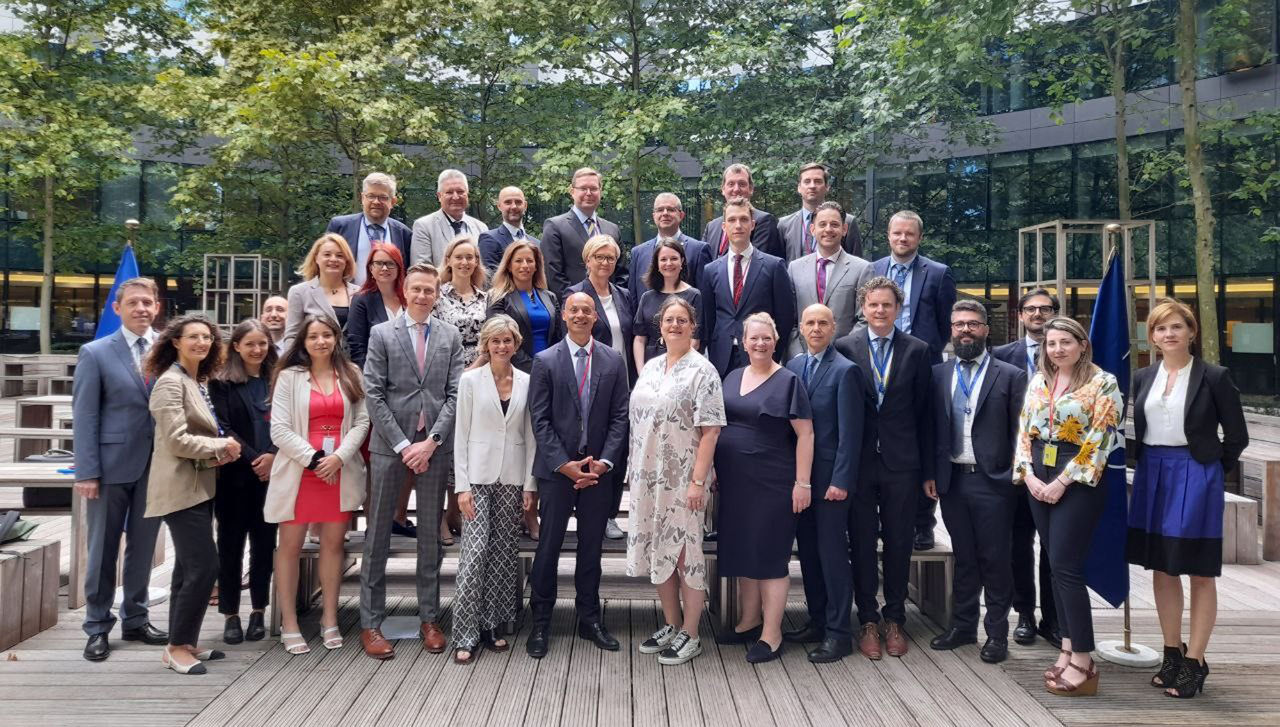
Following the NATO Summit in Madrid last month, senior officials from NATO and the European Union (EU) met today (14 July 2022) to take stock of recent developments in the cyber threat landscape and explore further areas of engagement on cyber defence.
“Cyberspace is contested at all times. Our cooperation with the EU on cyber issues has a strong foundation. Now is the time to step-up our shared situational awareness of cyber threats and our ability to respond to malicious cyber activities and to promote responsible behaviour in cyberspace,” said James Appathurai, Deputy Assistant Secretary General for Emerging Security Challenges.
The staff talks were co-chaired by Joanneke Balfoort, Director of the Security and Defence Policy Department, European External Action Service. Officials discussed recent policy developments, including the new NATO Strategic Concept and the EU’s Strategic Compass.
The discussions focused on the evolving cyber threat landscape, including in the context of Russia’s war of aggression against Ukraine, as well as respective efforts to enhance cyber resilience and assistance.
At the Madrid Summit, Allies took important decisions to strengthen the Alliance’s cyber defence posture. Allies re-affirmed the applicability of international law in cyberspace and committed to further enhancing their resilience, including by building capabilities to help each other respond to malicious cyber activities. They also agreed to enhance civil-military cooperation and expand partnership with industry.