Close
Back


From now on you can download videos from our website
If you would also like to subscribe to the newsletter and receive our latest updates, click on the button below.
Enter the email address you registered with and we will send you a code to reset your password.
The password must be at least 12 characters long, no spaces, include upper/lowercase letters, numbers and symbols.
Click the button to return to the page you were on and log in with your new password.
Prime Minister Frostadóttir, dear Kristrún, it is a pleasure indeed to be back in Reykjavík. This is the northernmost capital in NATO, I think even in the whole world. And I want to thank you for your warm welcome, for the friendship. And it is great to see you now in Reykjavík.
Since you took office - it is now almost a year ago, I think, in December - you have made Iceland's continued commitment to NATO clear. Very clear. And your government has ambitious plans to take the hard, but I believe also the necessary, decisions required to increase defence and security related spending, and for this, I commend you. For a nation without armed forces, this is no small task. But Iceland has always punched above its weight. Believe me, I remember very well when the Icelandic national football team beat the Netherlands in Amsterdam in 2015.
I also welcome your leadership, Kristrún, on Iceland's first formal policy on defence issues, which was presented to the parliament earlier this month, and this will further strengthen NATO's deterrence and defence.
Iceland, as we know, is a founding member of our Alliance. Your strategic position underpins security for North America and Europe at sea, below the surface, and in the air above. You operate critical air defence and surveillance systems as part of NATO's Integrated Air and Missile Defence. And you provide facilities, infrastructure, and host nation support at Keflavík for regular air policing. And indeed, that was a very impressive visit.
Your leadership on resilience and civil preparedness is second to none. Earlier today, indeed, with Foreign Minister Gunnarsdóttir, I flew over the Southern peninsula where repeated volcanic eruptions have forced the people of Grindavík to leave their homes again and again. The lava barriers built to protect the town and critical infrastructure are impressive and very practical. So, Iceland has also here shown that commitment, ingenuity and resilience, and that combination of commitment, ingenuity and resilience, that they matter.
We are now halfway between the Summit in The Hague, where we saw each other last, and our next Summit in Ankara. And our priorities are clear: to invest more in defence and security, to strengthen our defence industrial base, and to sustain our unwavering support to Ukraine against Russia's ongoing war of aggression. Russia has paid a high price for marginal gains, and Ukraine continues to defend itself with courage. There is tremendous renewed energy around the peace process. And for that, I want to commend US President Trump.
I also want to commend the people of Iceland. Iceland is a staunch supporter of Ukraine indeed, including through your recent contribution of more than €8 million to PURL, the NATO-led effort to support critical munitions to Ukraine. You have funded prosthetics for the wounded, supported demining initiatives with Lithuania, and contributed to procurement through the Danish defence industry model and the Czech ammunition initiative.
And these are concrete contributions that save lives and strengthen Ukraine's defence and also send a clear signal to Moscow that Allies stand with Ukraine.
I was told earlier of the Icelandic poet Hulda, who wrote during the Second World War about Iceland as the land far from the world's battlefields. It is a beautiful poem that captured Iceland's unique place in the world at that time. Today, we know there is no periphery, but the spirit she expressed still matters. Resilient people, bound by sea and sky, united in the pursuit of peace. From Reykjavík to The Hague, my home city, from the High North to the Black Sea, every Ally is now a frontline state in the contest for our security and our values.
So Prime Minister, dear Kristrún, thank you for your leadership. Thank you for Iceland’s steadfast support to NATO, commitment to NATO and for everything you're doing.
Aðalsteinn Kjartansson, Heimildin
My name is Aðalsteinn, I’m from the Icelandic Newspaper, Heimildin. I would like to ask you Mr Rutte, NATO’s role framed itself as an Alliance, not only of military security, but of shared democratic values. In recent years, we've been seeing measurable democratic backsliding across the transatlantic region. How do you assess NATO's current position as a political Alliance [inaudible] democracy, and how do you see its role evolving in the area when democratic systems, including some within NATO, appear to be under increasing strain.
Mark Rutte, NATO Secretary General
I would argue that indeed, still, till today, from the start in 1949 up to and including today, this is an Alliance of democracies of shared value, and we will always have our debates, even without – within our countries, from the centre left to the centre right, from the left to the right, and that’s exactly how it should play out. We have our free and independent media who will keep it sharp. The parliaments, our societies can organise demonstrations. And I can assure you, my country, I'm not sure here, but in The Hague and Amsterdam, they take place. So that’s still the case. That has not changed over those more than 75 years.
Holmfridur Maria Ragnhildardottir, MBL/Morgunbladid
Holmfridur Maria from Morgunbladid MBL. Mr. Secretary General, what are the most important investments Iceland needs to make to strengthen its national security and will NATO help Iceland with its development?
Mark Rutte, NATO Secretary General
Yes, and basically, we decide this together. So, we had a whole process in NATO where we agreed on, sorry for the NATO language, the capability targets, so in each country has to deliver. And of course, Iceland is unique, because you do not have a military, but you do have your investments in everything related to defence and security spending.
So, when it comes to air defence, when it comes to surveillance systems, and you are – as a country, you are the eyes and ears for many of us in NATO. This morning, when I visited the base, I was really impressed by the fact that all the countries there told me, that one of the things Iceland is very good at is host nation support, because you host a lot of military from other countries who are doing extremely important work here.
And host nation support is therefore crucial so that people like to come here. Sometimes they have to come here on short notice, because there is some urgency to get here, and then particularly is important that you have this organised for – organised this very well, and you did, so all these issues and everything – what you're doing in your societal resilience. Already mentioned, you were second to none. I think you can compare maybe a little bit with Estonia, Sweden, Norway, countries like that. But you have really thought it through. And I know that a country like mine, the Netherlands, is trying to learn from you how to do that.
So, on all of this, what we basically agreed on the capability targets, is that you’re on the right track. We want Iceland to do more. Iceland has committed to keep on investing over the coming years to make this even stronger.
Kristrún Frostadóttir, Prime Minister of Iceland
If I can just add to that, I think it’s very important that we have these regular catch ups. I mean, I met with Mark in Brussels this spring, then obviously the summer, again this fall. Because, you know, governments change, the Secretary Generals change, and all countries and we constantly need to have a shared understanding of where responsibilities lie. And I think the strength of NATO is this understanding, is that, of that, you know, we need to be focusing on capability. Not everyone is doing the same thing.
Countries are doing what fits them, what suits them, and this coming together is what strengthens the Alliance. This is why we have an Alliance. And it's so important that Mark got to see, the Secretary General, how we do things in Iceland, because then Icelanders can also feel the sense of security, of, you know, we have been doing well.
Our security model has been working. We just need to further strengthen that. These are not questions of, you know, changing the way we do security, but we need to make it more robust. And this is also strengthening our situation and our position in NATO. And so, you know, having that joint understanding, getting support on that end, and then us being able to sort of wrap it up with NATO funding, and then we put our funding in as well, is what has made this collaboration and this Alliance so strong.
Mark Rutte, NATO Secretary General
Iceland is an very important Ally, and you were there since the start. So we went the whole way together.
Hallgrímur Indridason, RUV
My name is Hallgrímur Indridason. I'm a reporter for RUV, the Icelandic National Broadcasting Service. Maybe on a similar note, but maybe a bit wider, you, of course, this morning, familiarised yourself with the security area at Keflavík. How do you see the importance of that for the NATO activities and the Alliance, and do you see the area, or the sort of NATO activities even increase in the near future, seeing the world situation in the world at the moment?
Mark Rutte, NATO Secretary General
Well, that’s the whole plan. That’s because we, as I said, we cannot be naive. We are all frontline states now. The latest Russian missiles can reach every part of NATO territory with within a very limited time span, and what Iceland is doing in terms of, indeed, surveillance, air defence, etc, making sure that this country is hosting all the nations organising this is crucial.
But also, when you look at what we discussed extensively, the High North, the Arctic, because there are seven countries in the Arctic, member of NATO, Allies within NATO, and only one is not an Ally in NATO or not applying for membership, and that’s Russia. And there is a ninth country, China, which is geographically not in the High North, but it’s very active here, becoming more and more active. So, but the seven; so Canada and US, and Iceland and Denmark, Finland, Norway, Sweden, they worked – these countries, working together within NATO, and NATO, particularly, I think, over the last 12 to 18 months, becoming more and more involved with these activities so that we can help to coordinate, and being the platform to organise this is crucial. Because sea lanes are opening up and we see how our adversaries are trying to make trying to make use of this and we discussed the visit of Jonas Støre, the Norwegian Prime Minister, to the White House, where he showed that map to President Trump saying, hey, here you have these huge submarine bases in Russia. They are not there to attack Norway. They are there to ultimately attack the United States. So it is a joint interest effort, and this is one of the reasons why it is so crucial that NATO is not only European, that it is transatlantic. Because the Atlantic, and the Arctic, and Europe – those three being safe means that we live in prosperity and can make sure that our values are protected and our people, but also United States and Canada.
Margrèt Helga Erlingssottir, SYN
Hello, Secretary General. My name is Margrèt, a reporter from SYN newsroom. You talked a little bit about the Arctic, and I want to further ask you about, given the growing tension between NATO and Russia, how do you envision Iceland's role, in particular with the Alliance, both strategically and politically in the coming years?
Mark Rutte, NATO Secretary General
Quite crucial, because Iceland is also a convening power, as you are. I think we started with 10 allies in 1949, [Aside: Kadri, if I'm correct? 12]. In 1949 we started with 12, and now we are 32. Iceland was one of the 12 original founding nations within NATO and Iceland has always been a country which was able to be the platform. And you still do that. You still organise regional conferences, sometimes even superseding regional conferences to organise, to bring the people together. So that’s one.
The other is, of course, that you are, as I said, the eyes and ears, because for the technology, which is here, your unique geography, your unique people, your very bright, proud nation and that means that, over the years, people have always thought, yeah, Iceland is not a threat, but Iceland is relevant, is important, and punches above its weight.
So I hope it will continue. And we discussed it, and the Prime Minister offered it and said, hey, wherever we can help within NATO to organise, be it the High North and other issues, we want to be that platform, and I’m sure we’ll make use of that.
So that will be in addition to the previous answer to the relevance of the High North, because it was always relevant. But I think with what is now happening in geographically, but also physically, with the sea lanes opening up, we have to be careful, and we need to protect ourselves.
Kristrún Frostadóttir, Prime Minister of Iceland
And it’s right what the Secretary General said, regarding us having the position of being a convening power of sorts, I think it's important that we keep that open, because we see us sort of situated right in between the US, Europe, obviously such a broad geography that NATO entails.
But at the same time, you know, we don't want to scare people into thinking that, you know, we're going down a bad path here in the High North, but we cannot be naive about what's going on. And we have been in a strong position strategically and security wise, because we've been an Ally of NATO. So we see our role now even stronger than before.
This unsinkable aircraft carrier that Iceland has been is even more relevant today. We see that our countries within NATO that are now looking towards how they can use Iceland as a platform here in the High North, and we look upon that as positively, because this strengthens our domestic defences as well. So we have to do that in collaboration with NATO.
We also are in a position where we can be sort of hegemons or leaders in this part of the world, right? Because this is a different part of the world, the central, the central Atlantic, with Greenland, Iceland, the Faroes. We have a voice here as well, and we have a responsibility to be leaders in this region. So we have offered that to NATO, we've offered that to other leaders, if we can be of help.
But you know, let me just reiterate what the Secretary General has said. You know, our position is not going to change. We will still be a host nation focused on infrastructure, focused on air surveillance, being the eyes and ears, such a good phrase, right for NATO, but we need to step up our investments. We can do that in a positive way for the domestic public as well, here in Iceland and we see a lot of opportunities and, and if I just reiterate this infrastructure development project, and now Helguvík today, such a good example of the positive work that we can do together.
Mark Rutte, NATO Secretary General
It is. And indeed, you said the place on the map is unique, because maybe sometimes you would like to be closer to Europe, but the fact that you are, yes, Europe, but at the same time you have that unique geographical position, of course, that has made this country what it is, one of the, yeah. I mean, you’re one of the most successful countries on Earth, but also unique in terms of understanding what that means, being that, on that unique place on the map. So close to Greenland, to Faroe Islands, but also playing that role in the High North.


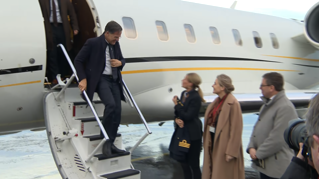
NATO Secretary General Mark Rutte visits Iceland
NATO Secretary General Mark Rutte and Þorgerður Katrín Gunnarsdóttir, Minister of Foreign Affairs of Iceland
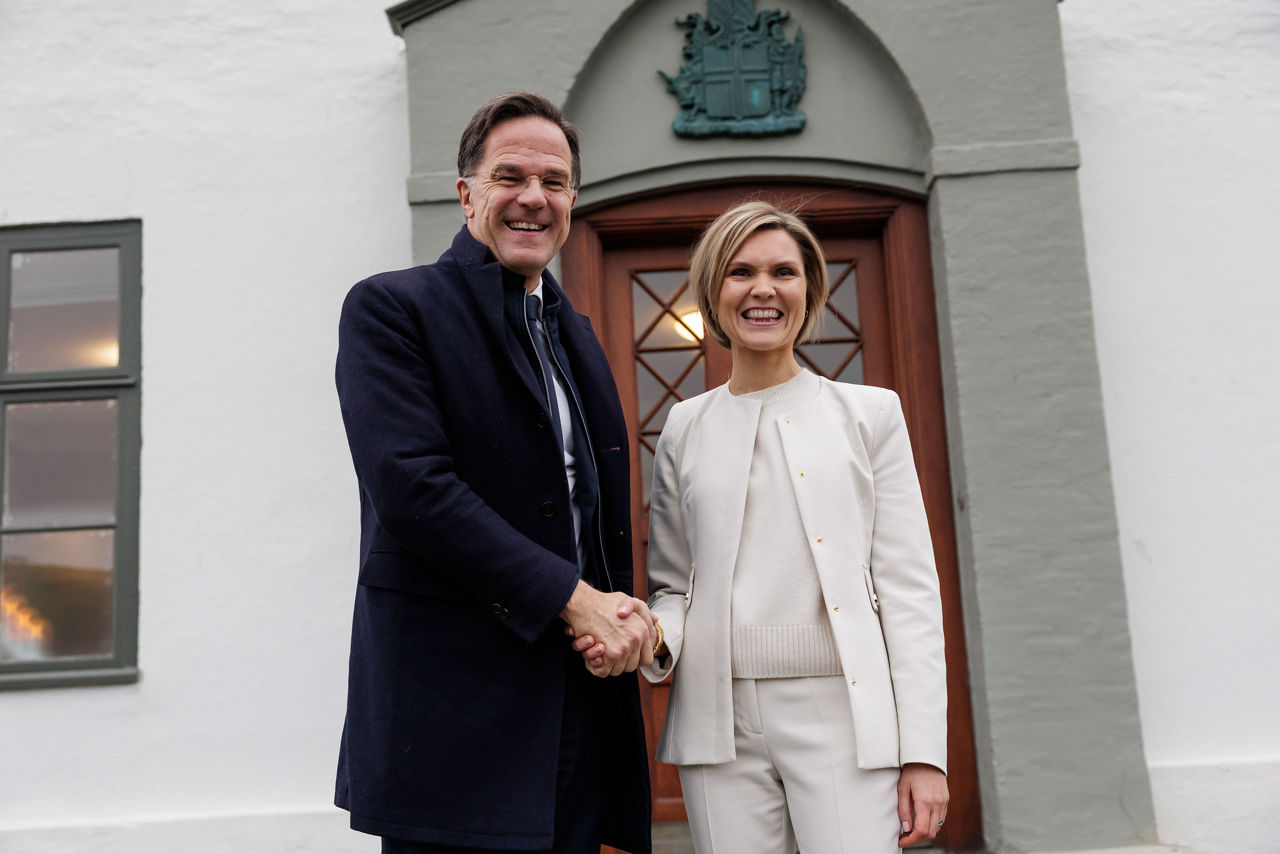
NATO Secretary General Mark Rutte meets with Kristrún Frostadóttir, Prime Minister of Iceland
NATO Secretary General Mark Rutte meets with Kristrún Frostadóttir, Prime Minister of Iceland
NATO Secretary General Mark Rutte visits Iceland
NATO Secretary General Mark Rutte visits Iceland
NATO Secretary General Mark Rutte visits Iceland
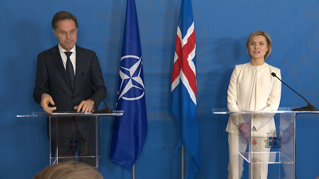
Joint press point by the NATO Secretary General Mark Rutte with Kristrún Frostadóttir, Prime Minister of Iceland
Joint press point by the NATO Secretary General Mark Rutte with Kristrún Frostadóttir, Prime Minister of Iceland
NATO Secretary General Mark Rutte engages with parliamentarians from the Foreign Affairs Committee of the Icelandic parliament (Alþingi) and the Icelandic Delegation to the NATO Parliamentary Assembly.
NATO Secretary General Mark Rutte engages with parliamentarians from the Foreign Affairs Committee of the Icelandic parliament (Alþingi) and the Icelandic Delegation to the NATO Parliamentary Assembly.
NATO Secretary General Mark Rutte engages with parliamentarians from the Foreign Affairs Committee of the Icelandic parliament (Alþingi) and the Icelandic Delegation to the NATO Parliamentary Assembly.
NATO Secretary General visits Iceland